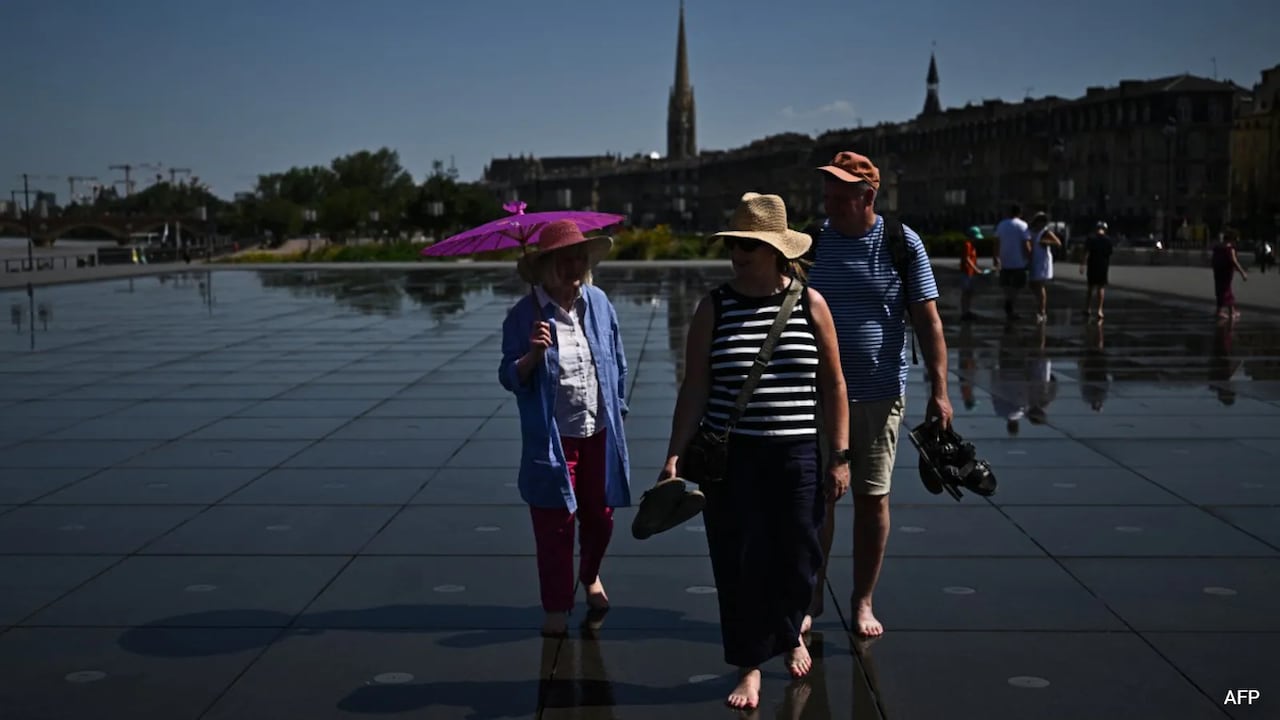
Europe is baking under record-breaking heatwaves that kill thousands of citizens every summer, but the true crisis is not the temperature. It is a structural failure of urban architecture, systemic economic neglect, and an outdated energy grid completely unequipped for a warming continent. While standard news reports treat these heatwaves as unpredictable natural disasters, the data proves they are entirely predictable annual events. The real tragedy lies in how European infrastructure actively traps this heat, turning historic cities into literal death traps for the vulnerable.
To understand why Europe is failing to cope, one must look past the sensationalized headlines of melting asphalt and crowded fountains. The continent is facing a compounding crisis where historical preservation clashes with human survival, and where the poorest citizens pay the ultimate price.
The Concrete Cauldron Effect
Most European cities were built to retain heat, not dissipate it. For centuries, narrow streets, thick stone walls, and a lack of green space served as an effective defense against brutal winters. Today, this exact layout creates a lethal phenomenon known as the Urban Heat Island (UHI) effect.
During a heatwave, building materials like asphalt, brick, and concrete absorb massive amounts of solar radiation. At night, when temperatures should drop, these materials slowly radiate that trapped heat back into the surrounding air.
This prevents cities from cooling down overnight. The human body requires nocturnal cooling to recover from daytime heat stress. Without it, the cardiovascular system remains under constant strain, leading to a sharp spike in strokes, heart attacks, and organ failure.
The distribution of this heat is far from equal. Wealthier neighborhoods often feature mature tree canopies, parks, and shaded boulevards that can lower local temperatures by up to 5 degrees Celsius. In contrast, working-class districts are dense concrete corridors with minimal vegetation. Trees do not just provide shade; they actively cool the air through evapotranspiration. The absence of urban greenery is not an aesthetic flaw. It is a public health hazard.
The Myth of Universal Air Conditioning
American observers often look at Europe's heat crises with confusion, wondering why residents do not simply turn on the air conditioning. The answer is rooted in a mix of historical complacency, architectural limitations, and economic reality.
Air conditioning penetration in European households remains remarkably low compared to the United States or Japan. In countries like France and Germany, fewer than 15% of homes have cooling systems. Installing these units in historic, protected buildings is often legally prohibited or structurally impossible. Even where it is permitted, the financial cost is prohibitive for millions of low-income families and retirees living on fixed incomes.
Furthermore, a sudden mass adoption of air conditioning would likely trigger a catastrophic collapse of Europe's energy infrastructure. The grid was designed for a different era.
The Grid Vulnerability
European power grids face a double whammy during intense summer heat. As demand for cooling spikes, the efficiency of power generation and transmission drops.
- Cooling Water Shortages: Nuclear and coal-fired power plants rely heavily on river water for cooling. During prolonged heatwaves, river temperatures rise too high, or water levels drop too low, forcing utilities to throttle or shut down power generation entirely.
- Transmission Efficiency Losses: High ambient temperatures cause power lines to sag and lose efficiency, meaning less electricity reaches its destination just when it is needed most.
- The Vicious Cycle: Traditional air conditioning units dump heat from inside a building directly out onto the street. A city where everyone uses air conditioning becomes significantly hotter on the outside, worsening the UHI effect for anyone walking the streets or unable to afford electricity.
The Economic Fracture of Climate Adaptation
The narrative surrounding climate change often frames it as a future threat. For Europe's working class, it is a current financial siphon. Heatwaves act as a regressive tax, disproportionately impacting those who cannot afford to adapt.
Consider outdoor laborers, delivery drivers, and agricultural workers. European labor laws have historically been slow to mandate maximum working temperatures. While some countries have begun introducing registries and temporary bans on afternoon labor during extreme alerts, enforcement is spotty at best. Workers are forced to choose between heat exhaustion or lost wages.
Inside the home, the elderly suffer in silence. Many retirees live in top-floor apartments of uninsulated pre-war buildings. Heat rises, turning these upper levels into ovens. Afraid of massive utility bills, many choose not to run fans or portable cooling units even if they own them.
Rewriting the Urban Blueprint
Fixing this crisis requires a complete overhaul of how European cities operate. Mirroring the American model of sprawl and heavy air conditioning usage is a dead end that will only accelerate carbon emissions. Instead, urban planners are looking toward ancient Mediterranean architectural principles and modern passive cooling technology.
Passive Cooling and Retrofitting
The most effective way to cool a city is to prevent it from absorbing heat in the first place. This can be achieved through aggressive, state-funded retrofitting campaigns.
White roofs and reflective coatings can bounce up to 80% of sunlight back into space, compared to just 10% for dark asphalt roofs. Implementing "green roofs"—covering rooftops with living vegetation—not only insulates the building below but also cools the surrounding air layer.
De-paving the Streets
Cities must systematically remove unnecessary asphalt. Replacing parking lots and wide concrete plazas with permeable soil, grass, and public parks creates natural heat sinks. Subsidized public "cooling hubs"—air-conditioned libraries, community centers, and retrofitted subterranean spaces—must be established within walking distance of every major residential block.
Relying on individual resilience is a failed strategy that fills morgues every July and August. Europe must treat extreme heat not as an unfortunate weather event, but as a structural infrastructure emergency that requires immediate, aggressive public investment.