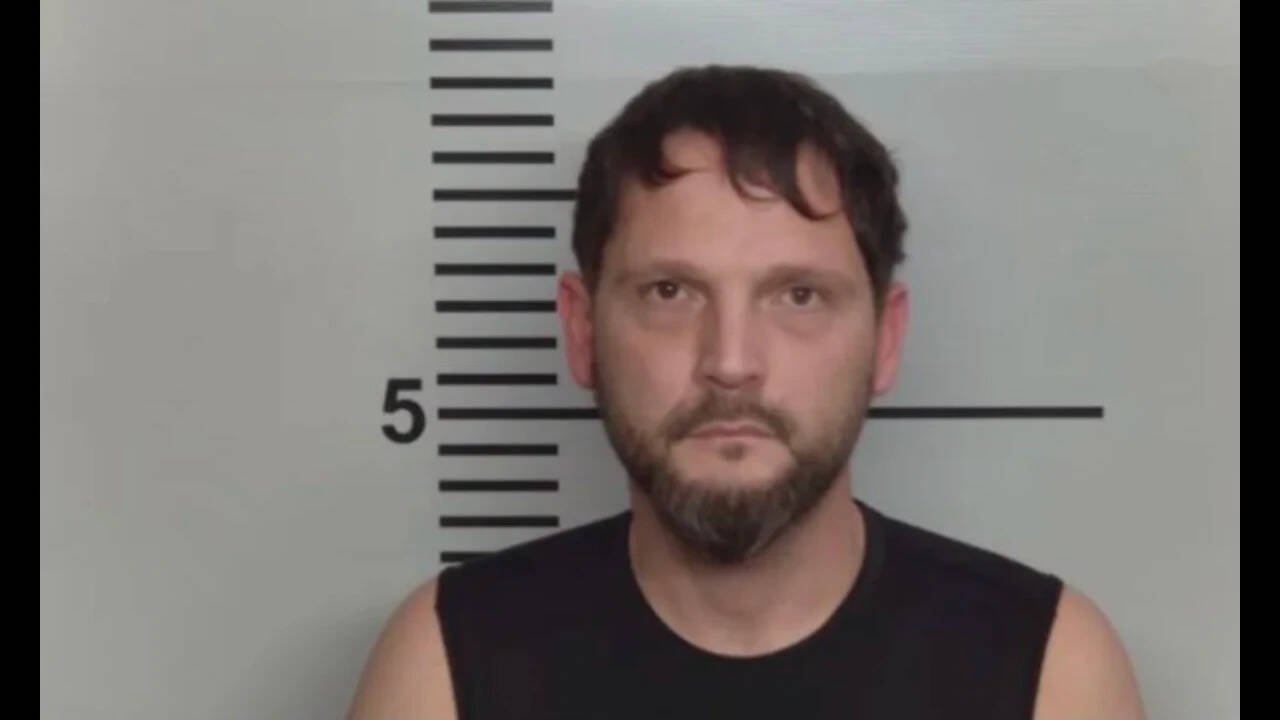
The fatal restraint of Yves Sakila on a busy Dublin shopping street has shattered the fragile illusion of Ireland’s progressive integration strategy. Sakila, a 35-year-old Congolese-born man who had lived in Ireland since 2004, died last Friday after being pinned to the pavement on Henry Street by at least five men following an alleged shoplifting incident. Mobile phone footage capturing the final five minutes of his consciousness quickly went viral, showing a civilian security guard kneeling on or near Sakila’s head and neck while others held his face to the asphalt. By the time an ambulance arrived, the tech-enthusiast turned homeless shelter resident was unresponsive. He was pronounced dead at the Mater Hospital.
The political fallout was instantaneous. Protesters gathered outside Leinster House, chanting against cover-ups and holding signs declaring that céad míle fáilte—the mythic Irish phrase for a hundred thousand welcomes—must apply to everyone. For Ireland's growing immigrant and minority communities, the video did not just show a private security intervention gone wrong. It looked like an imported American nightmare. Activists and classmates quickly labeled the tragedy Ireland’s "George Floyd moment."
To view this crisis solely through the lens of American racial politics, however, is to miss the unique, combustible reality of modern Dublin. This is not a simple carbon copy of US police brutality. The men pinning Sakila to the ground were not armed state agents; they were private contract security workers operating in a legal gray area. The underlying systemic failure belongs entirely to the Irish state, which has spent years ignoring the intersecting crises of a broken immigration infrastructure, a severe lack of mental health and homelessness support, and a completely unregulated private security sector tasked with policing the fallout.
The Illusion of Integration and the Modern Dublin Street
Ireland’s demographics have shifted with astonishing speed over the last quarter-century. For decades a nation defined by emigration, the economic boom of the Celtic Tiger era turned the island into a destination. Yet, as the state welcomed global labor and asylum seekers, successive governments failed to build the social infrastructure required to sustain this transformation.
Sakila’s life trajectory mirrors these broader systemic cracks. Arriving from the Democratic Republic of Congo as a teenager, he attended a North Dublin suburban high school and later worked in information technology. Friends described him as quiet, shy, and deeply intellectual. Yet, like thousands of others caught in Dublin’s brutal cost-of-living and housing crisis, he eventually slipped through the safety net, spending his final two years at the Salvation Army’s Granby Centre.
The friction on Dublin’s commercial streets has steadily intensified. Over the past three years, the capital has seen a sharp rise in anti-immigrant sentiment, culminating in large-scale rioting in central Dublin in late 2023—just blocks away from where Sakila took his last breath. Far-right agitators have successfully exploited public anxiety over housing shortages, turning local communities against asylum seekers and migrant workers. By failing to actively manage integration or protect vulnerable populations, the state created a pressure cooker.
When a minor property crime occurs in this environment, the response is no longer routine. It is charged with a volatile mix of societal tension, fear, and racial bias.
The Wild West of Private Security Restraint
The most critical distinction between the death of George Floyd and the death of Yves Sakila lies in who was holding the body down. Private security guards in Ireland occupy a massive, poorly monitored industry. While the state police force, An Garda Síochána, undergoes rigorous training regarding the physical dynamics of positional asphyxia, the same cannot be guaranteed for retail security contractors.
What is Positional Asphyxia?
When a person is held face-down on a hard surface with pressure applied to their back, neck, or torso, their ability to expand their lungs is severely compromised. The danger increases exponentially if the individual is panicked, intoxicated, or experiencing a mental health crisis, leading to rapid oxygen deprivation and cardiac arrest without the compliance monitor realizing the danger.
The Private Security Authority (PSA) regulates licensing in Ireland, but industry insiders acknowledge that training modules for retail guards often focus heavily on loss prevention, law, and basic physical defense, rather than the lethal risks of prolonged prone restraint. When five grown men pool their weight onto an individual for nearly five minutes, the line between detention and structural suffocation vanishes.
The Irish Council for Civil Liberties (ICCL) immediately flagged the footage as showing a completely disproportionate and excessive use of force. While a post-mortem examination failed to immediately determine a definitive cause of death, the physical realities documented on the video have already indicted the methods used. Retail security guards are paid to protect corporate inventory, not to act as judge, jury, and executioner over a suspected shoplifted item.
The Shadow of George Nkencho
This is not the first time Ireland has had to confront a flashpoint of this nature, and the state's historical handling of these cases explains the deep skepticism currently boiling over on the streets. In December 2020, George Nkencho, a 27-year-old Black Irish man suffering from a severe mental health crisis, was shot dead by the Garda Armed Support Unit outside his family home in West Dublin after a prolonged standoff involving a knife.
The state’s response to Nkencho’s death offers a grim blueprint for how the political establishment handles systemic trauma. It took more than five years for an inquest to finally deliver a narrative verdict in January 2026. The Garda Siochána Ombudsman Commission (GSOC) concluded its criminal investigation by sending a file to the Director of Public Prosecutions (DPP), who ultimately decided not to pursue any criminal charges against the officer involved.
For the African-Irish community, the message was clear: accountability is a slow, bureaucratic maze that rarely ends in justice. The promises of systemic reform made in 2020—including better training for mental health de-escalation and the introduction of body-worn cameras—have been implemented at a glacial pace.
When Yemi Adenuga, a councillor for the governing Fine Gael party and Ireland’s first elected Black female politician, warns that the government has failed to put provisions in place to manage the realities of modern migration, she is speaking from the inside of a system that chooses reactive damage control over proactive reform. Calling the current state of affairs "a recipe for chaos, anarchy and apathy" is not an activist hyperbole; it is an administrative diagnosis.
The Dangerous Weaponization of Operational Silence
In the wake of Sakila's death, the political machinery has fallen back on a familiar script. Taoiseach Micheál Martin called for a thorough investigation, expressing "huge concern across society." Meanwhile, An Garda Síochána announced that the results of the post-mortem would be withheld from the public for "operational reasons."
This institutional silence is a dangerous gamble. In an environment where social media video moves at lightning speed, an information vacuum is instantly filled by extreme narratives. On one side, far-right networks are already weaponizing the incident to paint central Dublin as a lawless zone overrun by migrant criminality, defending the actions of the security guards as necessary civic defense. On the other side, an marginalized minority community sees the withholding of autopsy details as the first step toward institutional erasure.
The state's insistence on treating this as an isolated retail mishap ignores the broader structural failure. Yves Sakila did not die in a vacuum. He died because Ireland has allowed its city centers to become battlegrounds where private, low-wage security personnel are left to manage the symptoms of homelessness, mental neglect, and racial friction.
The demands of the protesters outside the Dáil cannot be met by simply investigating the individuals on the Henry Street pavement. True accountability requires a complete overhaul of private security enforcement laws, strict criminal penalties for lethal restraint techniques by non-state actors, and an honest reckoning with the systemic racism that dictates whose life is deemed expendable over the price of a store commodity. Ireland can no longer afford to hide behind the comfortable myth of its historic hospitality while the reality on its streets tells a completely different story.