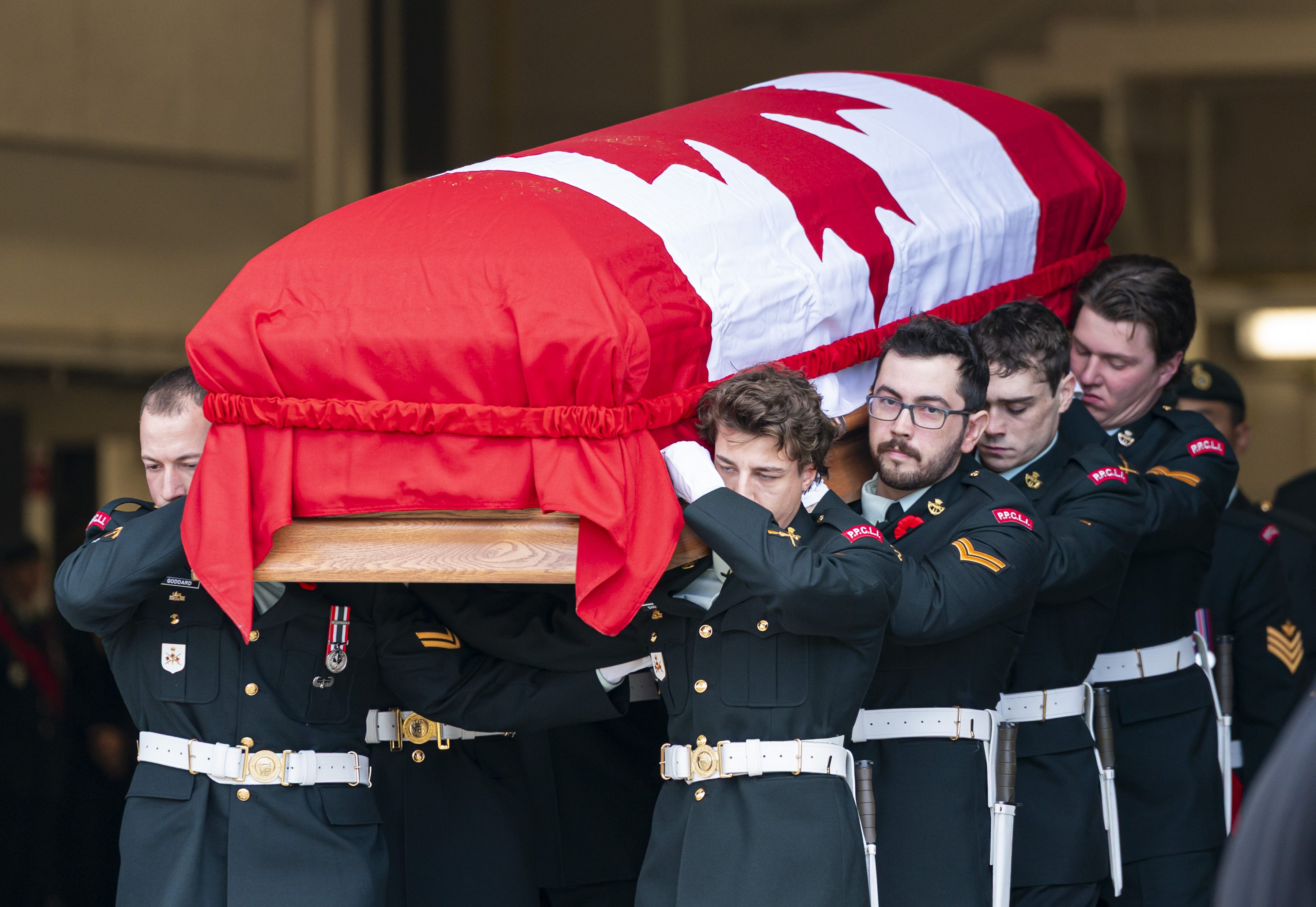
When a British Columbia soldier dies during routine exercises at Canadian Forces Base Wainwright, the military issues a standard expression of grief while grieving mothers are left mourning a "bright light" extinguished far from any active war zone. Behind these recurring tributes lies an uncomfortable institutional reality regarding training safety, opaque military investigations, and the systemic pressures placed on young recruits preparing for deployment.
Every year, thousands of Canadian Armed Forces personnel descend upon the sprawling prairies of east-central Alberta to simulate the chaos of modern warfare. For families back home in places like British Columbia, the assumption is straightforward. Danger belongs to overseas combat missions, while domestic bases exist to keep their children safe until they are ready. Yet when a sudden, non-combat fatality occurs on Canadian soil, that assumption shatters instantly. The public is fed a carefully curated statement expressing condolences, a mother shares heartbroken memories of a son who wanted nothing more than to serve his country, and the machinery of military bureaucracy quietly closes ranks.
The Anatomy of a Domestic Military Tragedy
To understand how a young soldier from British Columbia ends up dead on an Alberta training ground, you have to look at what CFB Wainwright actually is. Spanning over 600 square kilometers of rugged terrain, it is the primary proving ground for the Canadian Army's high-readiness brigades. Before troops deploy to Latvia, the Middle East, or disaster zones at home, they go through Wainwright. The exercises conducted here—often grouped under banners like Exercise Maple Resolve—are designed to replicate the physical and psychological exhaustion of real combat.
Exhaustion is not a byproduct of the training. It is the point.
Commanders push soldiers to operate on minimal sleep, carrying heavy loads across unfamiliar terrain, often using live ammunition or maneuvering massive armored vehicles in the dark. When everything works, this pressure builds resilience and unit cohesion. When a single link in the chain breaks—whether through mechanical failure, a miscommunication over radio channels, heat stroke, or an acute medical emergency—the consequences are irreversible.
In the immediate aftermath of a death at Wainwright, the contrast between the human loss and the institutional response is jarring. Families speak to local reporters about a young man's infectious smile, his dedication to his regiment, and the void left in their community. Meanwhile, Department of National Defence communications teams release three-paragraph advisories noting that the Canadian Forces National Investigation Service has been notified and that no further details will be released out of respect for the family's privacy.
Privacy is important. Transparency is equally vital, and in the Canadian military, the former is routinely used to delay the latter.
Why Non-Combat Deaths Happen on Home Soil
Critics of military oversight often point out that peacetime training fatalities are treated as isolated, freak accidents rather than symptoms of broader operational strain. Over the past two decades, investigations into training deaths across Canada have repeatedly uncovered familiar culprits.
- Vehicle rollovers and collisions: Light Armoured Vehicles (LAVs) and tactical trucks are top-heavy, difficult to see out of at night, and frequently driven by fatigued operators navigating unmarked trails or hidden ditches.
- Environmental exposure and physical exertion: Soldiers pushing past their physical limits in extreme heat or sudden prairie cold snaps face severe risks of cardiac events, heat exhaustion, and hypothermia, particularly when unit culture discourages admitting weakness.
- Live-fire and range accidents: Even with strict safety protocols, human error during complex, multi-unit maneuvers involving artillery, mortars, or small arms can turn lethal in fractions of a second.
- Undiagnosed medical vulnerabilities: Rigorous physical screening catches most issues, yet intense, sustained stress can trigger fatal underlying conditions in otherwise healthy young adults.
None of these risks are secrets to military brass. The debate among defense analysts and former service members centers on whether the Canadian Armed Forces balances realism against risk management effectively, especially during periods of severe recruitment shortages.
The Recruitment Crunch and Operational Tempo
Canada's military is currently navigating one of the worst personnel deficits in its modern history. Thousands of positions across the regular force and reserves sit vacant. Paradoxically, having fewer troops has not reduced the demands placed on the institution. Commitments to NATO's eastern flank, domestic wildfire and flood deployments, and ongoing readiness cycles mean the remaining soldiers are stretched thinner than ever.
When units are understaffed, experienced non-commissioned officers—the sergeants and master corporals who act as the vital safety buffer during dangerous exercises—are often overworked or covering multiple roles. Junior soldiers may be pushed into complex tasks faster to fill gaps. In an environment where "mission first" is drilled into recruits from day one, questioning whether a crew has had enough sleep or whether a vehicle has undergone a thorough safety check carries an unspoken social stigma.
Inside the Military Investigation Machine
When a B.C. mother loses her son at CFB Wainwright, her search for answers enters a labyrinth that operates largely outside the civilian justice system. While civilian coroners and medical examiners in Alberta may eventually review the cause of death, the primary fact-finding mission belongs to the military itself.
Two distinct tracks usually unfold simultaneously. First, the Canadian Forces National Investigation Service (CFNIS) determines whether criminal negligence or foul play occurred. Second, the military convenes a Board of Inquiry (BOI).
On paper, a Board of Inquiry is an administrative tool designed to examine every detail of an incident, identify systemic flaws, and issue recommendations to prevent future tragedies. In practice, the process is notoriously slow. It is not uncommon for families to wait two, three, or even four years to see a heavily redacted summary of what happened to their child.
During those years, grief is compounded by silence. Parents are assigned a military assisting officer to help navigate paperwork and funeral arrangements, yet these officers are bound by the same strict confidentiality rules as the rest of the chain of command. Families frequently report feeling shut out of the very process meant to provide them with closure, forced to rely on informal whispers from their loved one's fellow soldiers to piece together the final hours.
The Legal Shield of Crown Immunity
Adding to the frustration of bereaved families is the legal framework governing military service in Canada. Under federal law, service members and their families cannot sue the Crown for injuries or deaths sustained during duty, even if glaring negligence by commanders or faulty equipment played a direct role.
Instead, families are directed to Veterans Affairs Canada for statutory death benefits and pension entitlements. While financial support is essential, the inability to pursue civil litigation removes a powerful mechanism for public accountability. In the civilian world, a fatal workplace accident triggers provincial occupational health and safety investigations, public inquests, and lawsuits that force corporations to air their internal safety records in open court. Inside the military fence line, the institution investigates itself, grades its own performance, and decides how much the public is allowed to know.
The Culture of Stoicism and Its Hidden Costs
To understand why these systemic issues persist, you have to reckon with military culture itself. Armies do not function like normal workplaces, nor can they. Training soldiers to run toward danger requires instilling a mindset of toughness, obedience, and self-sacrifice. Without those traits, a military force collapses under fire.
Yet that exact mindset creates blind spots during peacetime training.
When a young soldier from British Columbia enlists, they enter a culture that prizes endurance above comfort. Reporting an illness, admitting extreme fatigue, or raising a flag about an unsafe shortcut during a high-stakes exercise at Wainwright can be perceived as letting the platoon down. Supervisors, facing pressure from higher headquarters to hit training benchmarks and certify their troops as "combat ready," face their own incentives to keep the exercise moving forward regardless of friction.
Hypothetically, consider a logistics driver operating on four hours of sleep over two days during a simulated resupply mission. The driver knows they are impaired by fatigue. Their corporal knows the convoy is behind schedule and the commanding officer expects the supplies delivered before dawn. Nobody wants an accident, yet every incentive in that chain pushes the vehicle onto a dark, rutted trail anyway. When tragedy strikes under those conditions, official reports rarely blame the broader institutional pressure. They point to "operator error" or "unforeseen terrain hazards."
What Meaningful Reform Actually Looks Like
Acknowledging the human cost of domestic military deaths requires more than flags at half-mast and sympathetic statements from Ottawa. If the Canadian Armed Forces wants to honor the young men and women who die wearing its uniform on home soil, structural changes to how training is monitored and investigated are overdue.
- Independent civilian oversight of training fatalities: Removing the exclusive investigative authority from the military chain of command for non-combat deaths would immediately boost public trust. Allowing provincial workplace safety regulators or an independent federal body to co-lead investigations at bases like CFB Wainwright would introduce outside scrutiny that internal boards simply cannot match.
- Mandatory timelines for Board of Inquiry disclosures: Grieving families should not have to wait half a decade to read a redacted report on how their child died. Establishing strict, legally binding deadlines—such as releasing preliminary factual findings within six months—would respect both investigative integrity and a family's right to the truth.
- Strict enforcement of crew rest and safety vetoes: Commanders must be evaluated not just on whether their units pass tactical assessments, but on their adherence to fatigue management protocols. Empowering junior leaders to halt an exercise for safety reasons without fear of career repercussions is standard practice in high-risk civilian aviation and energy sectors; it belongs in army training fields too.
- Transparent tracking of near-misses: Most fatal accidents are preceded by dozens of non-fatal warnings. Creating an anonymous, non-punitive reporting system for training near-misses would allow safety officers to spot dangerous trends—like defective vehicle harnesses or poorly marked hazards at Wainwright—before someone pays with their life.
The Weight Left Behind in British Columbia
Back in British Columbia, far from the dust and diesel fumes of Alberta, a family's life is permanently divided into a before and an after. The photographs shared with local media—a smiling young man in dress uniform, a candid shot from a family vacation, a proud parent standing beside their child at graduation—capture a potential that will never be realized.
Every soldier who signs the dotted line accepts the ultimate risk. They understand that defending their country might one day demand their life in a foreign conflict. What neither they nor their mothers ever bargain for is losing that life to preventable friction during a practice run at home. Until Canada demands the same rigor in protecting its troops at CFB Wainwright as it expects from them on the battlefield, those bright lights will keep going out in the dark.