The gavel fell in a sterile room in Geneva, Switzerland, but the echo was meant to be heard six thousand miles away.
When the World Health Organization declares a Public Health Emergency of International Concern, it sounds like bureaucracy. It sounds like committees, acronyms, and stacks of data shifting from one digital desk to another. But out in the world, where the red dirt kicks up against the heat and the air tastes faintly of charcoal smoke, that declaration means something entirely different. It means a line has been crossed. It means an invisible fire is spreading.
Let us strip away the sterile language of global health directives. To understand an Ebola outbreak, you cannot look at a graph. You have to look at a kitchen.
Consider a hypothetical family in a quiet village just outside Goma, in the Democratic Republic of Congo. Let us call the mother Marie. Marie does not read WHO press releases. She watches her eldest son’s forehead bead with sweat. It looks like malaria. It always looks like malaria at first. She dampens a cloth, presses it to his skin, and wipes away the moisture. In that simple, tender act of maternal devotion, an empire of transmission is born.
Ebola does not travel on the wind. It travels on love. It travels through the hands of the people who refuse to abandon their sick, through the final embraces given to the dead, and through the desperate, crowded corridors of local clinics where gloves are scarce and running water is a luxury. By the time the lab results return from a distant city, confirming the presence of a filovirus that dissolves the body from the within, the son is gone. And Marie is starting to shiver.
This is the reality behind the headlines. The global emergency isn't declared because a virus is deadly; Ebola has always been deadly, carrying a mortality rate that hovers terrifyingly around fifty percent, sometimes spiking even higher. The emergency is declared because the virus has broken its leash.
The Geography of Panic
Historically, Ebola was an isolated terror. It would emerge from the deep, shadow-drenched rainforests, devastate a remote river village, and burn itself out simply because it ran out of people to infect. It was too fast, too brutal, for its own good. It killed its hosts before they could reach a highway.
That geographic insulation is gone.
Now, the virus hitches a ride on motorbike taxis. It boards regional buses. It walks into cities of two million people sitting on international borders. When the WHO sounds the alarm, they are looking at a map where the dots are no longer clustered in the wilderness, but are bleeding across national frontiers.
The mechanism of the virus is a masterclass in biological ambush. Once it enters the bloodstream, it targets the very cells meant to defend the body. It hijacks macrophages and dendritic cells, turning the immune system against itself. It triggers a systemic inflammatory storm that causes blood vessels to leak uncontrollably. To see it up close is to witness a profound betrayal of anatomy.
Yet, the science of the virus is often easier to manage than the psychology of the community.
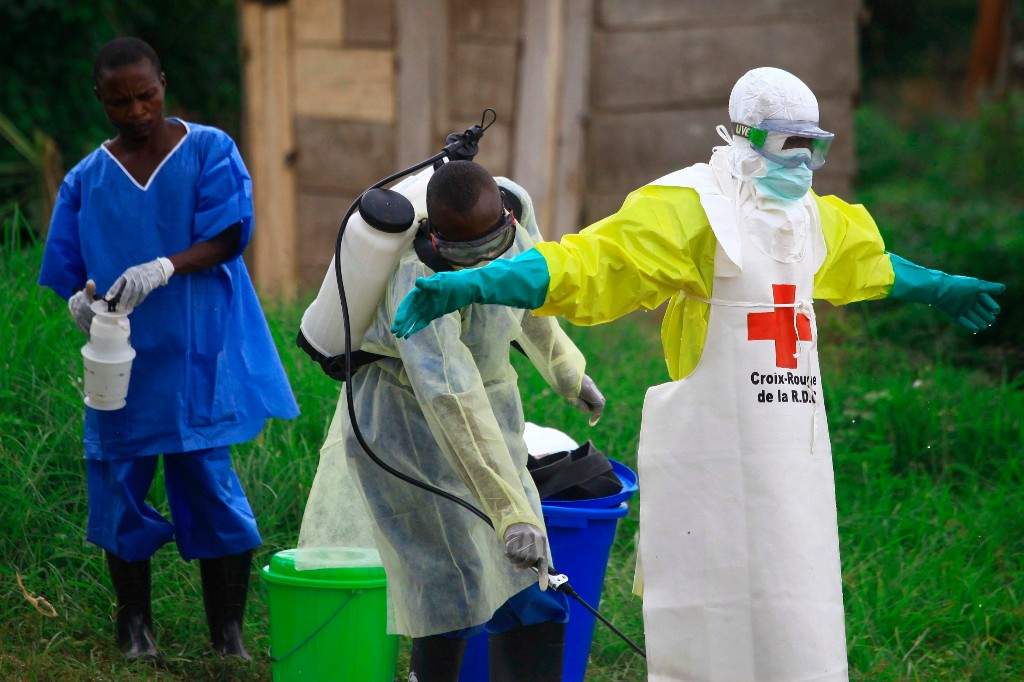
Imagine a team of outsiders arriving in your village dressed in white, moon-suit hazmat gear. They speak a different dialect. They take your symptomatic daughter away behind a plastic tarp, and if she dies, they tell you that you cannot bury her according to the traditions of your ancestors. They tell you her body must be bleached and burned, or placed in a body bag by strangers.
Would you trust them?
Of course not. You would hide your sick. You would spirit them away through the backwoods to traditional healers, inadvertently sowing the seeds of the next cluster. The true battleground of an outbreak is never just the isolation ward; it is the fragile, easily shattered space of human trust.
The Tools We Misunderstand
We live in an era of unprecedented medical advancement, and this is where the narrative often gets distorted. People hear about a global emergency and assume we are completely defenseless, trapped in a cinematic rerun of medieval plagues.
That is a mistake.
We have weapons now that previous generations could only dream of. The Ervebo vaccine, a triumph of modern biotechnology, offers a shield. It is highly effective when deployed correctly through a strategy known as ring vaccination. You find an infected person, you trace every contact they had, and you vaccinate a "ring" around them to wall the virus in.
But a vaccine in a vial is useless if the refrigerator keeping it cold loses power. It is useless if the road to the village has been washed away by torrential rains, or if armed rebel groups are firing on the health workers trying to deliver it. The science is solved; the logistics are a nightmare.
There are also therapeutics now, monoclonal antibodies like mAb114 and REGN-EB3, which can radically improve survival rates if administered early. Notice that caveat: if administered early.
But how do you get early treatment when the nearest clinic is a six-hour walk, or when entering that clinic carries the stigma of a death sentence? The gap between clinical efficacy and real-world execution is where thousands of lives are lost.
The Cost of Looking Away
There is a predictable choreography to international health crises.
First comes the discovery, quiet and localized. Then comes the slow build-up of cases, followed by the sudden realization that the containment lines have failed. Next is the declaration—the moment the world briefly looks up from its collective smartphone to glance at Central or West Africa. Funding flows. Cameras arrive.
Then, the curve flattens slightly, the news cycle shifts to an election or a celebrity scandal, and the attention evaporates.
This cyclical amnesia is our greatest vulnerability. The infrastructure required to stop an outbreak before it becomes a global emergency cannot be built during the emergency itself. It must be built during the quiet years. It requires training local nurses, establishing reliable diagnostic labs, ensuring that basic personal protective equipment is stocked in everyday health centers, and building relationships with community leaders so that when the white suits inevitably arrive, they are met with cooperation rather than stones.
When we ignore the health systems of distant, impoverished regions, we are not practicing isolationism; we are practicing blindness. In an interconnected world, a fever in a remote province is an existential threat to an airport hub on the other side of the planet. The virus does not care about passports, budgets, or sovereignty. It only cares about finding the next warm body.
The Weight of the Aftermath
If you survive Ebola, the story does not end when the blood tests come back negative.
Survivors enter a strange, purgatorial existence. The virus can linger for months in immunologically privileged sites in the body, like the eyes or the reproductive system. Beyond the physical sequelae—the joint pain, the chronic fatigue, the blurred vision—there is the social ghost.
Neighbors look askance. Landlords evict. Employers find reasons to let you go. You become a living monument to a collective trauma that everyone is trying desperately to forget.
Think back to Marie, our hypothetical mother. If she survives the infection that took her son, she returns to an empty home in a community that is terrified of her breath. The virus has not only dismantled her family; it has unstitched her place in the world.
The declaration from Geneva is not a call to panic. Panic is loud, chaotic, and utterly useless. Panic builds walls where it should build bridges. Instead, the declaration should be read as a somber reminder of our shared biological destiny.
The health workers currently putting on heavy rubber boots in the stifling heat, sweating through three layers of protective gear while listening to the rhythmic beep of a makeshift field hospital, are not just fighting to save a village. They are holding the line for everyone.
The true test of global health security is not whether we can generate a headline that frightens the world, but whether we possess the sustained, unglamorous stamina to support those workers when the cameras turn off and the world looks away.