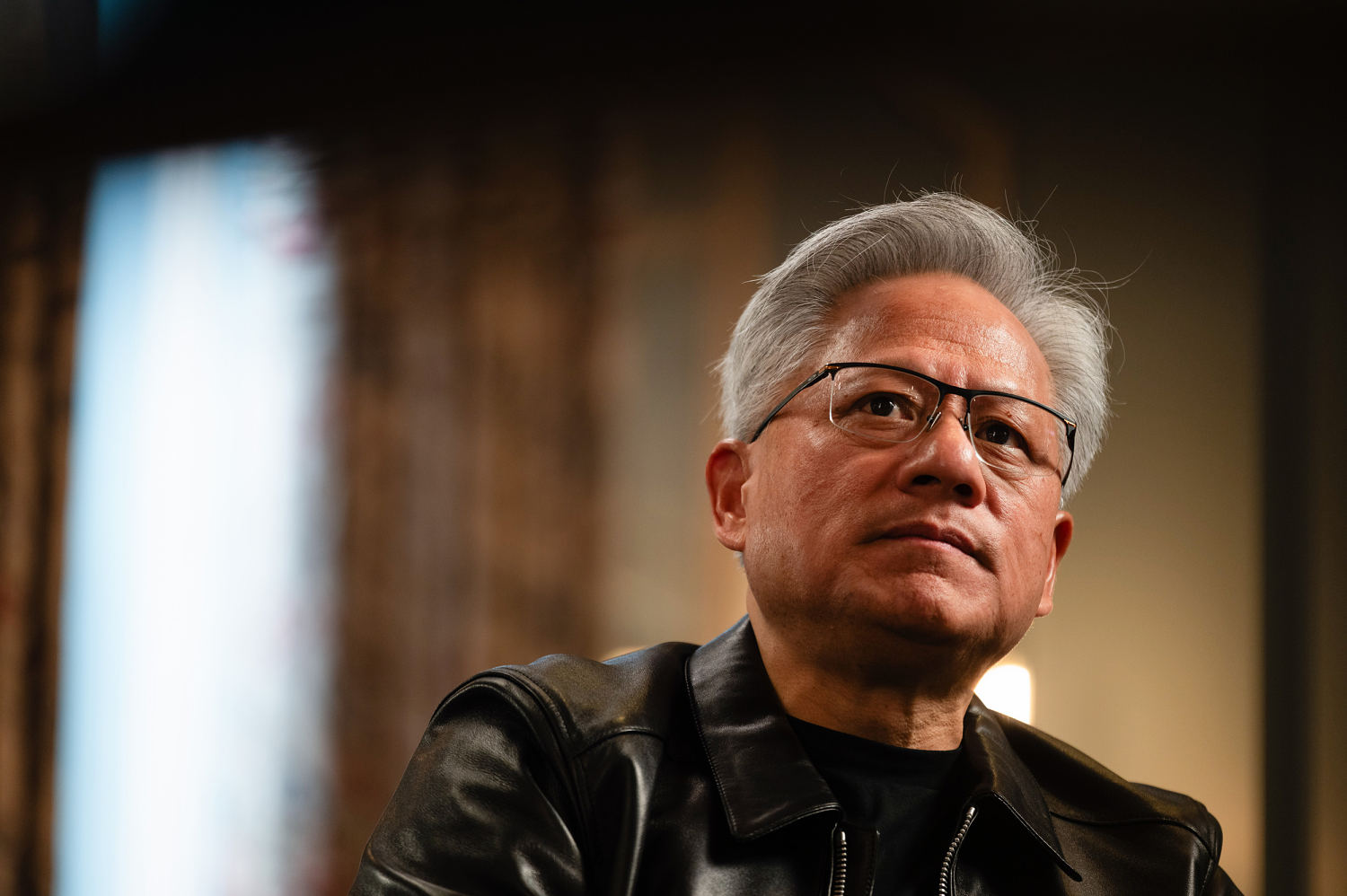
When Jensen Huang published an open statement declaring he would be honored to return as chief executive of Nvidia, he was not engaging in humble contrition. He was executing a calculated power move. His sudden resignation following internal investigations into personal conduct and compliance failures had briefly sent shockwaves through global markets, erasing billions in enterprise valuation overnight. Yet within days, the board of directors buckled under immense pressure from Wall Street, Silicon Valley venture capitalists, and Washington officials, reinstating Huang to his throne. The episode exposed a fundamental vulnerability in modern tech governance: Nvidia had become entirely incapable of existing without a single man.
The crisis began with a swift corporate ejection. Board members initiated independent reviews into personal relationships and potential export-control exposure involving third-party cloud infrastructure entities. The corporate machinery initially attempted to signal that rules apply to everyone, regardless of founder status. Huang exited quietly, but his absence immediately paralyzed the organization. Stock prices tumbled as institutional investors realized that decades of hardware dominance, proprietary software stacks, and supply chain relationships were built inside the head of one chief executive. For a closer look into similar topics, we suggest: this related article.
Huang understood his leverage perfectly. By stepping into the public eye with a carefully engineered message acknowledging personal errors while highlighting an outpouring of employee and customer support, he effectively bypassed the board. He put the burden directly onto the directors. If the market crashed further, if national security initiatives stalled, or if enterprise clients shifted orders to competitors, the board alone would bear the blame for refusing to bring back the architect of modern compute.
The Architecture of an Indispensable Founder
Modern technology conglomerates frequently claim to build institutional resilience, yet Nvidia spent thirty years doing the exact opposite. Huang consolidated operational control, technical strategy, and high-stakes geopolitical negotiations into his immediate sphere of influence. To get more context on the matter, detailed analysis can be read on Financial Times.
Chief executive officers in traditional industries delegate supplier relationships to procurement departments and leave customer relations to sales directors. Huang operated differently. He personally negotiated allocation quotas for advanced silicon packaging with overseas fabs, managed key account relationships with major cloud providers, and directed the long-term roadmap for hardware acceleration. This centralization created unprecedented executive efficiency during growth phases. It also created a single point of failure that made corporate succession impossible.
The company's software strategy reinforced this centralization. Nvidia did not merely sell graphics hardware; it constructed a closed ecosystem anchored by specialized software frameworks. Competitors tried for years to match the raw performance of CUDA-enabled silicon, but they repeatedly failed because developers were deeply locked into Nvidia's software environment. Huang directed this software-first architecture personally when critics considered graphics cards a niche product for consumer entertainment. Because the technical architecture matched his specific product intuition, substituting executive leadership meant risking the entire platform strategy.
When Huang departed, no internal executive possessed the cross-disciplinary authority required to hold the complex structure together. Senior vice presidents managed individual divisions, but none commanded the absolute authority needed to settle conflicts between hardware design teams, software optimization groups, and foundry liaison offices. The board discovered that replacing Huang did not simply mean hiring a new chief executive. It meant rebuilding the operational structure of a multi-trillion-dollar enterprise from scratch while under intense public scrutiny.
Boardroom Panic and the Flaw in Corporate Governance
Corporate boards are legally bound by fiduciary duty to protect shareholder value, yet that duty often conflicts directly with independent oversight. When Huang was forced out, major shareholders did not applaud the board for enforcing ethical standards and compliance discipline. They demanded his immediate return.
The financial market reaction was swift and unforgiving. Institutional asset managers viewed Huang's departure not as a necessary governance correction, but as an existential threat to portfolio returns. Wall Street analysts issued immediate downgrades, pointing out that ongoing supply chain expansion and custom silicon deployments required Huang's personal oversight. The board faced a immediate crisis. Enforce corporate compliance standards and watch hundreds of billions in equity value vanish, or capitulate to public pressure and restore the status quo.
Venture capital leaders and industry peers launched a coordinated public campaign to force the board's hand. Prominent figures declared that tech innovators operate under different realities and argued that personal conduct disputes should never derail industrial execution. Online petitions signed by thousands of employees flooded internal networks, demonstrating that worker loyalty lay with the founder rather than the board of directors.
This dynamic highlights a breakdown in governance mechanisms across Silicon Valley. Independent directors are meant to serve as a check on executive power. In practice, when a founder becomes synonymous with a company's financial valuation, independent directors become figureheads. The board initially tried to maintain a firm stance, issuing statements that they had no intention of reinstating the former leader. That resolve dissolved within days as market pressure intensified and key institutional stakeholders threatened legal action against the board for destroying enterprise value.
Political Pressure and the Geopolitical Chessboard
The drama inside Nvidia was never limited to corporate governance and Wall Street trading floors. Semiconductor hardware sits at the very core of global power projection, making Huang's status a matter of national economic interest.
Governments around the world treat advanced microprocessors as critical infrastructure. The supply of high-performance compute dictates national artificial intelligence development, defense research, and commercial infrastructure capabilities. In Washington, policymakers viewed the governance void at Nvidia with extreme alarm. A prolonged leadership struggle risked disrupting supply chains, delaying the deployment of domestic data center infrastructure, and creating openings for foreign competitors.
Political intervention followed rapidly. Government officials publicly emphasized the necessity of protecting domestic industrial leaders and maintaining steady execution across national compute projects. The administration recognized that Huang was one of the few figures capable of maintaining complex international supply networks while navigating tightened export control frameworks.
To settle regulatory concerns and facilitate his return, Nvidia established specialized compliance committees dedicated to export control oversight and national security protocols. A new executive-level compliance office was created to monitor internal operations and report directly to independent board committees. These structural changes allowed the board to save face publically while granting Washington the oversight guarantees it demanded. The message was clear. National strategic interests and market stability took priority over corporate governance protocols.
The Dangerous Precedent of Founder Immunity
The rapid reinstatement of Jensen Huang sets a troubling precedent for corporate leadership across the technology sector. It proves that if a chief executive grows a company large enough and makes its products essential enough, that executive becomes functionally untouchable.
This is not the first time a major technology firm has witnessed a chaotic founder dismissal followed by an immediate rehiring driven by employee and investor rebellion. The pattern is becoming a standard operational playbook. A board identifies serious conduct or governance issues, attempts to enforce institutional policy, faces immediate market panic and operational revolt, and ultimately surrenders.
Such outcomes strip corporate boards of meaningful authority. When directors know that firing a founder will trigger immediate shareholder retaliation and political pushback, they stop enforcing meaningful boundaries. Executive accountability becomes an illusion preserved only for mid-level managers and replaceable executives, while top-tier founders operate above institutional oversight.
Nvidia survived the immediate scandal, and its stock price recovered as soon as Huang reclaimed his desk. The core structural vulnerability remains unaddressed. The company remains dependent on a single individual whose presence guarantees market dominance and whose absence threatens structural collapse.
By bringing Huang back, the board resolved its short-term financial crisis, but it permanently compromised its own authority. The market celebrated the return of the executive who built the silicon empire. Yet the fundamental question facing investors, regulators, and employees remains unanswered. What happens when the day eventually arrives when Jensen Huang cannot come back?