When Britain's biggest defence company announces it's cutting more than 1,000 jobs, the immediate knee-jerk reaction is always the same. People assume the business is struggling.
They couldn't be more wrong.
On November 18, 2026, BAE Systems confirmed plans to eliminate up to 1,070 positions across its UK operations. The headline looks grim. Yet just days earlier, the contractor reported securing £33 billion in orders during 2026, alongside forecasting 10% to 12% profit growth for the year. Just over a week after the layoff news broke, the company landed another £4.5 billion military deal for combat vehicles.
So why is a wildly profitable arms manufacturer with a massive order book slashing headcount? If you've ever watched large defence contractors operate from the inside, this isn't a sign of collapse. It's a calculated restructuring of corporate bloat while trying to survive government procurement bottlenecks.
The Numbers Behind the BAE Systems Job Cuts
Most news coverage lumps the 1,070 figure together as one giant hit to British manufacturing. Look closer at the breakdown, and a completely different picture emerges.
BAE Systems employs roughly 50,000 people across the UK. Cutting 1,070 roles equals about 2.1% of its total British workforce. Over the past six years, fueled by surging global military budgets following Russia's 2022 invasion of Ukraine, BAE expanded its UK headcount from around 35,000 to 50,000. Even after every single one of these redundancies goes through, the company will still employ nearly 14,000 more workers in Britain than it did in 2020.
The real story isn't the total number. It's where the axe is falling.
- Head office overhead: Roughly 130 of the 1,000 staff at BAE's London headquarters face redundancy. That's 13% of the corporate centre—making head office workers 2.5 times more exposed than air sector employees.
- Air sector engineering and support: Around 940 of the 18,500 employees in the air division are affected, representing roughly 5.1% of that unit.
- Regional impact: According to ITV News, approximately 900 of these losses will hit BAE's major Lancashire aerospace hubs in Warton and Samlesbury. Meanwhile, the submarine shipyard at Barrow-in-Furness remains untouched.
BAE isn't gutting its production capacity. Shopfloor manufacturing staff, aircraft maintenance crews stationed at RAF bases, and early-career trainees are explicitly excluded from the cuts. The company is pursuing these reductions through voluntary redundancies rather than forced layoffs, targeting back-office, administrative, and non-production layers that swelled during years of rapid hiring.
Why a Profitable Defence Giant Is Trimming Staff
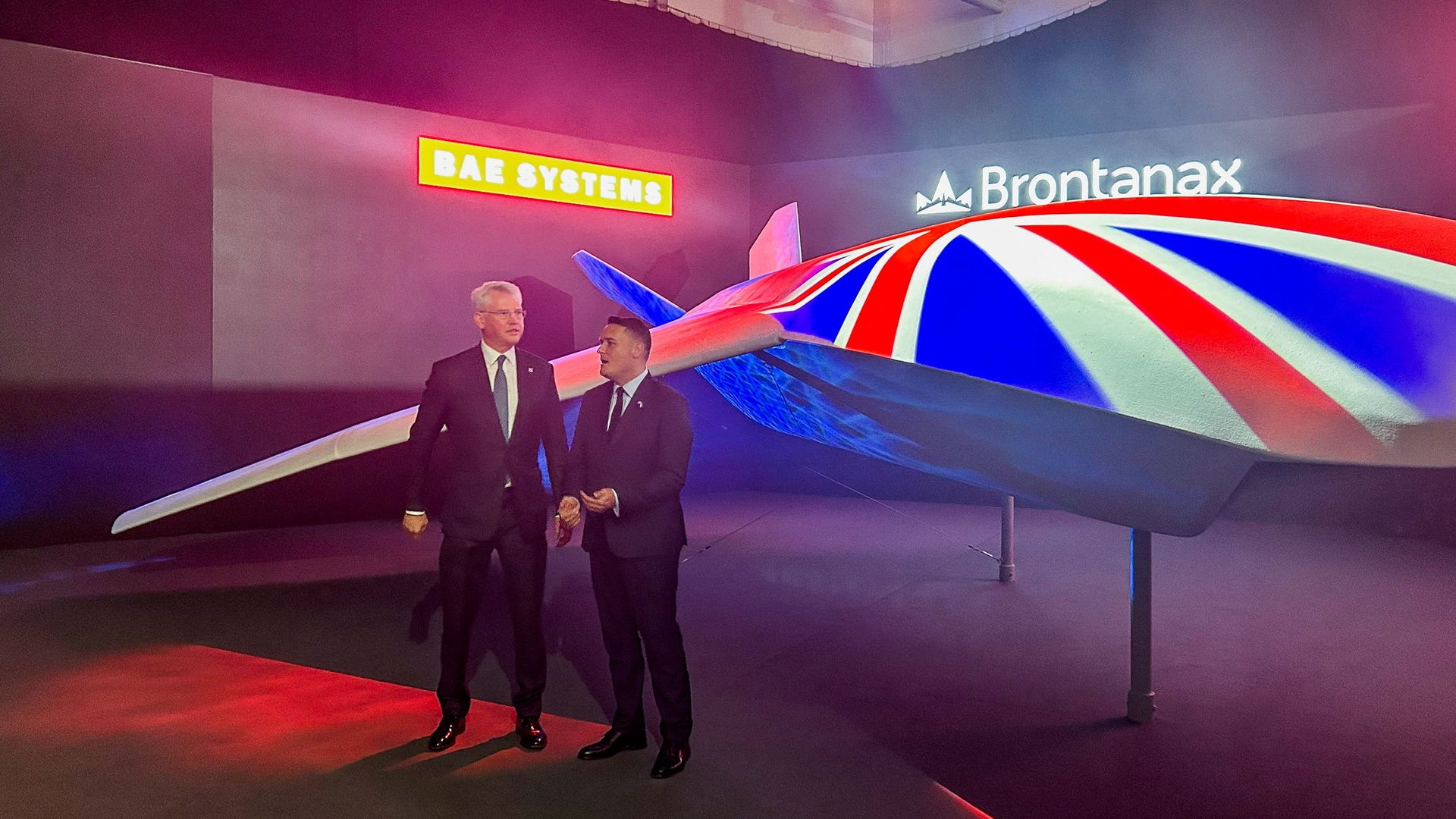
If you ask BAE Systems why this is happening, management points to speed. Modern military customers don't want ten-year procurement cycles anymore. They want rapid delivery and lower overhead costs per pound spent. In July 2026, BAE unveiled Brontanax, an uncrewed collaborative combat aircraft, at the Farnborough International Airshow. Developing autonomous systems requires leaner, faster engineering workflows than traditional legacy fighter jet assembly.
Ask the trade unions, and you'll get a much sharper political diagnosis.
Unite general secretary Sharon Graham immediately blamed Westminster. Her argument cuts straight to the core of British industrial policy: the UK government has dragged its feet on placing domestic orders for Eurofighter Typhoon jets and next-generation combat aircraft. Earlier in 2026, BAE's own leadership publicly urged ministers to publish Britain's delayed military spending plan.
When governments hesitate on big-ticket aerospace contracts, production lines face dangerous gaps between programmes. Companies can't keep hundreds of white-collar project managers and support staff sitting idle while politicians debate defence reviews. Conservative MP Andrew Snowden, representing Lancashire, echoed this frustration, pointing out the contradiction of ministers praising apprenticeship boosts one day while Britain's largest defence employer announces nearly a thousand regional job cuts the next.
The AI Myth in 2026 Layoffs
Whenever a major corporation trims corporate roles in 2026, tech pundits automatically blame artificial intelligence.
Don't fall for that narrative here. Neither BAE Systems nor the unions cited AI, automation, or software replacement as a driver for these cuts. Defence aerospace operates under strict security clearances, export controls, and regulatory oversight that prevent overnight AI substitution. This isn't a Silicon Valley efficiency purge. It's classic heavy-industry cycle management combined with corporate bureaucracy trimming.
How 2026 Compares to BAE's 2017 Restructuring
We've seen this movie before in Lancashire, though the plot has changed dramatically.
Back in 2017, BAE Systems announced nearly 2,000 job losses, putting 1,400 military air roles at risk—including 750 at Warton and Samlesbury. Back then, the company was genuinely starved of work. Typhoon final assembly was slowing down, Hawk trainer jet production was winding up, and export orders had dried up.
Today's restructuring happens in the exact opposite environment. Global demand for military hardware is near historic highs. BAE raised its annual free cashflow guidance by 50% in 2026, jumping from roughly £2 billion to £3 billion. Cutting 1,070 roles during a cashflow boom proves that corporate fat accumulates even in booming sectors—and shareholders eventually demand margin discipline regardless of top-line revenue.
What Affected Workers and Suppliers Need to Do Now
If you work at Warton, Samlesbury, or the London head office—or run a Tier 2 or Tier 3 supplier feeding into BAE's air division—don't wait for union negotiations to conclude before protecting your position.
- Audit your role's proximity to physical delivery. BAE drew a hard line protecting shopfloor assembly, RAF base maintenance, and apprentice pipelines. If your job sits in program administration, corporate strategy, or indirect support, treat your department as actively in scope.
- Evaluate voluntary severance terms carefully. Because BAE wants to hit the 1,070 target voluntarily, early-exit packages in the first consultation wave usually carry stronger financial terms than later rounds. Run the numbers on enhanced redundancy payouts against current local aerospace demand before volunteering.
- Look across the UK defence sector immediately. Britain's defence industry isn't shrinking—capital is simply shifting between divisions. Babcock just signed an £8.7 billion, five-year Ministry of Defence deal to maintain the UK's submarine fleet, and BAE's own land and maritime units continue expanding. Security-cleared engineers and project managers remain scarce across naval, cyber, and unmanned systems.
- Watch Westminster's Typhoon and CCA contract decisions. If ministers unlock fresh domestic orders for Typhoon upgrades or collaborative combat aircraft over the coming months, hiring freezes in Lancashire engineering teams will thaw quickly. Keep your CV updated and maintain active contacts across competing prime contractors like Rolls-Royce, Leonardo UK, and MBDA while the consultation window plays out.