The Rohingya displacement crisis persists because the international community treats an active geopolitical deadlock as a humanitarian logistics problem. Over one million Rohingya refugees remain warehoused in Bangladesh’s Cox’s Bazar district and on Bhasan Char island, trapped between a host nation experiencing acute resource exhaustion and a home state whose military apparatus engineered their expulsion. Standard diplomatic commentary frames this stalemate around abstract deficits in "international solidarity" and "accountability." That framing obscures the operational reality. Repatriation remains impossible not because global actors lack empathy, but because the incentive structures governing Myanmar’s State Administration Council (SAC), regional neighbors, and Western donors actively reward stasis over resolution.
To understand why the road home remains closed, analysts must strip away diplomatic rhetoric and examine the crisis as an equilibrium system. Three structural mechanisms sustain this equilibrium: asymmetric burden-sharing in humanitarian financing, the decoupling of legal accountability from physical leverage, and the weaponization of citizenship law as an administrative barrier to return.
The Structural Failure of International Solidarity
In international relations, "solidarity" is an unquantifiable sentiment until translated into fiscal transfers and resettlement quotas. When measured through capital flows and legal commitments, global solidarity for the Rohingya operates as a containment strategy rather than a resolution mechanism.
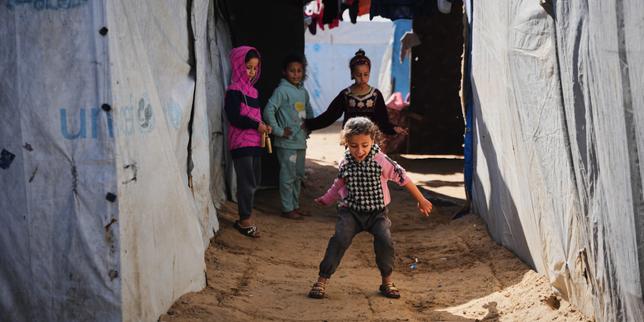
Donor nations, primarily the United States, the United Kingdom, and European Union member states, fund the Joint Response Plan (JRP) coordinated by the United Nations High Commissioner for Refugees (UNHCR) and the International Organization for Migration (IOM). This capital keeps over a million people alive in temporary bamboo-and-tarpaulin shelters. Yet funding consistently falls short of operational requirements, creating a predictable annual contraction in per-capita aid. When World Food Programme (WFP) rations drop, malnutrition rates climb, and camp security deteriorates as illicit economies fill the vacuum left by formal aid.
This financing model creates a perverse principal-agent problem:
- The Host State Trap: Bangladesh absorbs the immediate negative externalities of the crisis—deforestation in the Teknaf peninsula, depressed local wages, strained municipal infrastructure, and escalating internal security threats from armed factions operating within the camps. Dhaka’s refusal to permit formal integration, permanent housing, or legal employment stems from a rational fear that local integration permanently absolves Myanmar of its demographic obligations.
- The Donor Containment Dividend: Western donors pay a fraction of the cost required to resettle refugees domestically by subsidizing their containment in South Asia. Third-country resettlement programs absorb only a statistically negligible fraction of the population annually.
- The Regional Defection: ASEAN states operate under the principle of non-interference, preventing collective regional pressure on Naypyidaw while simultaneously interdicting Rohingya maritime vessels in the Andaman Sea. Neighboring states treat the displaced population as a border security threat rather than a regional labor or humanitarian responsibility.
Solidarity, in practice, has meant paying Bangladesh just enough to keep the camps from collapsing while refusing to alter the geopolitical cost-benefit calculus of the perpetrators in Myanmar.
Accountability Without Enforcement Leverage
Legal accountability mechanisms targeting Myanmar’s military—the Tatmadaw—represent a landmark in international jurisprudence, yet they exert zero immediate coercive effect on repatriation conditions. Three distinct legal tracks currently operate in parallel:
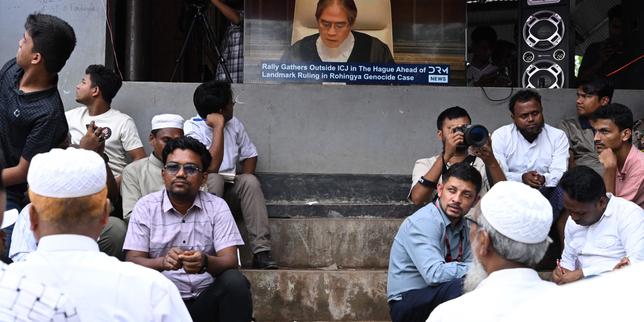
- The International Court of Justice (ICJ): The Gambia’s case alleging violations of the 1948 Genocide Convention resulted in provisional measures ordering Myanmar to prevent genocidal acts and preserve evidence. The ICJ operates at the pace of sovereign litigation; final merits rulings take years, and enforcement relies entirely on the United Nations Security Council, where permanent members hold veto power.
- The International Criminal Court (ICC): Because Myanmar is not a party to the Rome Statute, the ICC’s jurisdiction is restricted to crimes where at least one element occurred on the territory of a state party—specifically, the crime of forced deportation into Bangladesh. This jurisdictional constraint limits the scope of prosecution and excludes atrocities committed entirely within Rakhine State.
- Universal Jurisdiction Cases: Filings in jurisdictions like Argentina invoke universal jurisdiction to pursue arrest warrants against senior military and civilian officials. While symbolically potent, these warrants only restrict international travel to cooperating states; they do not degrade the Tatmadaw’s domestic coercive capacity.
The disconnect between courtroom progress and ground-level security illustrates a fundamental flaw in liberal institutionalism: retributive justice does not automatically produce restorative security. A commander facing an indictment in The Hague or Buenos Aires has zero incentive to surrender territorial control or grant political rights to a population whose testimony forms the evidentiary basis of that prosecution. In fact, external legal pressure without accompanying military or economic coercion hardens the regime’s internal cohesion, making concessions on Rohingya citizenship politically suicidal for the junta.
The Administrative Architecture of Statelessness
Discussions of repatriation frequently stall on physical security, ignoring the statutory machinery that renders the Rohingya legally nonexistent inside Myanmar. Even if active combat in Rakhine State ceased tomorrow, the administrative framework designed to prevent permanent return remains intact.
The core mechanism is the 1982 Citizenship Law. This statute categorizes citizens into three tiers—full, associate, and naturalized—and restricts full citizenship to taingyintha (national races) deemed to have settled in Myanmar prior to 1823, the year before the first Anglo-Burmese War. By excluding the Rohingya from the official list of 135 recognized ethnic groups, the law converted an indigenous population into illegal Bengali immigrants overnight.
Subsequent administrative measures systematically stripped the population of documentary proof of residency:
- Document Confiscation: Over three decades, state authorities invalidated National Registration Certificates, replaced them with temporary White Cards, and subsequently revoked those cards prior to the 2015 general election.
- The National Verification Card (NVC) Trap: Naypyidaw insists that returning refugees accept the NVC as a prerequisite for repatriation. For the Rohingya, accepting an NVC requires self-identifying as foreigners applying for naturalized status, effectively signing away their claim to indigenous citizenship and accepting permanent second-class legal standing.
- Physical Erasure and Demographic Engineering: Following the 2017 clearance operations, the state bulldozed hundreds of Rohingya villages, erected security installations over former residential zones, and redistributed agricultural land. Repatriation under current conditions means returning not to ancestral homes, but to closed transit camps and internal displacement sites indistinguishable from the camps in Bangladesh.
Without the repeal or fundamental amendment of the 1982 Citizenship Law, repatriation is merely geographic relocation from an open-air camp in Bangladesh to an internment camp in Myanmar.
Geopolitical Realignment Inside Rakhine State
Standard analyses treat the Rohingya issue as a bilateral dispute between Myanmar’s central government and the displaced population, mediated by Bangladesh. The territorial reality inside Rakhine State has invalidated that model.
The Arakan Army (AA), the armed wing of the United League of Arakan, has systematically dismantled the Tatmadaw’s military control across northern and central Rakhine State, including the critical border townships of Maungdaw and Buthidaung adjacent to Bangladesh. The junta no longer controls the physical territory to which the Rohingya would return.
This shift introduces acute operational complications:
- The Dual-Front Squeeze: Caught between a collapsing junta and an ascendant ethnic Rakhine insurgent force, Rohingya civilians remaining in Rakhine State face forced conscription by the Tatmadaw—deployed as human shields and cannon fodder—and retaliatory displacement by the AA, which views Rohingya armed groups aligned with the junta as existential threats to Arakanese self-determination.
- The Diplomatic Vacuum: Bilateral repatriation agreements negotiated between Dhaka and Naypyidaw are operationally dead. The SAC cannot guarantee safe passage or security in border zones it no longer governs. Meanwhile, international diplomatic protocols prevent the UN and Bangladesh from establishing formal state-to-state repatriation treaties with a non-state armed group like the AA.
- Chinese Strategic Hedging: Beijing’s primary objective in Rakhine State is protecting the China-Myanmar Economic Corridor (CMEC), specifically the Kyaukphyu deep-sea port and oil-gas pipelines terminating in Yunnan. China brokers ceasefires and facilitates symbolic repatriation pilot projects solely to stabilize infrastructure corridors, prioritizing asset security over human rights or citizenship restoration.
Operational Limitations of Current Interventions
Practitioners designing interventions for this crisis must confront hard constraints. No policy lever currently available resolves all variables simultaneously.
- Sanctions Regimes: Targeted financial sanctions on military conglomerates like Myanmar Economic Holdings Limited (MEHL) and Myanmar Economic Corporation (MEC) restrict hard currency flows to the junta, yet regional trade networks in China, India, and Thailand absorb enough resource exports (timber, jade, rare earths, natural gas) to keep the military apparatus operational.
- Pilot Repatriation Schemes: Small-scale, brokered returns of several hundred individuals serve diplomatic optics for Beijing and Naypyidaw while failing the UNHCR standard of voluntary, safe, and dignified return. Without freedom of movement, livelihoods, and citizenship, pilot returnees simply re-enter a closed surveillance system.
- Camp Self-Reliance Initiatives: Expanding education, vocational training, and formal labor access inside Cox’s Bazar improves immediate human capital and reduces camp criminality. However, Dhaka views any step toward permanence as a direct threat to its national security doctrine, creating continuous friction between host authorities and humanitarian agencies.
The Strategic Pivot Required to Break the Stalemate
Continuing to fund emergency relief while waiting for the junta to restore citizenship guarantees a multi-generational refugee crisis. Breaking the equilibrium requires shifting capital and diplomatic pressure toward the actual power brokers on the ground.
First, donor nations and Bangladesh must abandon bilateral repatriation frameworks with Naypyidaw and establish structured, pragmatic channels of engagement with the United League of Arakan and the National Unity Government (NUG). Any viable return framework requires security guarantees from the Arakan Army, which controls the border, alongside formal policy commitments from the NUG to abolish the 1982 Citizenship Law in a post-junta federal constitution. International aid agencies should condition future cross-border humanitarian assistance into Rakhine State on verifiable, non-discriminatory protection benchmarks enforced by local administrative authorities.
Second, humanitarian financing must transition from annual emergency appeals to multi-year development grants tied to host-community infrastructure in Bangladesh. Donors must compensate Dhaka directly for environmental degradation and public service strain through concessional financing and trade preferences, contingent on Bangladesh permitting formal primary and secondary education using the Myanmar curriculum and regulated work permits within Cox’s Bazar. Transforming the camp population from aid-dependent detainees into an educated, economically productive workforce lowers the fiscal burden on donors, stabilizes camp security, and prepares the Rohingya to rebuild Rakhine State once the military conflict reaches a political settlement.