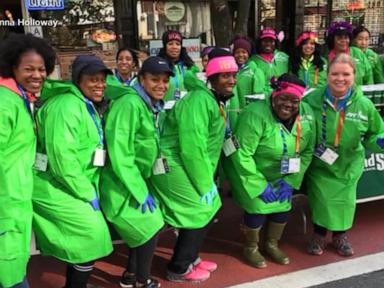
Executing a mass-participation endurance event across five densely populated urban boroughs requires a temporary logistics network rivaling mid-sized military supply chains. While media coverage routinely frames the New York City Marathon volunteer corps through human-interest narratives of civic pride, the operational reality is a strict exercise in distributed labor management, queue theory, and risk mitigation. Without approximately 10,000 to 12,000 unpaid personnel executing synchronized tasks across a 26.2-mile linear footprint, the New York Road Runners (NYRR) could not legally or physically stage the event. Understanding how this temporary organization functions exposes the mechanics of zero-margin event logistics, where a single bottleneck in fluid distribution or baggage transport cascades into systemic safety failures.
The Structural Economics of Unpaid Event Labor
A commercial enterprise attempting to staff a 24-hour operational window with 12,000 workers at New York City minimum wage rates would incur millions of dollars in direct payroll, payroll taxes, and workers' compensation insurance before purchasing a single paper cup. The marathon circumvents this cost barrier by converting civic engagement into structured labor. This model relies on a non-monetary value exchange: participants trade physical exertion and time for social capital, exclusive access to a globally recognized cultural event, and structured community affiliation.
From a labor economics perspective, this creates a distinct operational challenge known as principal-agent divergence without financial recourse. In traditional employment, management enforces compliance through wage retention or termination. In a volunteer ecosystem, organizers cannot fire a worker who abandons a post at 6:00 AM due to freezing rain. Event architects must replace financial incentives with extreme procedural simplification and psychological ownership.
To prevent attrition and execution failure, NYRR segments the workforce into specialized functional nodes rather than treating volunteers as interchangeable generalists. This division of labor mirrors Taylorist scientific management principles, stripping away task ambiguity so an untrained individual can achieve peak operational output within ten minutes of arriving on site.
The Four Operational Pillars of Marathon Logistics
A comprehensive breakdown of the marathon's volunteer infrastructure reveals four distinct functional layers. Each layer addresses a specific physical constraint of moving over 50,000 runners through constrained urban corridors.
1. Pre-Race Staging and Crowd Compression (Fort Wadsworth)
The logistical funnel begins at Fort Wadsworth on Staten Island, hours before the first starting gun fires. Here, the primary engineering problem is high-density human storage and controlled release. Thousands of athletes arrive via ferry and bus, requiring rapid security screening, bib verification, and wave sorting.
Volunteers in this sector act as human traffic control valves. Their function is governed by Little's Law in queue theory: the long-term average number of items in a stationary system equals the long-term average effective arrival rate multiplied by the average time that an item spends in the system. If volunteer-managed checkpoints slow the arrival rate into the starting corrals, queues back up onto the Verrazzano-Narrows Bridge access roads, delaying the entire broadcast and street-closure schedule. Volunteers mitigate this by executing binary checks—verifying corral colors and bib numbers visually without engaging in conversational troubleshooting, which is offloaded to dedicated information tents.
2. High-Velocity Hydration and Nutrition Nodes
Along the 26.2-mile course, fluid stations represent the highest-risk kinetic zones for both runners and workers. A typical marathon station must distribute hundreds of thousands of cups of water and electrolyte beverages within a compressed four-hour window.
The mechanics of a fluid station operate on an assembly-line model divided into three sub-roles:
- The Pourers: Positioned behind tables, responsible for maintaining a continuous buffer of filled cups. The optimal fill level is strictly between one-third and one-half capacity; overfilling wastes liquid and creates slick asphalt hazards, while underfilling forces runners to grab multiple cups, doubling paper waste and slowing pace.
- The Presenters: Positioned at the edge of the flow, holding cups at chest height with extended arms. This posture allows a runner moving at 6 to 10 miles per hour to execute a clean handoff without breaking stride or colliding with static table edges.
- The Sweepers: Equipped with brooms and rakes, operating in the immediate aftermath of the elite and sub-elite waves. Crushed paper cups create a frictionless layer on asphalt that causes acute ankle and knee injuries. Sweepers must clear the tarmac during micro-gaps in runner density, requiring high situational awareness.
3. Medical Triage and Biometric Monitoring
While licensed physicians, nurses, and EMTs handle acute clinical interventions, non-medical volunteers form the critical outer perimeter of the medical tent architecture. Their primary function is early detection and administrative intake.
Stationed along the final stretch in Central Park and inside the post-finish chute, spotters monitor runners for visual indicators of exertional heat stroke, hyponatremia, and severe hypoglycemia—specifically ataxia (loss of motor coordination), glazed expressions, or erratic lateral movement. When a runner collapses, volunteers do not administer medical care; they execute immediate spatial isolation, clearing surrounding runners to prevent secondary trampling, and signal roving medical teams. Inside the tents, volunteer scribes log patient arrival times, core temperature readings, and fluid administration, ensuring clinical staff remain focused entirely on stabilization rather than data entry.
4. Post-Finish Decompression and Baggage Retrieval
Crossing the finish line does not end the logistical challenge; it shifts the problem from forward propulsion to rapid dispersal. Central Park West and the surrounding Upper West Side streets have finite spatial capacity. If runners stop moving immediately past the timing mats, the finish chute backs up, trapping incoming athletes in freezing conditions while their core body temperatures plummet.
Finish-line volunteers enforce continuous forward momentum. Through vocal cadence and physical gesturing, they keep athletes walking through the sequential distribution of heat sheets (Mylar blankets), medals, and recovery bags. Concurrently, baggage volunteers manage a massive spatial sorting algorithm. Tens of thousands of checked bags, transported from Staten Island via UPS trucks, must be unloaded, sequenced by bib number, and retrieved within seconds of a runner approaching the designated truck. Failure in this sorting phase creates immediate crowd crush conditions in the exit avenues.
Cause-and-Effect Mechanics of Systemic Bottlenecks
Amateur analyses of large-scale events often assume that adding more volunteers linearly increases operational capacity. In practice, over-staffing constrained zones induces congestion and communication breakdown. The relationship between volunteer headcount and throughput follows a diminishing marginal returns curve that eventually turns negative.
Consider a standard fluid station on Fourth Avenue in Brooklyn. The physical length of the table array dictates the maximum number of runners who can access water simultaneously. If organizers double the number of volunteers behind those tables without extending the linear footage of the tables, workers collide with one another, drop boxes of cups, and obstruct the pouring workflow.
A second critical cause-and-effect chain involves environmental variables. Ambient temperature dictates runner fluid consumption rates. On an unseasonably warm November morning (temperatures exceeding 65 degrees Fahrenheit), runner hydration demand spikes, and medical tent admissions rise exponentially. A 15-degree temperature increase does not merely require 15 percent more water; it accelerates cup depletion rates to the point where pouring teams cannot replenish tables faster than runners strip them. Once a table goes dry, runners stop entirely to wait for pours, instantly transforming a moving stream of athletes into a stationary wall that blocks the course.
Operational Limitations and Failure Modes
Relying on a largely transient, single-day volunteer workforce introduces structural vulnerabilities that event directors must actively engineer around. No operational framework eliminates these inherent constraints.
The Training Deficit
Most marathon volunteers receive less than thirty minutes of on-site briefing on race morning, supplemented by digital orientation packets that many do not read thoroughly. Consequently, institutional knowledge resets to zero every year outside of the core cohort of volunteer captains. Complex decision-making cannot be delegated to the front lines. If a scenario falls outside standard operating procedures—such as a sudden security reroute or a localized supply truck breakdown—front-line volunteers lack the systemic context to improvise safely.
Asymmetric Attrition
Volunteer no-show rates fluctuate wildly based on shift start times and weather conditions. A 4:30 AM staging shift in Staten Island during a cold rainstorm experiences vastly higher attrition than a 10:00 AM finish-line medal distribution shift in Manhattan. Organizers must over-recruit by 15 to 25 percent for early-morning and peripheral shifts to guarantee baseline operational headcount, which occasionally results in underutilized personnel if weather conditions turn unexpectedly mild.
Communication Latency
While sector captains carry two-way radios linked to the central command center, the average volunteer relies on visual cues and vocal commands. In high-decibel environments—such as the spectator-lined avenues of Manhattan—verbal instructions degrade rapidly. Passing a nuanced directive down a 200-yard hydration station takes several minutes, creating severe latency when rapid adjustments are required, such as clearing a lane for an incoming ambulance.
Strategic Framework for High-Scale Volunteer Optimization
Organizations managing massive temporary workforces—whether in endurance sports, disaster relief, or large-scale civic operations—cannot rely on goodwill to overcome structural friction. To extract maximum reliability from unpaid labor, operations directors must implement three non-negotiable protocols.
First, design roles for minimum viable cognition. Break every operational task down to a single, repeatable physical motion. Eliminate multi-step decision trees at the edge of the network. If a role requires more than two sentences to explain, split it into two distinct positions.
Second, deploy tiered redundancy based on shift friction. Calculate an attrition risk score for every operational zone using three variables: start time, transit accessibility, and weather exposure. Apply dynamic over-booking multipliers exclusively to high-friction nodes rather than across the entire roster, protecting the operational center from critical understaffing without bloating low-friction zones.
Third, establish rigid escalation boundaries. Empower front-line volunteers to execute their specific mechanical task autonomously, while strictly forbidding them from troubleshooting anomalies. Pair every cluster of fifteen to twenty general volunteers with one experienced, radio-equipped captain whose sole mandate is exception handling. By isolating routine execution from crisis management, large-scale events maintain continuous throughput under extreme environmental and logistical stress.