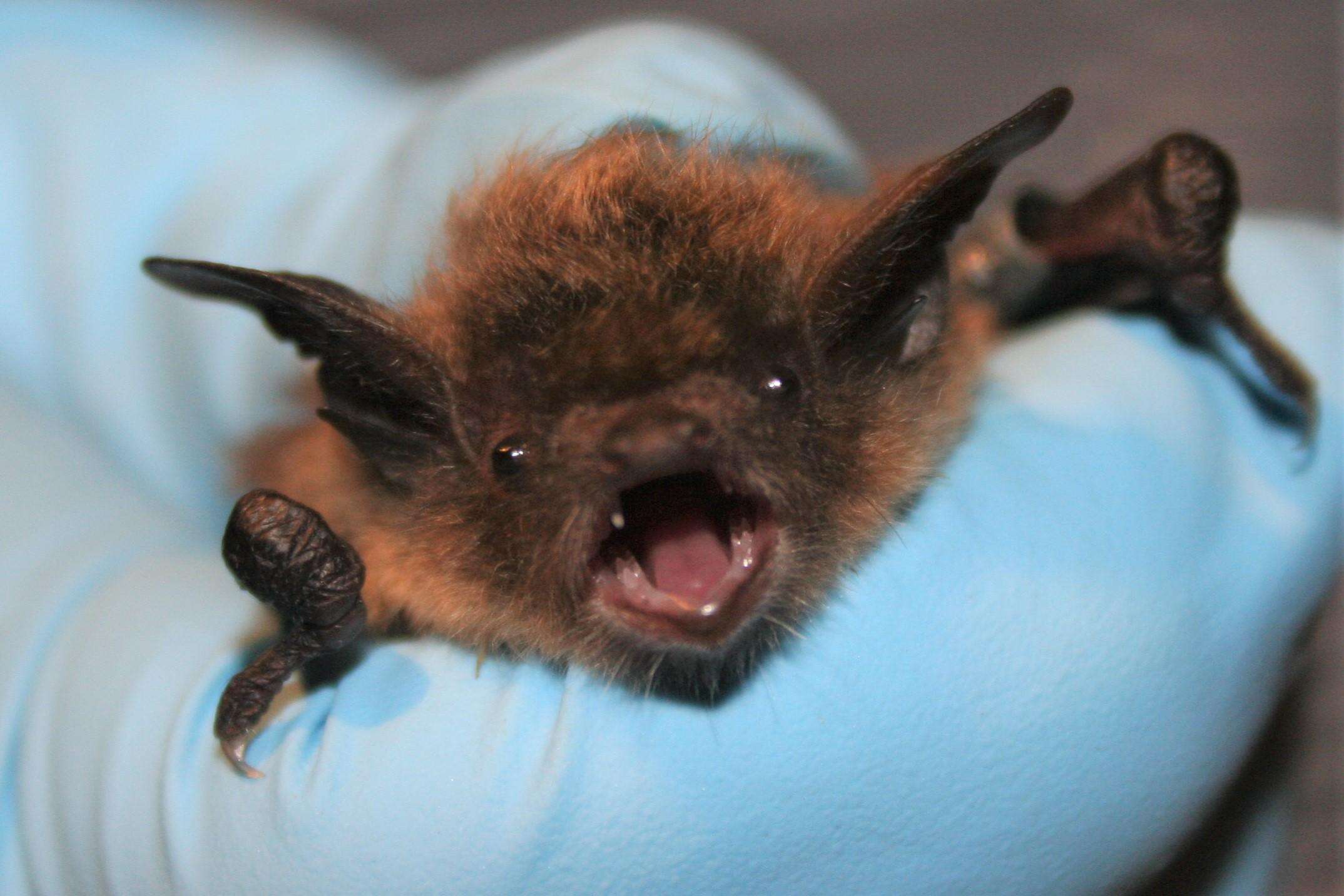
A recent fatal rabies case in Ontario involving an 11-year-old boy exposes a critical vulnerability in public health screening protocols: the reliance on visible physical trauma as a trigger for post-exposure prophylaxis (PEP). The child woke up with a bat in his room, but because there were no visible bite marks or scratches, medical evaluation did not result in the administration of the rabies vaccine. Weeks later, the infection progressed to clinical rabies, which carries a near-100% mortality rate. This systemic failure highlights a disconnect between public perception of animal vectors and the biological reality of Chiroptera (bat) morphology and viral transmission mechanics.
To prevent future diagnostic failures, public health strategies must shift from trauma-based screening to exposure-based risk modeling. Understanding this shift requires an analysis of the transmission dynamics of the rabies virus, the physical constraints of bat interactions, and the precise window of efficacy for clinical intervention.
The Micro-Pathology of Sub-Visual Transmission
The primary error in managing bat exposures is the assumption that a transmission event will leave a discernable mark. Unlike domestic canines or larger wild carnivores, whose teeth cause significant tissue lacerations, many North American bat species possess highly specialized, needle-like dentition.
Anatomy of a Bat Bite
The silver-haired bat (Lasionycteris noctivagans) and the big brown bat (Eptesicus fuscus)—two common reservoirs for the rabies virus in Canada—have teeth so small that a bite sustained during sleep rarely awakens the victim. The epidermis is punctured with minimal mechanical disruption, resulting in:
- Rapid Hemostasis: The puncture seals almost immediately, preventing sustained bleeding that would otherwise draw attention to the wound.
- Absence of Inflammation: Because the volume of saliva injected into the superficial tissue is minute, the localized immune response is negligible during the first few hours, failing to produce typical warning signs like erythema (redness) or localized edema (swelling).
- Epidermal Elasticity: The elasticity of human skin closes the micro-puncture, making visual identification impossible during a routine physical examination.
The Neurotropic Journey
Once the virus enters the tissue via saliva, it does not enter the bloodstream. Instead, it remains localized at the site of inoculation, replicating in myocytes (muscle cells) during the incubation phase. This localized period varies significantly, spanning from weeks to over a year, depending on the viral load and the proximity of the bite to the central nervous system.
[Inoculation via Micro-Puncture]
       │
       ▼
[Localized Myocyte Replication] (Variable Incubation Phase)
       │
       ▼
[Binding to Nicotinic Acetylcholine Receptors]
       │
       ▼
[Retrograde Axonal Transport via Peripheral Nerves] (~8-20mm/day)
       │
       ▼
[Spinal Cord Encephalomyelitis]
       │
       ▼
[Rapid Centrifugal Spread to Salivary Gloands & Brain]
The virus utilizes retrograde axonal transport, traveling along the peripheral nerves toward the spinal cord and brain at an estimated rate of 8 to 20 millimeters per day. Because the virus is sequestered within the nervous system, it evades circulating neutralizing antibodies. Once the virus crosses the blood-brain barrier and enters the central nervous system, widespread encephalomyelitis occurs. At this point, clinical symptoms manifest, and the disease becomes irreversible.
The Public Health Risk Matrix
To optimize clinical decision-making, public health agencies must utilize a strict exposure matrix rather than relying on physical evidence of a wound. The World Health Organization (WHO) categorizes rabies exposures into three distinct tiers, but the presence of a bat in a sleeping environment requires an immediate escalation of risk classification.
| Exposure Category | Clinical Presentation / Scenario | Required Action |
|---|---|---|
| Category I | Touching or feeding animals, licks on intact skin (No exposure). | None, if reliable history is available. |
| Category II | Nibbling of uncovered skin, minor scratches or abrasions without bleeding. | Immediate vaccination and local treatment of the wound. |
| Category III | Single or multiple transdermal bites or scratches, licks on broken skin; any direct contact with a bat unless exposure can be reliably excluded. | Immediate administration of Rabies Immune Globulin (RIG) and Rabies Vaccine. |
The Ontario failure occurred because clinical triage misclassified a bat-in-room scenario as Category I due to the lack of visible trauma, whereas epidemiological standards dictate it must be treated as Category III. When a person awakens to find a bat in their room—or when a bat is found in the room of an unattended child, a sleeping individual, or someone with cognitive impairment—exposure must be presumed.
The Economics and Logic of Prophylaxis Interventions
The decision to withhold Post-Exposure Prophylaxis (PEP) is often influenced by a lack of risk awareness or a miscalculation of the cost-benefit ratio within healthcare systems. However, when evaluated against the absolute mortality of clinical rabies, the cost function of universal PEP for qualified bat exposures becomes highly favorable.
Components of True Post-Exposure Prophylaxis
A complete PEP protocol for an unimmunized individual consists of two distinct biological mechanisms:
- Passive Immunity (Rabies Immune Globulin - RIG): This provides immediate, localized neutralizing antibodies at the site of the suspected exposure. RIG is infiltrated around the suspected bite area to neutralize the virus before it can enter the peripheral nerves. It acts as a stopgap measure during the window when the patient's immune system has not yet produced its own antibodies.
- Active Immunity (Rabies Vaccine): A series of four cell-culture vaccine doses administered on days 0, 3, 7, and 14. This stimulates the patient’s immune system to produce endogenous neutralizing antibodies, which typically appear within 7 to 10 days of the initial dose.
The primary operational constraint is timing. PEP is virtually 100% effective if administered prior to the virus entering the peripheral nervous system. It is entirely ineffective once clinical symptoms appear.
The strategy of waiting for symptoms to appear before treating a suspected case is fundamentally flawed. Clinical rabies management relies on experimental protocols like the Milwaukee Protocol (induced coma combined with antiviral medications), which has failed to show reproducible efficacy in subsequent trials and is largely discounted by global infectious disease specialists. Survival remains a statistical anomaly.
Protocols for Eliminating Diagnostic Bottlenecks
Medical institutions and public health units must overhaul their intake algorithms to eliminate subjective assessments of animal bites. The following operational directives outline the required protocol for managing potential bat exposures:
Implement Direct-Contact Triage Triggers
Any patient presenting with a history of finding a bat in an enclosed space where they were sleeping, intoxicated, or otherwise incapacitated must be fast-tracked for Category III PEP protocols. The absence of a visible wound must be explicitly documented as non-diagnostic and disregarded as a reason to withhold treatment.
Capture and Diagnostic Testing of the Vector
If the bat is still present in the environment, it must not be released. It should be safely captured by animal control services and sent to a designated public health laboratory for direct fluorescent antibody (DFA) testing of the brain tissue.
- If the bat tests negative for rabies virus antigen, PEP can be safely discontinued or withheld.
- If the bat escapes, tests positive, or cannot be recovered, the full PEP regimen must be completed without exception.
Mandate Physician Education on Neurotropic Transmission
Public health agencies must issue updated clinical advisories emphasizing that rabies transmission does not require an open, bleeding laceration. Medical curricula and continuing education platforms must reinforce the fact that Chiroptera exposures defy traditional wound-care triage models.
The Ontario tragedy proves that clinical assumptions based on visual evidence are fatal when dealing with neurotropic viruses. Public health departments must enforce a zero-tolerance policy for unmonitored bat exposures, shifting the clinical default from observation to immediate biological intervention.