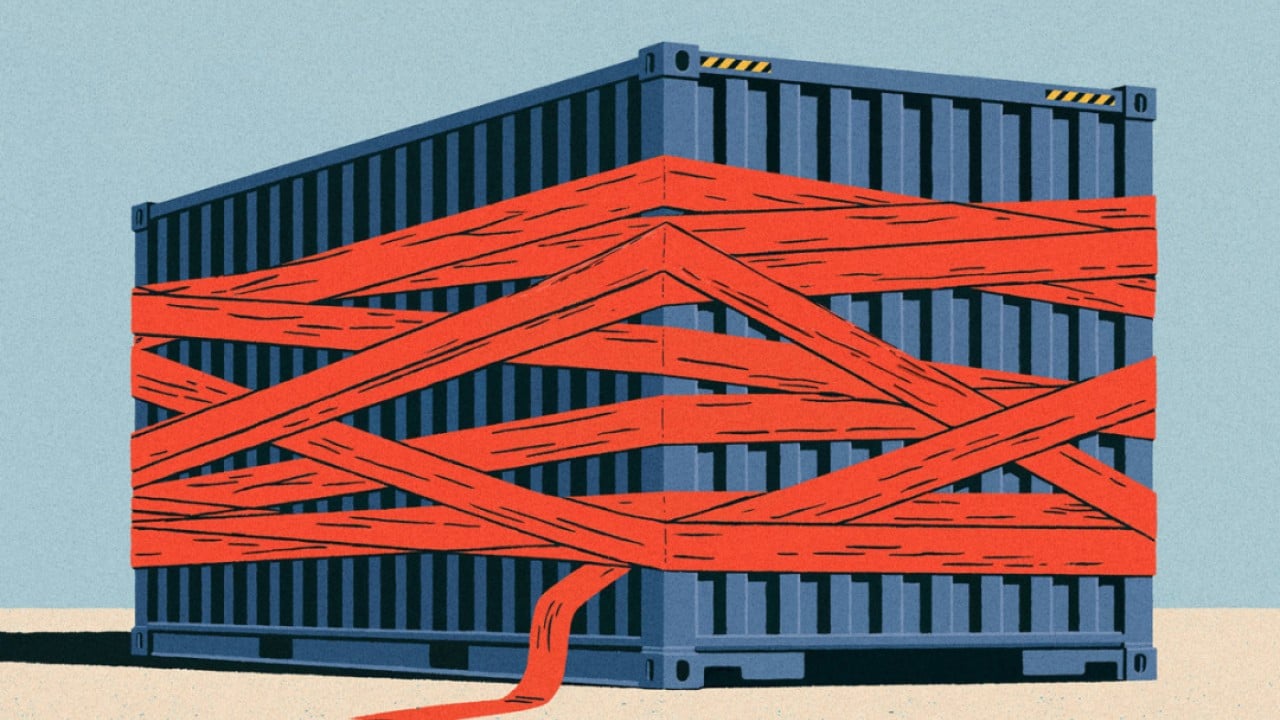
Every time Washington and Beijing announce a high-level meeting, corporate boardrooms freeze. Supply chain directors pull up spreadsheets, CFOs delay capital expenditure approvals, and legal teams scramble to interpret vague diplomatic readouts. When Xi-Trump summits happen, global companies don't need another round of theatrical handshakes or temporary tariff pauses that expire in ninety days. They need predictable rules they can actually budget around.
Right now, corporate planning across the Pacific feels like trying to build a house during an earthquake. You can't commit fifty million dollars to a new manufacturing facility in Vietnam, Mexico, or Ohio if a single social media post or impromptu press conference could upend your entire cost structure overnight. Businesses operate on three-to-five-year capital cycles, yet US-China trade policy has spent years operating on news cycles.
The Hidden Tax of Diplomatic Ambiguity
Most commentators focus on the headline tariff rates—whether duties sit at 10 percent, 25 percent, or 60 percent. That's only half the problem. Honestly, many multinational corporations can adapt to higher tariffs if they know those rates will stay put for a few years. What kills investment is not knowing what the rules will look like next quarter.
Economists at the Federal Reserve and the Bank for International Settlements have repeatedly documented how trade policy uncertainty acts as a drag on business investment. When companies can't calculate their return on investment because customs classifications, export controls, or retaliatory blacklists might shift without warning, they simply hold onto cash. Stock buybacks go up while factory construction stalls.
Consider how a mid-sized electronics manufacturer operates today. Their components might cross borders three or four times before final assembly. A lithium battery cell from one supplier, a printed circuit board from another, and rare-earth magnets processed in China all converge on an assembly line. When a summit ends with an ambiguous statement about "constructive dialogue" and "working groups," that manufacturer still has zero clarity on whether their core inputs will face new licensing requirements next month.
Why Short-Term Truces Backfire
We've seen this movie before. During the first Trump administration, the Phase One trade deal signed in January 2020 paused certain tariff escalations in exchange for Chinese purchasing commitments. While financial markets briefly cheered the truce, underlying structural disputes—industrial subsidies, intellectual property enforcement, and technology transfer—remained unresolved.
For corporate compliance teams, those rolling truces created a nightmare. Companies had to track constantly shifting exclusion lists managed by the Office of the United States Trade Representative (USTR). Thousands of businesses spent millions on trade lawyers just to apply for temporary tariff waivers that expired within a year. Instead of solving supply chain bottlenecks, stopgap deals forced companies to maintain expensive dual-track operations, keeping backup suppliers on retainer just in case talks collapsed.
What Businesses Actually Need From Xi-Trump Summits
If leaders in Washington and Beijing want their meetings to stabilize global commerce rather than rattle it, they have to move past vague communiqués. Corporate leaders aren't asking for free trade utopia. They're asking for clear guardrails.
First, both governments need to define the exact boundaries of national security restrictions. Over the past several years, the concept of national security has expanded rapidly. Under the "small yard, high fence" doctrine articulated by U.S. policymakers, export controls were supposed to target narrow, high-end military technologies like advanced semiconductors and artificial intelligence chips. In practice, businesses worry the yard keeps getting bigger while the fence keeps moving.
When executives don't know whether legacy chips, agricultural machinery, or biotech equipment will be swept into the next round of Entity List additions, they preemptively pull back from legitimate commercial partnerships. Clear, published criteria for what constitutes a restricted technology—along with predictable review timelines—would immediately lower compliance costs for thousands of firms.
Second, summits must establish transparent dispute-resolution channels that work faster than multi-year World Trade Organization litigation. When Beijing launches an anti-dumping investigation into European brandy or American agricultural goods, or when Washington imposes Section 301 tariffs, companies get caught in the crossfire with no rapid appeal mechanism. Functional bilateral working groups with actual authority to resolve customs bottlenecks and regulatory hold-ups matter far more to exporters than grand geopolitical pledges.
Third, companies need realistic transition periods whenever new rules take effect. Sudden tariff implementations or immediate export bans strand goods already sitting on container ships in the middle of the Pacific. Giving importers and exporters a standard six-to-twelve-month phase-in window allows firms to honor existing contracts and unwind inventory without taking catastrophic write-downs.
How Smart Companies Are Hedging Their Bets Right Now
Waiting around for politicians to hand over a neat, predictable trade framework is a losing strategy. The smartest operators I've spoken with across logistics and manufacturing have stopped treating US-China friction as a temporary storm. They're treating it as permanent climate change.
Instead of betting everything on a single summit breakthrough, resilient firms are taking concrete steps to insulate their balance sheets:
- Mapping Tier-Two and Tier-Three Suppliers: Most companies know who they buy finished parts from, yet fewer than half have full visibility into where their suppliers source raw materials. Auditing deep-tier dependencies reveals hidden exposure to Chinese refining or component monopolies before customs agents flag a shipment.
- Adopting "In Region, For Region" Manufacturing: Rather than building one massive global hub in Shenzhen or Shanghai to serve the entire world, multinationals are regionalizing. Products destined for North American consumers get assembled in Mexico or the US Midwest, while Chinese factories focus specifically on serving the domestic Chinese market and Southeast Asia.
- Pricing Political Risk Into Contracts: Legal teams are rewriting force majeure and tariff-escalation clauses with both vendors and customers. Instead of absorbing sudden 25 percent duty hikes out of gross margins, smart suppliers build automatic cost-sharing triggers directly into multi-year supply agreements.
- Stress-Testing Cash Flow Against Retaliation: Companies with heavy revenue exposure inside China—from automakers to luxury brands—are modeling scenarios where local regulatory inspections, consumer boycotts, or retaliatory tariffs suddenly slice their Chinese operating margins in half.
The Cost of Getting This Wrong
Both the United States and China face serious domestic economic pressures that make needless uncertainty dangerous. American manufacturers are dealing with high borrowing costs and labor shortages as they try to reshore production. Meanwhile, China's economy is grappling with a prolonged property downturn, weak domestic consumer confidence, and deflationary pressure in key industrial sectors.
Neither economy can afford self-inflicted wounds caused by erratic policy signaling. According to data from the U.S. Census Bureau and China's General Administration of Customs, bilateral merchandise trade still runs into hundreds of billions of dollars annually, supporting millions of jobs across agriculture, aerospace, semiconductors, and retail. Even as supply chains diversify, deep commercial interdependence remains a hard reality.
If Xi-Trump summits produce nothing more than photo opportunities followed by fresh rounds of retaliatory threats, companies will respond the only way they know how: by freezing hiring, delaying factory upgrades, and passing higher risk premiums onto everyday consumers at the checkout counter.
Immediate Steps for Business Leaders Before the Next Summit
Don't wait for the next joint press conference to figure out your exposure. Pull your procurement, legal, and finance leads into one room this week and run a strict tariff and export-control audit on your top twenty revenue-generating products. Identify every component subject to Section 301 duties or Commerce Department export rules, calculate the exact margin hit if duties jump by another 20 percent, and lock in secondary supplier agreements in Southeast Asia or Latin America before capacity gets booked out by your competitors. Diplomatic clarity is out of your hands, so build an operation that survives without it.