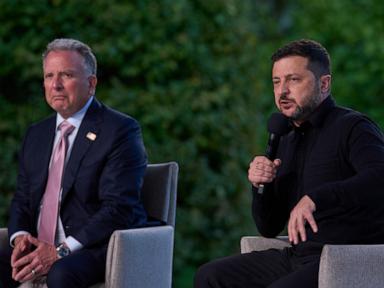
Diplomacy rarely moves in a straight line, especially when a grinding war enters its fifth year. US special envoy Steve Witkoff recently stepped off a train in Kyiv alongside Jared Kushner to brief Ukrainian leadership on high-stakes talks held just hours prior inside the Kremlin. Following extensive closed-door discussions with Volodymyr Zelenskyy and national security advisers from Britain, France, and Germany, Witkoff publicly characterized the exchange as substantive, important, and deeply encouraging. Yet behind the cautious optimism lies a stark reality. No immediate peace treaty was signed in the Ukrainian capital. Both sides know that bridging the massive chasm between Moscow's demands and Kyiv's red lines will require painful concessions.
The itinerary itself sent a distinct signal. Stopping in Moscow first to meet with Vladimir Putin before heading south to Kyiv showed that Washington is trying to rebuild a diplomatic bridge that collapsed months ago. Kremlin foreign policy aide Yuri Ushakov labeled those initial talks constructive and candid, noting that the delegation brought fresh ideas alongside economic proposals involving potential joint ventures. But Ukrainian officials initially eyed the sequence with skepticism. Lawmakers in Kyiv worried aloud that external partners might attempt to force an unacceptable compromise onto a nation fighting for its survival.
Zelenskyy chose a pragmatic path. Instead of slamming the door on American mediation, he welcomed the delegation at St. Sophia Square and shifted the focus toward immediate survival and long-term security guarantees. Winter is coming. That terrifying seasonal reality dominated the practical agenda in Kyiv. With Russian forces aggressively targeting critical power grids and civilian infrastructure, the discussions quickly moved beyond abstract peace frameworks down to concrete numbers. Ukraine needs air defense systems, upgraded energy reserves, and substantial volumes of American liquefied natural gas to keep the lights on when temperatures drop.
Territory remains the ultimate stumbling block. Roughly three-quarters of the eastern Donbas region remains under Russian occupation, and Kyiv has repeatedly stated that surrendering land is out of the question. Zelenskyy maintained that any final territorial settlement can only be resolved at the highest level between national leaders, keeping hard boundaries intact for now. Meanwhile, the kinetic war didn't pause for the diplomats. Overnight drone strikes and air raids continued to rattle both nations, proving that battlefield momentum still dictates political posture.
Witkoff insists the White House is pushing for a diplomatic resolution rather than a military stalemate. Translating that ambition into an actual ceasefire will demand compromises that neither Moscow nor Kyiv is currently eager to embrace. For now, the engagement itself represents a fragile reset. Watch for whether these diplomatic tracks morph into formal trilateral negotiations before the snow settles.


