Silence.
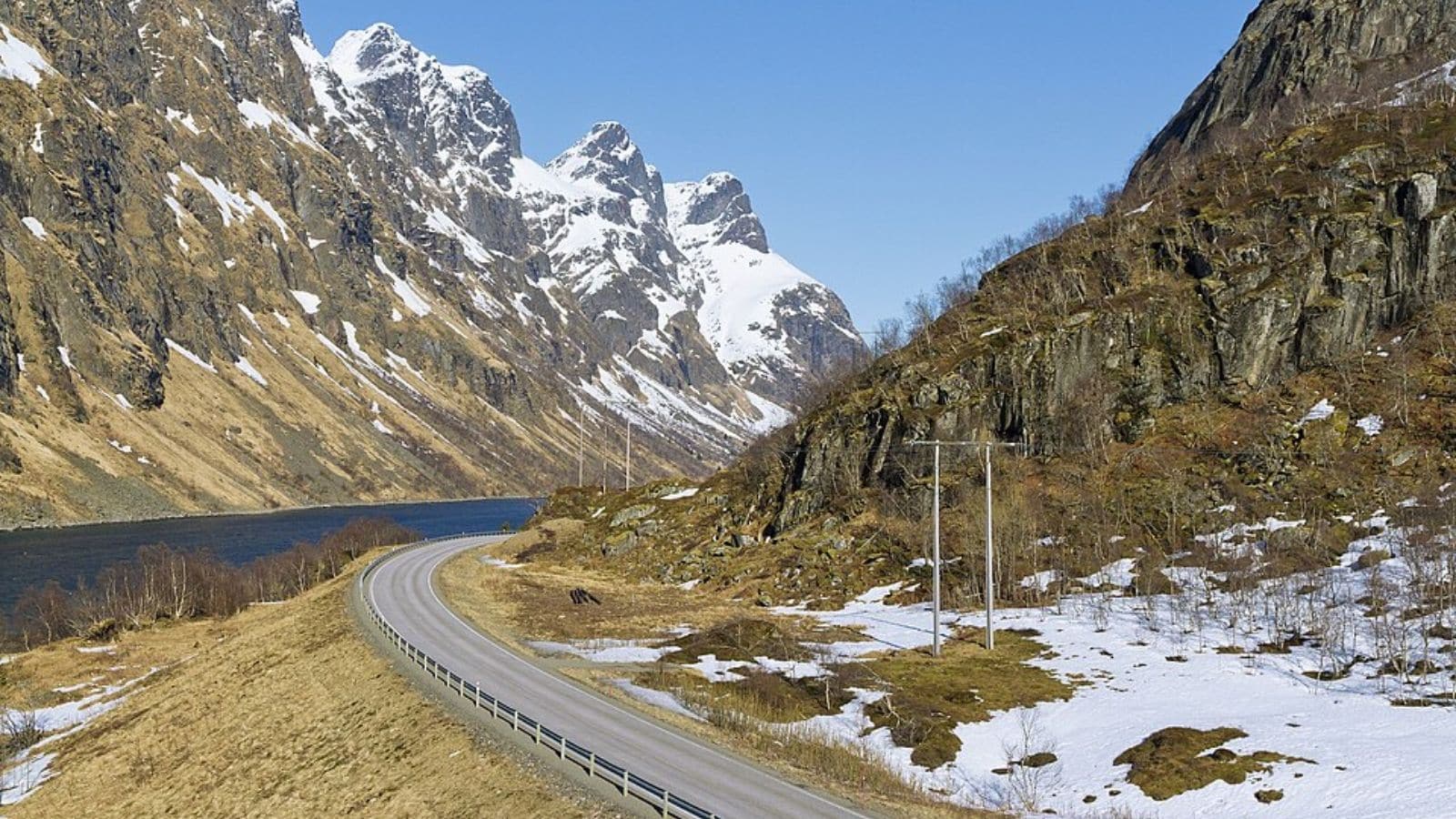
That is the first thing you notice at five in the morning on a mountain ridge above Kelowna when the winter refuses to arrive, a heavy, metallic quiet where the roar of snowguns and the rhythmic clatter of the bullwheel should be. For weeks, the slopes of the Okanagan Valley look less like a winter playground and more like a bruised expanse of granite, scrub pine, and anxious waiting. Then, overnight, the sky finally cracks open, dropping twenty centimeters of cold, dry interior powder onto Big White, SilverStar, and Apex.
Social media erupts with photos of buried picnic tables and snow-dusted chairlifts. Local radio hosts sound giddy. Hoteliers in Vernon and Penticton exhale for the first time since October.
Yet beneath the fresh white blanket, a quiet dread lingers in the valley. Every lift operator, ski patroller, and coffee shop owner knows the three-syllable shadow hanging over the season. El Niño.
To understand what a single storm means to British Columbia’s interior mountains, you have to stop looking at weather forecasts as mere meteorological trivia and start seeing them as the heartbeat of an entire regional economy. When fresh snow falls in the Okanagan ahead of an El Niño winter, it is not just a pretty postcard for tourists in Vancouver or Seattle. It is a temporary reprieve from a high-stakes atmospheric poker game where the house always holds a warm Pacific current.
The Physics of an Atmospheric Thief
Meteorologists talk about the El Niño-Southern Oscillation in clinical terms, measuring sea surface temperature anomalies in the central and eastern equatorial Pacific. When those waters warm by just half a degree Celsius above normal and stay there, the jet stream splits and shifts north.
Think of the jet stream as a massive, high-altitude conveyor belt carrying Pacific moisture toward the North American coast. In a neutral year, or during a cold La Niña winter, that conveyor belt aims straight at the southern interior of British Columbia, colliding with the Monashee and Cascade mountains to dump meters of famous Okanagan champagne powder.
Under El Niño, that conveyor belt tilts upward toward Alaska, leaving southern British Columbia in a warmer, drier rain shadow.
Statistically, strong El Niño winters in the Okanagan bring average temperatures one to three degrees Celsius warmer than historical norms, alongside a measurable drop in valley-bottom precipitation. That single degree sounds harmless when you are sitting in a heated living room. On a mountain, one degree is the razor-thin boundary between a knee-deep powder day and a miserable afternoon of freezing rain that turns hard-earned base snow into bulletproof ice.
Consider a hypothetical mountain operations manager—let us call him Marcus—standing beside a snowcat at SilverStar Mountain Resort just after a November storm. To the arriving weekend skier, the thirty centimeters of fresh snow on the ground looks like victory. Marcus knows better. He reaches down, pushes a gloved hand through the fluffy top layer, and feels his knuckles hit bare dirt and jagged scree just inches below.
"People see white and think we are open for business," Marcus might tell you, his breath pluming in the crisp air. "They do not see that without a frozen, compacted base underneath, the first hundred skiers will scrape that powder right down to the rocks. And if an El Niño warm spell hits next week, everything we just got goes straight down the storm drains."
This is the invisible reality of early-season snow in a warming climate cycle. Fresh snow buys time, cools the ground, and sparks the crucial wave of early bookings that keep resorts solvent through December. It does not, however, rewrite the broader atmospheric script already forming thousands of kilometers away in the Pacific Ocean.
More Than a Weekend Hobby
If you have never lived in a mountain town, it is easy to view ski resorts as luxury amenities for people who can afford thousand-dollar season passes and Gore-Tex jackets. That perspective misses the entire economic architecture of the Okanagan Valley.
Winter tourism in British Columbia’s interior is an intricate ecosystem of interdependence. When the chairs spin on schedule at Big White, Apex, and Sun Peaks to the north, money flows outward like meltwater in spring. It pays the mortgage of the independent bakery owner in downtown Kelowna who supplies pastries to mountain lodges. It funds the winter hours for dozens of seasonal mechanics, shuttle drivers, physiotherapists, and restaurant servers who rely on the four-month winter surge to survive the quieter shoulder seasons.
Let us trace the ripple effect through another hypothetical character, Elena, who runs a small equipment rental and boot-fitting shop twenty minutes off the highway leading up to Apex Mountain Resort near Penticton. Elena took out a high-interest operating loan in August to stock her racks with new skis, bindings, and heated boot liners. Her debt schedule does not care about Pacific Ocean temperatures. Her rent is due on the first of every month, whether the mountain has a two-meter base or bare grass.
When the first early-season storm hits, Elena’s phone finally starts ringing. Parents bring in growing kids for seasonal leases. Weekend warriors drop off last year’s boards for fresh edge tunes and hot wax. The cash register hums, and for seventy-two hours, Elena feels the knot in her stomach loosen.
Yet she keeps one eye glued to the long-range weather models. She remembers the brutal El Niño winter of 2015–2016, and the even more punishing warmth of 2023–2024, when warm atmospheric rivers washed away mid-mountain snowpacks across the province in January, forcing resorts to close runs and triggering cancellations that echoed into spring. When tourists cancel hotel rooms in January, they do not just skip a ski day; they skip dinners out, wine tastings, local breweries, and retail shops across the entire valley.
The History Written in Snow Stakes
To understand why the Okanagan greets an El Niño forecast with such hard-earned skepticism, you only have to look at the historical snow stakes kept by mountain patrol teams over the past four decades.
The Okanagan’s reputation was built on a very specific geological and climatic miracle. Located in the dry interior rain shadow of the Coast Mountains, the valley receives far less total moisture than coastal giants like Whistler Blackcomb. What it lacks in sheer volume, it makes up for in temperature and humidity. Cold Arctic air spilling down from the north collides with just enough Pacific moisture to create snow with an astonishingly low water content—light, dry, airy crystals that skiers float through effortlessly.
Historically, that formula was reliable enough to build billion-dollar real estate developments on the sides of mountains. Over the last thirty years, however, the margins have narrowed.
Data from Environment and Climate Change Canada and provincial snow survey stations show a clear, unsettling trend across southern British Columbia: snowlines are creeping higher up the slopes, winter thaws are occurring more frequently in January and February, and the snowpack water equivalent at mid-elevations has grown wildly erratic. When a cyclical El Niño event layers on top of long-term background warming, those anomalies amplify one another.
Look at what happened during the severe 2023–2024 El Niño cycle. While some interior peaks managed to salvage decent conditions at their highest elevations due to their natural altitude advantage—Big White’s village sits at 1,755 meters, significantly higher than many coastal resorts—lower-elevation runs struggled for months. Resorts across British Columbia saw sharp drops in skier visits, some reporting declines of twenty to thirty percent during peak holiday weeks.
And yet, history also holds a crucial caveat that keeps hope alive in the valley: El Niño is a probability, not a prison sentence.
Why Elevation Changes the Odds
Ask any veteran meteorologist in British Columbia about forecasting El Niño winters, and they will quickly admit how humbling the science can be. While strong El Niño events tilt the statistical dice toward warmer and drier conditions, local topography has a stubborn habit of disrupting broad global patterns.
This is where the Okanagan holds a quiet card up its sleeve. Elevation.
Because the valley floor sits around 340 meters above sea level while its major ski resorts tower between 1,150 and 2,300 meters, temperature inversions frequently play tricks on regional weather maps. A grey, damp, five-degree afternoon in downtown Kelowna can sit directly beneath a crisp, minus-four-degree snowstorm raging on the upper bowls of Big White or SilverStar.
During previous El Niño winters, coastal resorts closer to the ocean bore the brunt of warm Pacific storms, watching rain fall halfway up their mountains while the high-altitude interior resorts of the Okanagan stayed just cold enough to catch dense, heavy snow. Those storms may not have delivered the feather-light powder the region is famous for, but heavy, high-moisture snow builds an indestructible base that survives mid-winter warm spells far better than dry fluff ever could.
I have stood on the summit of SilverStar on a January morning after an "unforecastable" interior storm dumped thirty centimeters while the valley below stayed brown and dry. Watching skiers carve silent, effortless turns through untouched trees while warm fog blanketed the lake far below felt like witnessing a magic trick. It is that exact geographical quirk—that stubborn refusal of high mountains to obey valley-level forecasts—that keeps locals waxing their boards even when the headlines look grim.
Adapting to a Fickle Sky
Resorts in the Okanagan are no longer sitting passively around the woodstove waiting for Mother Nature to cooperate. Faced with increasingly volatile winters, mountain operators have poured tens of millions of dollars into engineering resilience against warm cycles.
Walk behind the scenes at any major interior mountain today and you will see an industrial-scale war against temperature fluctuations:
- High-efficiency snowmaking networks: Modern fan guns can now pump out massive volumes of man-made snow during brief, forty-eight-hour cold snaps, creating a dense, frozen foundation that resists melting far longer than natural snow.
- Summer slope grooming and brush clearing: By meticulously mulching rocks, grading trails, and clearing low brush during July and August, resorts have reduced the minimum snow depth required to safely open a run from sixty centimeters down to thirty.
- Diversified four-season infrastructure: Mountain biking trails, alpine hiking networks, Nordic skiing tracks, and summer festivals ensure that a resort’s survival no longer hinges entirely on January snowfall.
Even with all that technology, snowmaking cannot cover an entire mountain, nor can mountain bikes pay off winter hospitality debts in February. Snowguns require cold temperatures and massive amounts of water and electricity; if the mercury hovers above minus two degrees Celsius, the machines sit idle, expensive monuments to human ambition waiting for a drop in the thermometer.
The Human Need for Winter
Strip away the economics, the jet stream mechanics, and the snowmaking telemetry, and you are left with something far simpler and harder to quantify. People in the Okanagan need winter for their sanity.
When November drags on in grey, damp limbo, a quiet lethargy settles over the valley. The days shrink to eight hours of pale light. The orchards sit bare and skeletal along the hillsides. Without snow to reflect the low winter sun, the landscape feels heavy, paused, incomplete.
Then comes that first real storm.
Suddenly, the world brightens. Sound softens, muffled by millions of intricate ice crystals blanketing rooftops, cedar branches, and fence posts. Neighbors who barely spoke all autumn wave over snow shovels in their driveways at dawn. Strangers share chairlifts, trading stories about the best tree runs and comparing notes on which ridge is holding the deepest drifts.
There is a vulnerability in loving a sport—and building a livelihood—around something as fleeting as frozen water falling from the sky. Every autumn requires a leap of faith. You buy the pass, tune the edges, stock the pantry, and bet your winter happiness on atmospheric currents shifting thousands of miles away in an ocean you cannot see.
The fresh snow blanketing the Okanagan mountains right now will not stop El Niño from reshaping the Pacific jet stream this winter. Warm spells will likely come. Rain may threaten the lower runs in January, and anxiety will flicker back to life in hotel lobbies and rental shops from Vernon to Osoyoos.
For today, though, the snowcats are rumbling up the ridges, their headlights cutting bright yellow cones through swirling white flakes. Beneath the blades, cold snow is being pressed firmly into cold earth, inch by stubborn inch, building a foundation against whatever the Pacific decides to send next.