Cold rain hits the tall arched windows of the Peace Palace in The Hague, blurring the manicured Dutch gardens outside into smears of wet green and slate gray. Inside the Great Hall of Justice, the air smells faintly of polished oak, wool suits, and stale coffee. Judges in black robes and white bibs sit behind a massive curved bench, their faces unreadable, their microphones muted.
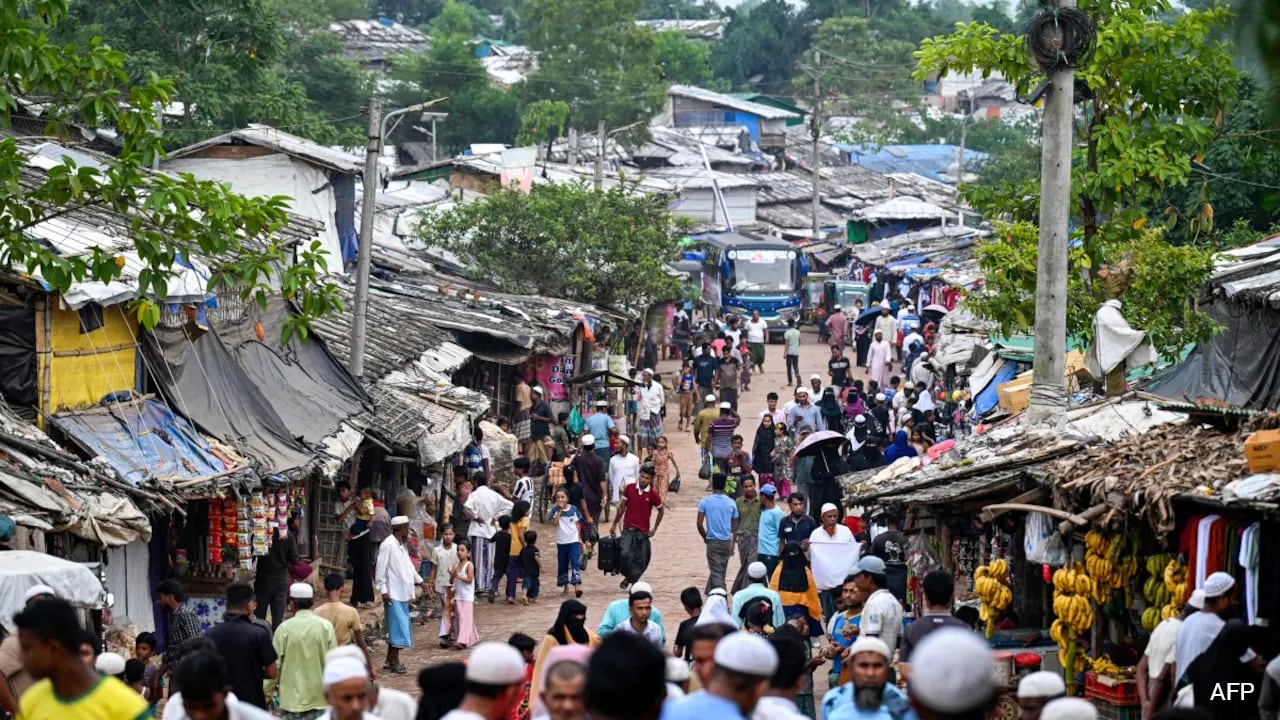
Seven thousand miles away, in a sprawling labyrinth of bamboo and blue tarpaulin perched on the muddy hills of Cox’s Bazar, Bangladesh, a man named Abdul—a composite portrait drawn from the real testimonies of hundreds of survivors—sits on an upturned plastic bucket. He holds a cheap smartphone with a cracked screen, waiting for a signal to catch.
Wait.
Just wait.
That is all nearly a million people have done since August 2017, when the sky over Myanmar’s Rakhine State turned black with the smoke of burning villages, and the rivers ran thick with bodies and floating ash. Today, inside that quiet, climate-controlled room in the Netherlands, the International Court of Justice—the highest legal body of the United Nations—prepares to speak. They are deciding whether to impose emergency measures on Myanmar to stop what the world calls an alleged genocide against the Rohingya people.
Most news reports will tell you this is a procedural milestone in international law. They will cite Article IX of the 1948 Genocide Convention, mention The Gambia’s role as the applicant state, and note that Aung San Suu Kyi, once the darling of Western democracy and a Nobel Peace Prize laureate, traveled to Europe to personally defend her country’s military against the charges.
Those reports miss the point entirely. They strip the flesh off the bones until nothing remains except dry legal jargon. Because what happens in The Hague today is not merely an argument between lawyers over treaty obligations; it is a battle over whether a human being has the right to exist, to hold a name, and to have their suffering recognized as real before the dust settles over their grave.
The Architecture of Erasure
To understand why a ruling in Europe matters to a man sitting in the mud in Bangladesh, you have to understand how genocide actually works. We tend to think of mass atrocity as a sudden explosion of madness—a fire that flares up out of nowhere, burns everything in sight, and dies out. History tells a very different story. Mass murder is rarely spontaneous. It is built brick by brick, law by law, decades before the first match is struck.
In Myanmar, the erasure of the Rohingya began with paperwork.
For generations, this predominantly Muslim ethnic minority lived in Rakhine State, on the western coast bordering Bangladesh. They farmed the rice paddies, fished the Naf River, and built mosques beside Buddhist monasteries. Then came the slow tightening of the vise. In 1982, Myanmar’s military junta passed a citizenship law that left the Rohingya off the list of 135 officially recognized ethnic groups. Overnight, millions of people became ghosts in their own homes.
Imagine waking up tomorrow and discovering that the government no longer acknowledges your birth certificate, your property deed, or your right to travel to the next town without a permit. Imagine needing state permission just to get married, or facing fines if you have more than two children. When a state strips a group of people of their legal identity, it is performing a sleight of hand: it is convincing the rest of the population that these neighbors are not citizens, not stakeholders, and eventually, not quite human.
By the time the Myanmar military—known as the Tatmadaw—launched its brutal "clearance operations" in August 2017, the psychological groundwork had been laid for thirty-five years. Following attacks on police posts by a small Rohingya insurgent group, the army unleashed a campaign of staggering ferocity. Soldiers surrounded villages at dawn. They fired indiscriminately into fleeing crowds. Women were dragged into houses and assaulted; infants were torn from mothers' arms and thrown into burning huts.
Within weeks, more than 700,000 Rohingya fled across the border into Bangladesh, joining hundreds of thousands who had escaped earlier waves of violence. United Nations investigators later estimated that at least 10,000 people were killed in those initial weeks alone, though many believe the true number is far higher. Over 300 villages were wiped off the map, bulldozed into flat brown dirt so that satellite images could no longer trace where families had once cooked dinner or planted mango trees.
I remember standing near the banks of the Naf River during those chaotic autumn weeks, watching the boats arrive under the cover of darkness. The smell is what stays with you—a suffocating mixture of wet mud, untreated sewage, woodsmoke, and infected wounds. You saw children with eyes so hollow they didn't even blink when thunder cracked overhead. You met grandmothers who had walked for ten days through jungle mud with bullets still lodged in their calves, clutching nothing more than a rusted cooking pot or a single faded photograph wrapped in plastic. When you see trauma up close like that, stripped of diplomatic euphemisms, you realize that the word genocide is not an academic label. It is the only word heavy enough to hold the weight of what happened.
An Unlikely Champion From Across the Ocean
For two years after the exodus, the international community offered sympathy, emergency food rations, and endless committee meetings—yet zero accountability. Myanmar’s generals remained untouchable, shielded by geopolitical alliances and the sheer difficulty of prosecuting sovereign nations.
Then, in November 2019, help arrived from an unexpected corner of the globe.
The Gambia, a tiny West African nation tucked along the Atlantic coast, stepped forward to file a lawsuit against Myanmar at the International Court of Justice. On paper, the two countries had almost nothing in common. Separated by thousands of miles of ocean and desert, The Gambia had no direct stake in Southeast Asian border politics. Yet The Gambia had just emerged from twenty-two years of its own brutal dictatorship under Yahya Jammeh—a regime marked by torture, disappearances, and state-sponsored terror.
Abubacarr Tambadou, The Gambia’s Justice Minister and a former prosecutor at the International Criminal Tribunal for Rwanda, had visited the refugee camps in Cox’s Bazar. Walking through those endless rows of bamboo shacks, listening to mothers describe the slaughter of their children, he recognized the exact scent of unchecked impunity he had seen in Rwanda in 1994.
Under the 1948 Genocide Convention, drafted in the ashes of the Holocaust, every nation that signs the treaty has an obligation not just to refrain from genocide, but to prevent and punish it—anywhere in the world. Think of the Genocide Convention like a neighborhood fire alarm wired to every house on the block. If one house catches fire and the owner refuses to put it out, any neighbor on the street has the legal standing to pull the alarm and summon the fire department, even if their own porch isn't burning yet.
Backed by the 57-nation Organisation of Islamic Cooperation, The Gambia pulled that alarm. They didn't ask the World Court to reach a final verdict on genocide immediately—a full trial at the ICJ can take a decade or longer to sort through mountains of forensic evidence. Instead, they asked for "provisional measures." In plain English, they asked the court for an emergency restraining order to force Myanmar to stop killing, stop destroying evidence, and protect the roughly 600,000 Rohingya who remained trapped inside Rakhine State under conditions akin to an open-air prison.
The Shock of a Fallen Icon
If the lawsuit itself was historic, what happened during the preliminary hearings in December 2019 was surreal.
Few people expected Aung San Suu Kyi to show up in person. For decades, she had been an international symbol of moral courage, enduring fifteen years of house arrest under Myanmar’s military rulers rather than abandon her struggle for democracy. Her portrait hung in university dorms and human rights offices from London to San Francisco.
Yet there she sat in the Great Hall of Justice, dressed in traditional Burmese silk, fresh jasmine flowers pinned neatly into her hair. As lawyers for The Gambia read out graphic testimonies of gang rape, mass shootings, and infants burned alive, Suu Kyi stared straight ahead, her expression carved from stone.
When it was her turn to speak, she did not express sorrow for the dead. She did not utter the word Rohingya—a term the Myanmar government refuses to recognize, insisting instead on calling them "Bengalis" to imply they are illegal immigrants from Bangladesh. Instead, she framed the military’s campaign as a legitimate counter-terrorism operation against armed insurgents, admitting only that "disproportionate force" might have been used in isolated incidents and insisting that Myanmar’s own military courts could handle any misconduct.
Watching her defend the very generals who had once locked her away felt like watching a familiar painting peel off the canvas to reveal something cold and unrecognizable underneath. Critics pointed to domestic politics—an upcoming election in Myanmar where standing up to the military would have been political suicide. Others saw a deeper blindness, a nationalism so entrenched that even a Nobel laureate could not see the humanity of a despised minority.
Whatever her motive, her appearance turned the courtroom into a mirror for the world. If a democracy icon could stand before fifteen international judges and dismiss the systematic destruction of an entire people as an "internal armed conflict," what hope was left for the rule of law?
What a Piece of Paper Can and Cannot Do
It is easy to be cynical about international courts. I have covered enough conflicts to know that a piece of parchment signed in the Netherlands cannot stop a bullet fired in the jungle. The International Court of Justice has no police force. It has no army, no handcuffs, and no jail cells. If Myanmar decides to ignore the court's orders, the judges cannot march into Naypyidaw and arrest the generals.
So why does today’s ruling matter so much? Why are thousands of refugees huddled around radios and borrowed phones in the mud of Cox’s Bazar, holding their breath for the verdict?
Because power relies on silence, and impunity thrives in the dark.
First, a ruling in favor of provisional measures shatters Myanmar’s official narrative. For years, the generals claimed that the world was lying, that the burnt villages were fake news, and that the refugees had burned down their own homes. When the highest court on earth formally declares that there is a plausible risk of genocide—and orders a sovereign state to cease all genocidal acts and preserve evidence—that lie becomes infinitely harder to sell to foreign investors, trade partners, and diplomatic allies.
Second, the court's orders carry binding legal weight under the UN Charter. If Myanmar defies them, the matter goes straight to the United Nations Security Council. Even if powerful allies like China or Russia use their veto power to block sanctions, the political cost of shielding an accused genocidal regime rises dramatically. Every diplomatic meeting, every arms deal, every infrastructure loan becomes stained by an official judicial warning.
Third, and perhaps most urgently, the ruling creates a lifeline for the 600,000 Rohingya still inside Myanmar. Cut off from aid workers, barred from hospitals, and confined to dilapidated camps and fenced-in villages, they have lived under the constant dread of a second wave of violence. A formal requirement that Myanmar report back to the court every few months on the steps it is taking to protect them puts a spotlight on their survival. It tells the commanders on the ground: Someone is watching. Someone is keeping score.
Still, honesty demands acknowledging the limits of this moment. A favorable ruling today does not mean the refugees in Bangladesh can pack their bags tomorrow. Without citizenship, without guaranteed safety, and without the restoration of their land, returning to Myanmar remains a death sentence. The legal wheels in The Hague grind with agonizing slowness; a final judgment on whether Myanmar committed genocide could easily stretch into the late 2020s or beyond. Justice, in the halls of international law, moves at the pace of glaciers while human lives burn away like dry grass.
The Echo Across the Water
Back in the Great Hall of Justice, the courtroom clock ticks toward the hour. Security guards take their positions along the velvet ropes. Journalists lean forward in the press gallery, fingers poised over keyboards, ready to condense months of legal briefs and lifetimes of grief into breaking-news alerts.
In Cox’s Bazar, the afternoon heat begins to break, bringing a brief, salty breeze off the Bay of Bengal. Inside a dim bamboo shelter, Abdul adjusts the volume on his cracked phone as a local activist translates the live stream from The Hague into the Rohingya language—a tongue that has no official script in the land where its speakers were born.
Around him, neighbors crowd into the doorway. Old men with henna-dyed beards lean on wooden canes. Young women balance toddlers on their hips, their faces still marked by the exhaustion of survival. None of them understand the finer points of the 1948 Genocide Convention or the jurisdictional debates over erga omnes obligations. They do not know what provisional measures look like on paper.
They know only one thing. For decades, they were told they did not belong anywhere. They were told their names were illegal, their homes were forfeit, and their lives were worth less than the soil beneath their boots.
Now, in a distant palace of stone and glass, fifteen strangers in black robes are preparing to decide whether the world will finally admit that they exist.
The gavel strikes once—a sharp, wooden crack that echoes through the microphones, across the satellites, and down into the mud of the camps, where a million pairs of eyes wait to see if the truth still carries weight.