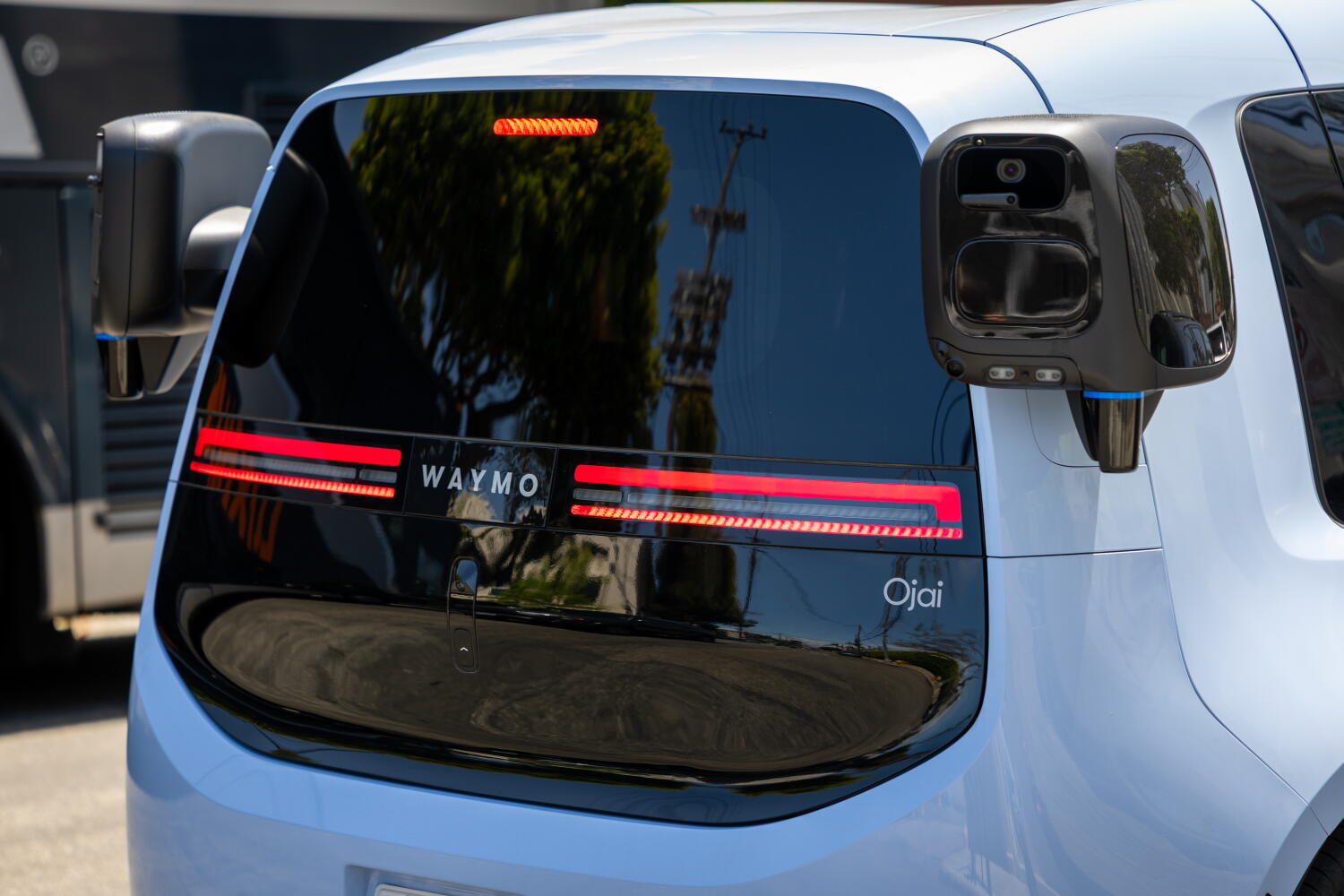
Waymo has officially pushed its autonomous ride-hailing service into Torrance, Manhattan Beach, and surrounding pockets of Los Angeles County, expanding its geofenced footprint across the South Bay. Press releases and local news blurbs frame this rollout as another milestone in consumer convenience—a friendly, white Jaguar I-PACE showing up to take beachgoers to brunch or commuters to the office. That surface-level reading misses the real story.
This expansion is not about giving Manhattan Beach residents an easier ride to the pier. It is an aggressive, calculated land grab designed to conquer the most lucrative, friction-heavy transit corridors in Southern California before competitors can even get their permits out of bureaucratic purgatory. By absorbing the South Bay, Waymo is solving its biggest unit-economics problem: turning short, unprofitable urban hops into longer, high-margin suburban and airport-adjacent runs.
The Geography of Profit in Los Angeles County
Anyone who has driven through Los Angeles knows the city is not a single metropolis. It is a sprawling collection of suburbs in search of a center, bound together by bottlenecks. When Waymo first launched commercial operations in Los Angeles, it stuck to a relatively tight, predictable core: Santa Monica, West Hollywood, Mid-City, and Downtown. Those neighborhoods offered dense population centers and high ride frequency, which are essential for gathering baseline operational data.
Density alone does not pay the bills in the robotaxi business. Short trips inside dense urban cores carry high overhead costs. Every time a vehicle has to navigate a tight pickup zone in West Hollywood, wait for a passenger, and drop them off three miles away, the operational margins get crushed by deadhead miles and constant sensor recalibration in chaotic traffic.
Enter the South Bay.
Stretching the service map into Torrance, Manhattan Beach, Redondo Beach, and Hermosa Beach changes the math entirely. Residents in these coastal communities routinely travel longer distances for work, dining, and entertainment. A trip from Torrance to Century City, or from Manhattan Beach to Culver City, stretches the meter. Longer rides mean higher gross bookings per trip without a proportional increase in pickup and drop-off friction.
More importantly, look at the map around Manhattan Beach. You are staring directly at the southern perimeter of Los Angeles International Airport (LAX).
The LAX Chokehold
For years, the holy grail of Los Angeles ground transportation has been the LAX curb. Uber and Lyft built massive chunks of their Southern California revenue on airport runs, even after the airport authority pushed pickups out to the LAX-it lot. Autonomous vehicles face strict regulatory hurdles when operating directly on airport property, where federal, state, and municipal jurisdictions collide in a mess of liability rules.
By blanketing Manhattan Beach and neighboring El Segundo, Waymo is staging its fleet right on the doorstep of the airport. Even without direct terminal access—or while waiting for final municipal sign-offs to enter the central terminal area—controlling the immediate perimeter allows Waymo to capture the massive commuter and business traveler base living within a ten-minute radius of the runways. They are surrounding the fortress before kicking down the front door.
Why Torrance Matters More Than Manhattan Beach
Most media coverage fixates on Manhattan Beach because of its wealth and coastal prestige. Industry analysts look at Torrance.
Torrance is an industrial, corporate, and retail powerhouse. It houses major corporate campuses, sprawling medical centers, massive retail hubs like the Del Amo Fashion Center, and dense residential neighborhoods that rely almost entirely on personal automobiles. Public transit in the South Bay is notoriously fragmented, leaving residents dependent on driving or paying steep surge prices on traditional rideshare apps.
Operating in Torrance presents a completely different set of engineering challenges compared to the grid-like streets of Santa Monica.
- Multi-lane arterial roads: Streets like Hawthorne Boulevard and Sepulveda Boulevard feature high-speed, six-lane traffic with aggressive merging and unprotected left turns across wide medians.
- Complex commercial parking lots: Navigating into and out of massive suburban shopping centers requires an autonomous stack capable of handling erratic pedestrian behavior, delivery trucks blocking fire lanes, and faded asphalt markings.
- Micro-climates and coastal fog: The marine layer rolling off the Pacific Ocean into Torrance and Redondo Beach creates thick fog and glare conditions that test the limits of LiDAR and camera sensor fusion.
If Waymo’s fifth-generation hardware and software stack can handle a rainy Tuesday rush hour on Hawthorne Boulevard without causing a phantom-braking pileup, the technology is ready for almost any suburban market in the United States. Torrance is a stress test disguised as a commercial launch.
The Regulatory Chess Match Behind the Scenes
Autonomous vehicle companies do not expand on a whim. Every square mile added to a service area represents months of quiet negotiation with the California Public Utilities Commission (CPUC), the California Department of Motor Vehicles (DMV), and local city councils.
In Los Angeles, city officials and transit unions have repeatedly pushed back against rapid robotaxi expansion. Concerns over blocked fire trucks, sudden stops in active traffic lanes, and the long-term displacement of human drivers have turned every regulatory hearing into a street fight. Waymo watched what happened in San Francisco, where aggressive, simultaneous fleet scaling by competitors led to high-profile traffic snarls, public backlash, and eventual license revocations.
Waymo played the long game. Instead of flooding the entire Los Angeles basin overnight, the company adopted an incremental, neighborhood-by-neighborhood creeping strategy.
By rolling out to the South Bay in measured phases, Waymo avoids triggering the kind of acute infrastructure shock that unites local politicians against them. A few dozen white Jaguars operating smoothly in Manhattan Beach generate curiosity and positive social media chatter. Five hundred vehicles suddenly paralyzing Sepulveda Boulevard would generate emergency city council injunctions.
The Depot Strategy
Behind every expansion zone lies a physical real estate footprint that rarely makes the headlines. Autonomous fleets cannot simply park on residential streets when battery levels drop or sensors need cleaning. They require high-capacity charging depots equipped with heavy-duty electrical infrastructure, automated washing bays, and technician teams working around the clock.
Expanding into Torrance and the South Bay required securing industrial real estate with massive power grid capacity—no small feat in Southern California, where commercial power upgrades can take years to clear utility backlogs. While competitors were burning cash on flashy marketing campaigns or struggling to keep prototype vehicles on the road, Alphabet’s real estate and infrastructure teams were quietly locking down leases and installing high-speed DC fast chargers in industrial pockets south of the 105 Freeway.
That physical infrastructure is the real moat. Software can be copied or improved over time; locking down high-voltage urban charging depots in coastal California takes billions of dollars and years of lead time.
The Brutal Reality of the Unit Economics
Let’s strip away the futuristic sheen and look at the cold financial math driving this expansion. Alphabet has poured tens of billions of dollars into Waymo over the past fifteen years. For most of that timeline, it was categorized under "Other Bets"—Wall Street’s polite euphemism for a money pit.
The mandate has shifted. Waymo is no longer a research project; it is a commercial enterprise expected to show a clear path to profitability.
The economics of a robotaxi are brutally simple. The upfront capital expenditure of the vehicle—the Jaguar I-PACE outfitted with custom LiDAR, radar, high-resolution cameras, and onboard compute—is staggering, easily running well over $150,000 per unit. To amortize that hardware cost, the vehicle cannot sit idle. It needs high utilization rates across all hours of the day, not just during Friday night bar rushes.
Suburban expansion into places like Torrance provides the steady, daytime demand needed to keep wheels turning. Retirees going to medical appointments at Torrance Memorial, corporate workers commuting between office parks, and shoppers heading to retail centers fill the dead hours between morning and evening rush hours.
At the same time, Waymo is quietly testing pricing elasticity. In the early days of its Los Angeles rollout, rides were heavily subsidized to build rider habits. Today, in expanded zones, Waymo prices are frequently on par with—or slightly higher than—UberX and standard Lyft rides. Riders are willing to pay a slight premium for the privacy, cleanliness, and predictability of an empty cabin, and the absence of tipping immediately offsets a 15% to 20% higher base fare.
What Happens to Human Drivers and Traditional Rideshare
The narrative pushed by tech optimists suggests that autonomous vehicles will simply complement existing transit and rideshare networks. That is wishful thinking. In markets where Waymo achieves critical mass, it directly cannibalizes human-driven rideshare volume.
Consider a hypothetical driver living in Carson or Gardena who relies on driving full-time for Uber and Lyft. Historically, that driver’s bread and butter came from working the South Bay beaches on weekends and running weekday airport loops between Torrance, Manhattan Beach, and LAX. Those are predictable, lucrative, low-crime routes with good tipping demographics.
As Waymo absorbs those exact neighborhoods, the human driver doesn't disappear overnight, but the quality of their available trips degrades. When an algorithm skims off the clean, predictable suburban rides, human drivers are left fighting over the messy scraps—long-distance runs out to the Inland Empire with empty return trips, late-night bar pickups, or complex multi-stop deliveries that autonomous vehicles still struggle to execute.
Uber knows this. That is why Uber has pivoted from trying to build its own self-driving hardware to acting as an aggregator, cutting partnership deals with Waymo in markets like Phoenix and Austin. In Los Angeles, however, Waymo is operating directly through its own app, keeping 100% of the customer relationship and 100% of the fare revenue. Every rider in Manhattan Beach who downloads the Waymo One app and links their credit card is a customer Uber may never win back.
The Unresolved Flaws on the Pavement
For all its technical dominance, Waymo’s South Bay expansion does not mean the technology is infallible. Watch these vehicles closely on the streets of Redondo Beach or Torrance, and the limitations of current autonomy become obvious.
First, there is the issue of hesitation. Waymo vehicles are programmed to prioritize safety above all else, which often translates to extreme conservatism in ambiguous traffic situations. When approaching a four-way stop where human drivers are aggressively rolling through, or trying to merge into fast-moving beach traffic on Pacific Coast Highway, a Waymo will sometimes freeze, waiting for a gap that never comes. Local drivers quickly learn they can bully the white Jaguars, cutting them off with impunity because they know the robot will always yield.
Second, pickup and drop-off friction remains an unsolved headache. A human Uber driver will pull into a red zone for ten seconds, throw on the hazard lights, and let a passenger jump out in front of a restaurant. Waymo’s software strictly obeys municipal painted curbs—mostly. When a street is lined with parked cars and red zones, the vehicle will sometimes force a passenger to walk two blocks away to a legally designated loading zone, turning a convenient door-to-door trip into an annoying hike.
Third, remote assistance is still the quiet crutch holding the entire operation together. When a Waymo encounters a downed power line, a confusing construction zone, or a police officer directing traffic with hand signals, the car does not magically solve the problem on its own. It stops, pings a remote human operator sitting in a command center, and asks for path guidance. Those operators do not drive the car with a joystick, but they do draw new virtual paths around obstacles. As the fleet scales across massive territories like L.A. County, maintaining low latency and enough human oversight during major weather events or citywide emergencies becomes an immense logistical challenge.
The Freeway Question
There is one glaring omission in the current South Bay rollout: the freeways.
Right now, taking a Waymo from Torrance to Downtown Los Angeles or Santa Monica means taking surface streets the entire way. A trip that takes twenty-five minutes on the I-405 or I-110 can easily stretch to fifty-five minutes crawling through traffic lights on La Cienega or Figueroa. For commuters, that time penalty is a dealbreaker.
Waymo has been testing autonomous freeway operations with employees in Los Angeles and San Francisco, gathering data at 65 miles per hour where stopping distances triple and sensor range is pushed to its absolute limit. Expanding the surface-street map into the South Bay is clearly the precursor to unlocking the I-405 corridor. Once Waymo flips the switch on commercial freeway rides connecting the South Bay, LAX, the Westside, and Downtown, the value proposition of owning a second car in Los Angeles takes a direct hit.
Until that switch is flipped, the South Bay expansion remains a brilliant, albeit incomplete, tactical maneuver. Waymo has successfully claimed the territory, built the charging infrastructure, and conditioned thousands of new suburban riders to trust a driverless car. Now comes the hard part: proving that moving people across the most car-obsessed county in America can actually turn a profit without a human behind the wheel.