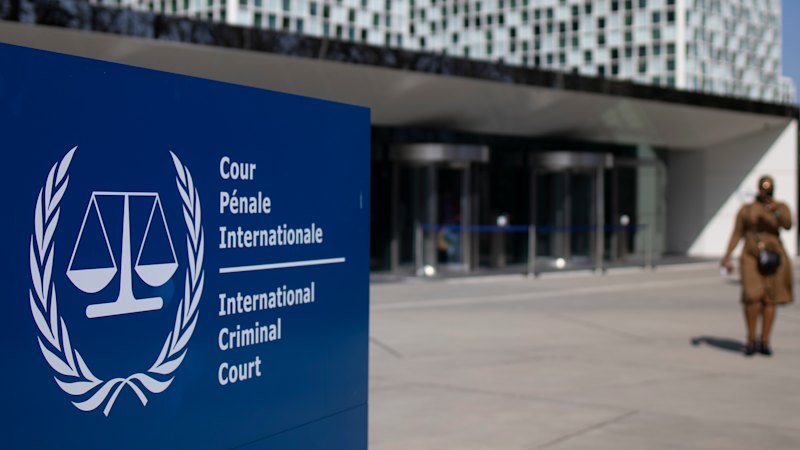
Every few years, Washington throws a tantrum over the International Criminal Court, and the media treats it like a constitutional crisis or a major shift in global order.
Stop buying the script.
The standard media narrative claims that US opposition to the Hague represents a profound defense of national sovereignty against an overreaching international tribunal. That framing is lazy, comfortable, and fundamentally wrong. The truth is much more cynical. The American establishment does not fear the ICC because it threatens sovereignty. They posture against it because fighting an institution with zero enforcement power is the cheapest geopolitical theater available. It satisfies the domestic base, reassures the defense apparatus, and changes precisely nothing on the ground.
To understand why this perpetual feud is a manufactured distraction, you have to look past the rhetoric and examine the plumbing of international law.
The Sovereignty Myth
The foundational fallacy repeated in every mainstream breakdown of this conflict is that the United States is uniquely vulnerable to prosecution. Pundits love to paint a picture of American commanders and diplomats sleeping with one eye open, terrified of an arrest warrant issued by foreign judges in the Netherlands.
This is absurd.
The United States never ratified the Rome Statute. Under international law, a treaty cannot bind a non-party state without its consent, barring a referral from the United Nations Security Council—where Washington holds a permanent veto. The ICC has jurisdiction over nationals of non-member states only if the alleged crimes occur on the territory of a state party. Even then, the principle of complementarity dictates that the court can only step in if a domestic judicial system is genuinely unwilling or unable to investigate and prosecute the crimes itself.
Washington has an aggressive, if deeply flawed, military justice system. By conducting its own internal reviews and court-martials—however lenient critics might find them—the Pentagon checks the complementarity box. The ICC is legally locked out.
So why does Washington treat the court like an existential threat? Because opposition to international bodies is a bipartisan insurance policy against accountability, draped in the flag of exceptionalism. It allows politicians to project strength without taking any actual risk.
The Real Cost of Paper Tigers
While Washington wastes diplomatic capital threatening sanctions against court officials and freezing assets of prosecutors, real atrocities slip through the cracks of a crippled global judiciary.
The ICC is already a paper tiger. It relies entirely on state cooperation for arrests, evidence gathering, and funding. When major powers—whether the United States, Russia, China, or regional heavyweights—decide to ignore it, the court is reduced to writing strongly worded press releases.
By treating this toothless entity as an existential menace, American foreign policy accomplishes two contradictory goals:
- It signals to domestic nationalists that Washington will never bow to foreign judges.
- It quietly preserves a system where international law applies selectively to weak states that lack the economic or military leverage to ignore it.
Look at how the debate is framed during any escalation. Pundits ask whether the court has the moral authority to investigate superpowers. That is the wrong question entirely. The right question is why we pretend an institution dependent on voluntary contributions and voluntary arrests has any operational relevance to how great powers conduct foreign policy.
The Bi-Partisan Consensus on Impunity
The hostility toward the Hague spans administrations, regardless of political party. Democratic and Republican White Houses alike have adopted a two-step approach: cooperate selectively when it suits foreign policy objectives—such as backing warrants against adversaries—and threaten total economic warfare when the court turns its gaze inward or toward close allies.
This hypocrisy is not a bug; it is the feature.
When the court investigated alleged actions by US personnel in Afghanistan, the reaction from Washington was swift and punishing. Sanctions were levied against the chief prosecutor. Visas were revoked. The message was unmistakable: international justice is an instrument for managing the behavior of the developing world, not a universal standard.
When you strip away the high-minded legal briefs and the fiery speeches on Capitol Hill, the entire dispute is a shadow play. The court cannot touch Washington, and Washington knows it. The conflict persists because both sides benefit from the friction. The ICC gets to posture as a defender of global human rights against American hegemony, and Washington gets to posture as the fierce guardian of national sovereignty against globalist overreach.
Meanwhile, the victims of actual atrocities wait for justice that never comes, caught between a powerless court and superpowers that treat human rights law as a public relations exercise.
Stop looking at the theatrics of sanctions and threats. Follow the incentives. As long as opposing the Hague remains politically profitable and practically consequence-free, the war will continue—loud, performative, and entirely fake.