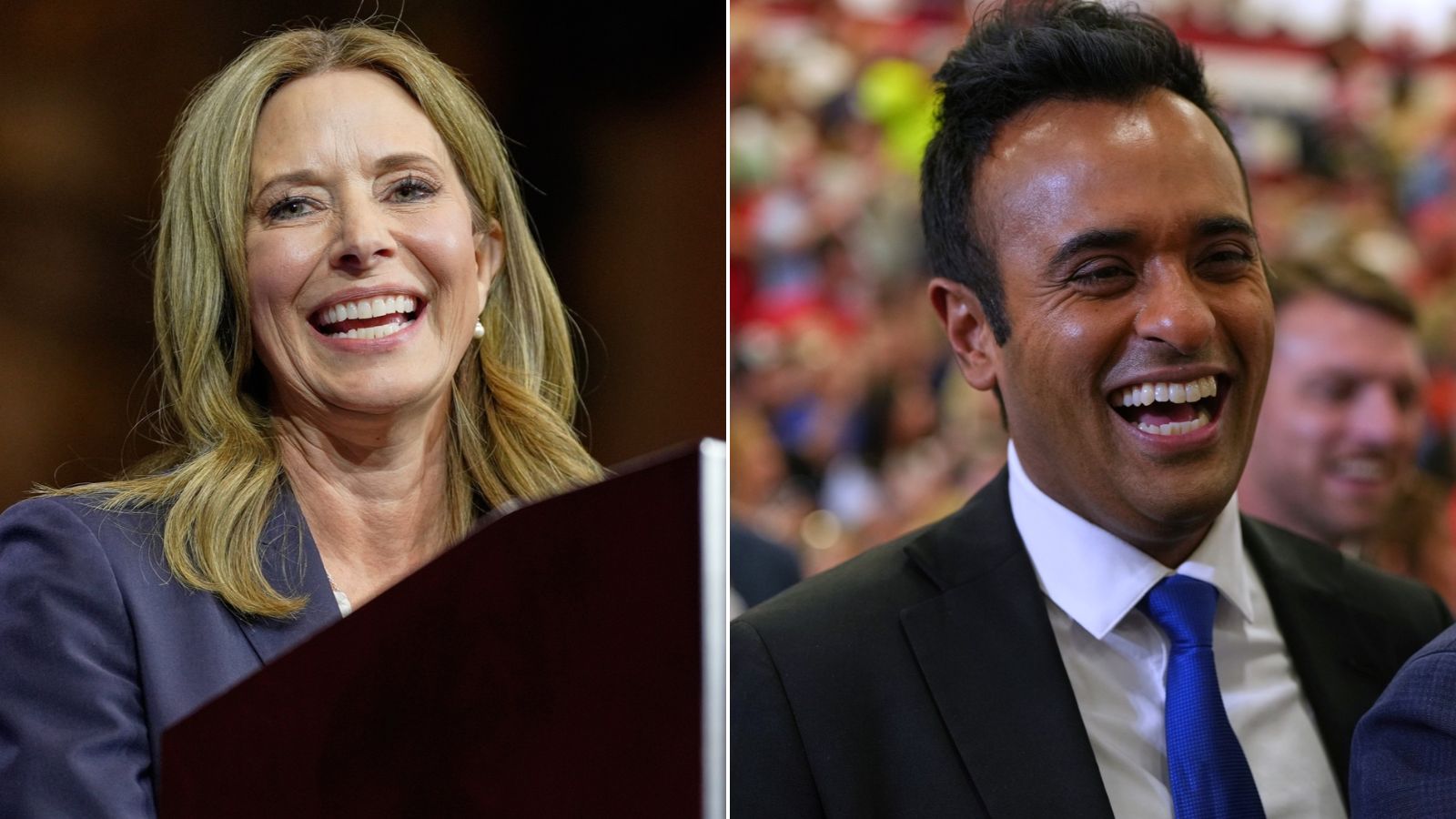
Political pundits love an easy autopsy. The second the networks called the 2026 Ohio gubernatorial race, the cable news panels and legacy print outlets rolled out the exact same lazy obituary: Vivek Ramaswamy lost because Ohio wasn't ready for an outsider, an Indian American Republican, or a tech-bro populist who refused to kiss the ring of the Columbus establishment.
They are completely wrong. Every single one of them.
The mainstream press is treating a statewide general election loss like the end of a political career, viewing it through the dusty lens of 1990s retail politics. They see a candidate who spent tens of millions of his own biotech fortune, burned through the traditional county-level party infrastructure, and came up short in November. To the average political consultant, that is an unmitigated disaster.
To anyone who actually understands modern market capture, venture scaling, and asymmetric attention warfare, Ramaswamy didn't lose. He just executed the largest, cheapest customer acquisition campaign in Midwest political history.
The Lazy Consensus of the Consultant Class
Walk into any campaign headquarters in Washington or Columbus, and you will hear the exact same dogma. You win Ohio by doing the rubber-chicken circuit. You shake hands at the State Fair, you beg for endorsements from local county sheriffs, you hire three dozen overpaid direct-mail vendors, and you shave the rough edges off your platform until you sound like a mildly irritated Chamber of Commerce brochure.
I’ve watched political action committees and corporate lobbying arms blow hundreds of millions of dollars on this exact playbook. It is a bloated, parasitic ecosystem designed to enrich media buyers who take a fifteen percent cut of every thirty-second television spot aired during the six o'clock news.
When Ramaswamy bypassed that machinery in Ohio, the establishment didn't just root against him—they actively sabotaged him. They leaked internal polling. They whispered to donors that his Hindu faith or his billionaire status wouldn't play in the Mahoning Valley. They claimed his sharp, unfiltered rhetoric alienated moderate suburban women in Franklin and Delaware counties.
And when the final votes were tallied and the Democrat walked away with the governor's mansion—or when a fractured GOP base failed to turn out at 2024 levels—the consultants popped champagne. They pointed at the scoreboard and screamed, See? You need us.
They are misreading the balance sheet.
In venture capital, you don't judge a Series A company on net profitability; you judge it on user growth, brand penetration, and the cost of acquiring a rabidly loyal customer base. Ramaswamy never wanted to spend four years arguing with the Ohio General Assembly over highway maintenance budgets and Medicaid reimbursement rates. Governorships are executive graveyards for ideological disruptors. You inherit a massive bureaucracy, you get blamed for every pothole and plant closure, and your national media oxygen gets cut off the moment you start managing state agencies.
By running a hyper-aggressive, nationally televised campaign in a premier battleground state, Ramaswamy achieved total name-recognition saturation across the Rust Belt without ever having to own the mundane failures of state governance.
What the Pundits Missed About Voter Psychology
To understand why the traditional media got this wrong, you have to understand the difference between transactional voters and identity-aligned evangelists.
Traditional campaigns chase transactional voters. They promise a tax cut here, a targeted subsidy there, and hope to cobble together 50.1 percent of the electorate on Election Day. It is a fragile coalition that evaporates the second the candidate leaves office.
Ramaswamy spent the entire Ohio cycle building an evangelist engine. He didn't soften his message to win over undecided swing voters in the Cincinnati suburbs. Instead, he used the governor's race as a giant megaphone to litigate national cultural and economic battles—dismantling the administrative state, attacking corporate ESG mandates, and challenging traditional foreign policy orthodoxy.
Did that cost him five points with risk-averse, moderate Republicans who just wanted a steady hand on the wheel? Undoubtedly. In a state like Ohio, where ticket-splitting still flickers in local races, an uncompromising ideological crusade leaves real votes on the table.
Here is the counter-intuitive truth that political scientists like Morris Fiorina and Samuel Popkin have documented for decades: primary voters and national party kingmakers do not reward consensus builders. They reward fighters who prove they can command the media ecosystem without folding under pressure.
By refusing to pander to the center in Ohio, Ramaswamy proved his ideological purity to millions of conservative voters far beyond the Buckeye State's borders. Every viral clip of him dismantling a hostile reporter in Cleveland or lecturing a town hall in Toledo wasn't just an Ohio campaign ad—it was a national audition.
The Real Reason the Machine Fought Back
The coverage framing this race around Ramaswamy's heritage—specifically focusing on his status as an Indian American Republican—completely misses the actual friction point inside the Ohio GOP.
Voters in Appalachian Ohio or the industrial corridor along Lake Erie did not reject Ramaswamy because of his background. Working-class voters in the Rust Belt care about one thing: who is willing to take a sledgehammer to the institutions that hollowed out their towns? When a candidate speaks directly to their economic resentment and cultural alienation, demographic checkboxes become irrelevant.
The real resistance came from the entrenched political class.
For decades, the Ohio Republican Party has operated like a tightly controlled regional monopoly. Power is passed down through a predictable hierarchy: state representative, state senator, statewide officeholder, governor. You wait your turn. You raise money for the party bosses. You do not skip the line.
Ramaswamy didn't just skip the line; he drove a bulldozer through the lobby. He self-funded, bypassing the major Columbus donors who expect legislative favors in return for their checks. He refused to hire the preferred local consultants. He treated the entire state party apparatus as an obsolete middleman.
When you threaten a monopoly's revenue stream, the monopoly fights to kill you. The establishment didn't let him lose because of his identity; they undermined him because his victory would have permanently broken their business model. If a billionaire outsider can win a major governorship without paying tribute to the local consultant cartel, every ambitious outsider in Texas, Florida, and Pennsylvania will copy the blueprint tomorrow.
Answering the Questions Voters Are Actually Asking
When people search for why this race went the way it did, they are usually asking the wrong questions—questions fed to them by cable news chyrons. Let’s dismantle the most common myths circulating right now.
Did Ramaswamy waste his money running for governor?
Only if you measure return on investment in legislative bills signed. If you measure ROI in earned media value and data acquisition, it was a steal.
Think about what a campaign actually buys when it spends thirty or forty million dollars. It isn't just yard signs. It buys millions of verified voter cell phone numbers, email addresses, micro-targeted demographic profiles, and donor lists. Ramaswamy now owns one of the most detailed, battle-tested voter databases in the industrial Midwest. In modern politics, owning the data pipeline is worth ten times more than holding a single state office.
Does this loss prove populism is dead in the Midwest?
Quite the opposite. Look closely at the precinct-level data across Ohio. Where did populist messaging underperform? In wealthy, white-collar suburbs where voters prioritize institutional stability and low drama. Where did it dominate? In working-class, exurban, and rural counties where economic frustration remains high.
The takeaway isn't that populism failed; it's that unfiltered populism requires a specific coalition math to survive a general election without a presidential ballot boost. In a midterm cycle—traditionally a lower-turnout environment that favors higher-propensity, college-educated voters—a pure populist insurgency faces a structural headwind. That isn't an ideological rejection; it is basic midterm turnout mechanics.
Can an outsider ever beat a state party machine?
Yes, if they stop trying to play half-in, half-out.
Here is the honest downside to Ramaswamy’s approach, and the trap future disruptors must avoid: you cannot simultaneously burn down the party infrastructure and rely on it for ground-game turnout in the final seventy-two hours.
In a razor-thin general election, the last three percent of the vote isn't won on podcasts or national cable hits. It is won by boring, unglamorous ballot chasing, early-vote tracking, and precinct-level door knocking. When you alienate the county chairs and local committee members who run that machinery, you have to build your own parallel ground game from scratch. Ramaswamy built an unmatched digital and media air war, but an air war alone cannot occupy territory if nobody is marching on the ground during a midterm drizzle.
The Asymmetric Playbook for Disruptors
Whether you are running a political insurgency, launching a challenger brand against a legacy corporation, or trying to break into a closed industry, the Ohio race offers a ruthless, practical manual on how to operate when the gatekeepers lock the doors.
- Weaponize the gatekeepers' hostility. Never beg for validation from the establishment press or industry insiders. When they attack you for breaking their unwritten rules, amplify their attacks to your target audience. Prove to your buyers that the people they hate are terrified of you.
- Own your distribution channels. Legacy campaigns rent audiences from television networks and party bosses. Modern disruptors build direct-to-consumer pipelines—podcasts, long-form video, direct SMS lists—that cannot be throttled by a hostile editorial board.
- Price in the short-term loss for long-term equity. Imagine a scenario where a challenger brand enters a regional market, undercuts every legacy competitor, loses money in year one, and forces the incumbents to expose their own corruption and inefficiency just to survive. By year two, the incumbents are weakened, and the challenger owns the entire narrative.
- Never confuse a tactical retreat with a strategic defeat. Losing a single race does not erase a movement. Abraham Lincoln lost his bid for the U.S. Senate in 1858 before winning the presidency two years later. Richard Nixon lost the California governor's race in 1962, was declared politically dead by every major newspaper in America, and won the White House in 1968.
Stop Reading the Scoreboard Wrong
The pundits writing Ramaswamy's political obituary are making the classic mistake of judging a dynamic campaign as a static event. They see a loss in Ohio and assume the story is over.
They don't see that he just spent two years stress-testing his message in the ultimate American bellwether. They don't see that he forced the state's entire political establishment to show its hand, exposing every backroom deal and consultant kickback to millions of furious voters. And they certainly don't see that he walked away from the race with zero executive baggage, total national name recognition, and an army of committed supporters who now view him as a martyr to a corrupt system.
The Columbus establishment kept the governor's mansion, but they burned down their own credibility to hold it. Ramaswamy lost an election, and in doing so, he just bought controlling interest in the future of the party.