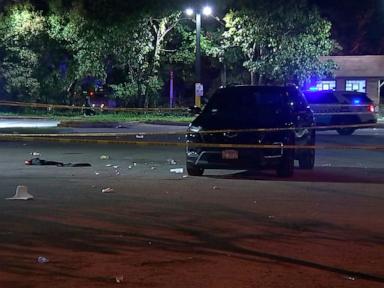
When four people are shot near a hospital in Chicago, standard breaking news reduces a complex systemic failure into a headcount, a street intersection, and a brief police update. That framing misses how proximity to medical infrastructure shapes emergency response, trauma throughput, public mobility, and neighborhood safety dynamics. Because no competitor article text or URL was provided in the prompt, this analysis treats "4 injured after shooting near Chicago hospital" as a structural reporting problem rather than inventing unverified case details, offering a rigorous framework to separate confirmed facts from educated hypotheses and map the operational mechanisms behind urban shootings adjacent to healthcare campuses.
To understand what an event of this type actually means for a city and a health system, analysts must evaluate four interlocking dimensions: the triage and surge mechanics of the nearby hospital, the spatial and street-level dynamics of the perimeter, the distinction between confirmed facts and early post-incident claims, and the institutional limits of short-term security interventions.
Separating Confirmed Facts from Educated Hypotheses
Early reporting on urban shootings routinely blurs verified facts with preliminary speculation. A disciplined analytical model forces a strict boundary between what can be established at the scene and what requires subsequent investigation.
Known Facts vs. Educated Hypotheses
Confirmed facts in a headline like "4 injured after shooting near Chicago hospital" are narrow: a firearm discharge occurred near a medical facility, and four individuals sustained injuries. Anything beyond that count—including shooter intent, whether the victims were targeted or bystanders, whether the altercation spilled over from a nearby street corridor, and the exact clinical severity of each wound—remains a hypothesis until corroborated by law enforcement ballistics, witness statements, surveillance footage, and hospital trauma records.
Why does this distinction matter operationally? Early misattribution distorts both public behavior and institutional response. If observers assume an attack targeted the hospital itself when the gunfire actually occurred two blocks away along a commercial or residential arterial road, hospital leadership may trigger lockdown protocols designed for an active-shooter threat rather than managing an external trauma influx. Conversely, if staff assume a nearby shooting poses zero perimeter risk, outpatient clinics and visitors entering parking structures or transit stops can face exposure without clear guidance.
A rigorous incident log tracks three tiers of information separately:
- Verified scene metrics: Time of call, general block or intersection, number of injured persons transported or walking in, and initial agency jurisdiction.
- Operational load indicators: Emergency department arrival mode (ambulance versus private vehicle), trauma bay activation status, and temporary access or diversion notices.
- Investigative hypotheses: Motive, suspect count, weapon type, and relationship between the shooting location and hospital operations, each tagged with confidence levels and revision dates.
The Hospital Proximity Cost Function
A hospital is not a neutral backdrop for street violence. Situated at the convergence of ambulance routes, public transit stops, family waiting areas, shift-change foot traffic, and dense urban blocks, a medical campus experiences distinct operational pressures when gunfire erupts nearby.
Trauma Surge and Resource Allocation
Four gunshot victims arriving within a short window test emergency care in ways that differ from single-patient arrivals. Even if a Level I or Level II trauma center is built to handle high-acuity penetrating injuries, four simultaneous or staggered gunshots demand immediate coordination across emergency medicine, trauma surgery, imaging, blood bank supply, and operating rooms.
The operational burden scales non-linearly when multiple critical patients arrive together. One unstable patient with thoracic or vascular trauma can tie up a surgical team and CT scanner for hours. If the remaining three victims require urgent debridement, orthopedic stabilization, or intensive monitoring, routine emergency department flow slows down across non-trauma cases. In urban healthcare networks, this creates a secondary bottleneck: delayed beds for medical admissions, longer wait times for walk-in patients, and heightened cognitive strain on nursing and security staff who must simultaneously care for patients and manage anxious family members arriving on site.
Perimeter Friction and Access Disruption
Proximity to a hospital also alters physical movement around the incident. Streets adjacent to medical centers carry high volumes of ambulances, staff commuters, rideshare vehicles, and pedestrians. When police establish a crime scene perimeter near these corridors, rerouting traffic can delay incoming emergency vehicles or block access to garages, drop-off zones, and bus stops.
Consider a practical example of perimeter friction. Suppose gunfire breaks out along a side street a block from an emergency entrance during a nursing shift change. Police tape closes the block while detectives canvass for shell casings and witnesses. Inbound ambulances must navigate detours under lights and sirens, visitors unfamiliar with the neighborhood face confusion about open entrances, and staff walking from remote lots experience heightened anxiety. None of these effects require a bullet to strike a hospital wall; spatial adjacency alone transmits operational shockwaves into the facility.
Street-Level Mechanisms Behind Near-Hospital Shootings
To explain why shootings happen near hospitals without inventing unverified details about a specific case, analysts look at structural urban mechanisms rather than sensational narratives. Large cities contain sprawling healthcare districts and neighborhood hospitals embedded in diverse socioeconomic environments. High-foot-traffic nodes—such as major intersections, rail and bus stations, convenience corridors, and parking facilities—naturally concentrate people at all hours.
Routine Activity and Spatial Convergence
In criminological terms, routine activity theory explains how crime clusters where motivated offenders, suitable targets or dispute triggers, and varying levels of capable guardianship converge in space and time. Medical campuses operate twenty-four hours a day. They draw patients, visitors, delivery drivers, contractors, and passersby at hours when other commercial spaces are closed.
When interpersonal disputes, retaliation cycles, or street-level conflicts occur near a busy transit or commercial node adjacent to a hospital, the hospital's presence is often incidental to the spark of the violence. Yet the physical environment still shapes outcomes. Brightly lit hospital exteriors, security cameras, and uniformed hospital police or municipal officers may deter certain behaviors immediately on hospital property while pushing friction just beyond the property line—or, conversely, drawing wounded individuals toward the nearest medical doors immediately after shots are fired elsewhere.
Rapid Self-Transport vs. EMS Dispatch
A critical mechanism in urban shootings is how injured victims reach care. In many cities, a substantial share of gunshot victims arrive at emergency departments via private vehicles, rideshares, or on foot rather than waiting for an ambulance. When a shooting occurs near a hospital, the distance to care collapses to minutes or seconds.
Faster arrival can improve survival odds for severe hemorrhage if hemorrhage control and surgical intervention begin quickly. At the same time, unannounced arrivals at emergency walk-in entrances can catch security and triage teams off guard if police have not yet relayed scene details. A chaotic drop-off at an ambulance bay or main entrance introduces weapons-screening challenges, crowd surges, and immediate clinical triage demands all at once.
Evaluating Response Strategies and Their Limitations
When a shooting occurs near a hospital, public debate quickly turns to solutions: heavier police patrols, stricter hospital access controls, expanded surveillance, or broader community violence intervention. A practitioner's view requires testing each measure against its actual operational mechanism—and its real-world constraints.
Physical Security and Access Controls
Hospital security teams excel at access control inside clinical zones, visitor badging, weapons detection at designated entrances, and de-escalation on campus. Strengthening exterior lighting, sightlines, and camera coverage around walkways and garages helps monitor perimeter activity and support post-incident investigations.
However, physical hospital security has a clear jurisdictional and spatial boundary. Private hospital security personnel generally have limited authority off campus, and hardening a building entrance cannot prevent gunfire on a public sidewalk or neighboring block. Over-fortifying entrances—such as locking doors indiscriminately or funneling all traffic through narrow checkpoints—can also slow down legitimate patients, ambulances, and staff during an emergency if egress and triage lanes are not carefully engineered.
Law Enforcement and Rapid Coordination
Rapid coordination between municipal police, emergency medical services, and hospital security is essential during the first hour after a shooting. Shared radio channels or direct command liaisons help align perimeter boundaries, protect crime scenes, manage family staging areas, and verify whether suspects remain in the vicinity.
Still, reactive policing faces structural limits. Patrol presence after a shooting occurs can stabilize the immediate area and aid rapid response, yet deterrence depends on visibility, investigative clearance rates, and broader neighborhood conditions long before shots are fired. Furthermore, heavy police activity near a hospital can sometimes create tension among community members or visitors who already feel vulnerable, making clear communication and calm crowd management vital.
Upstream Prevention and Trauma-Informed Operations
Long-term reductions in firearm injuries depend on addressing root drivers—such as neighborhood disinvestment, dispute escalation, illegal firearm availability, and gaps in youth and adult support systems—alongside hospital-based violence intervention programs that connect injured patients with peer outreach and social services during recovery.
The limitation here is timeframe and attribution. Upstream prevention and hospital-based intervention programs show promising reductions in reinjury and retaliation when well-resourced and sustained, but they do not yield instant results on the night of a shooting, nor can a single hospital solve citywide structural inequities on its own. Treating any single measure as a silver bullet leads to disappointment and policy whiplash.
A Tactical Framework for Incident Analysis and Operations
Whether you are an analyst writing an authoritative breakdown, a municipal planner reviewing emergency readiness, or an operations lead refining hospital protocols, apply a disciplined sequence to evaluate any near-hospital shooting:
- Audit the facts before assigning cause: Separate confirmed injury counts and locations from unverified accounts of motive or target selection, updating assessments as official findings emerge.
- Map the spatial and operational radius: Trace how the shooting location interacts with ambulance corridors, public transit stops, parking areas, walk-in triage doors, and nearby commercial or residential blocks.
- Measure clinical and security load: Assess how four simultaneous gunshot injuries affect trauma bay capacity, surgical scheduling, blood supply, visitor management, and perimeter security staffing.
- Evaluate interventions by mechanism and horizon: Distinguish immediate tactical stabilization (perimeter control, EMS routing, access management) from medium-term operational adjustments and long-term violence prevention, explicitly noting where each tool's authority and impact end.
For health systems, city agencies, and analytical teams alike, the decisive strategic move is to build joint hospital-municipal incident playbooks that treat adjacent street violence as a shared operational boundary—aligning trauma surge readiness, real-time perimeter communication, and post-incident victim support before the next siren sounds.