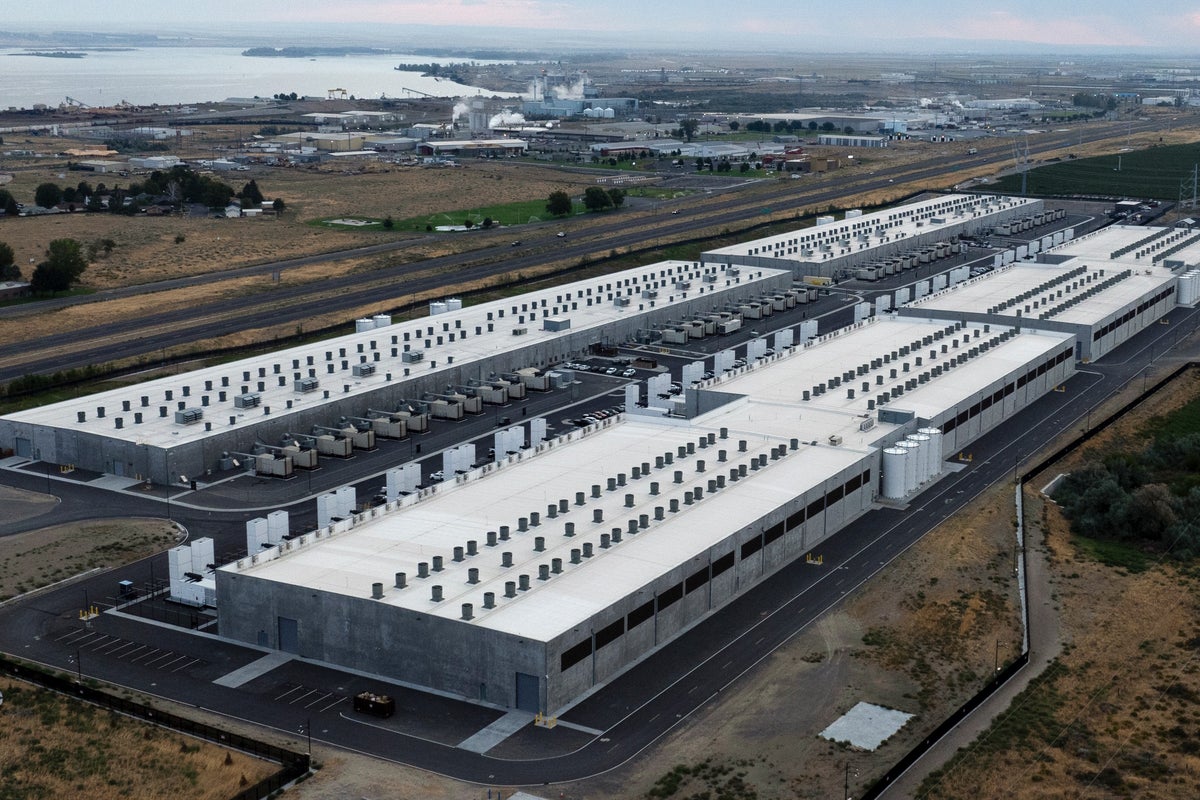
The global expansion of data center infrastructure is colliding with the physical limits of municipal engineering. As hyperscale cloud providers and artificial intelligence operators deploy trillions of dollars in hardware capital, the geographic concentration of these assets has shifted from rural exurbs to dense metropolitan nodes.
The launch of the Global Urban Data Centres Pact by 40 municipal leaders under the C40 Cities alliance during London Climate Action Week marks a fundamental shift in the macroeconomics of digital infrastructure. It signals that cities are moving away from competitive, incentive-driven deregulation toward defensive, coordinated zoning and resource-pricing frameworks.
To understand why this political bloc formed, one must look at the rate of demand acceleration. Unlike previous structural shifts in utility demand, the compute buildout is happening on an compressed timeline.
In Melbourne, Australia, the existing base of approximately 50 active facilities is projected to scale from historical baselines to consume 10 percent of the total municipal grid capacity by 2030, and up to 20 percent by 2040. This represents an unprecedented load growth profile that outpaces the capital expenditure cycles of regulated utilities.
The Tri-Variable Municipal Resource Strain
The friction between local governments and hyperscale developers is driven by three distinct, inelastic local resource constraints.
1. The Baseload Grid Congestion Bottleneck
Industrial data centers operate at utilization rates that generate flat, continuous load profiles. This presents a systemic challenge to municipal grids undergoing a transition to intermittent renewable generation. When hyperscalers enter a metropolitan market, they absorb the available transmission margin. This forces utilities to either delay the retirement of legacy fossil-fuel peaking plants or pass the capital costs of immediate grid upgrades down to retail ratepayers.
2. Evaporative Water Consumption Ratios
The thermal management of high-density server racks relies heavily on evaporative cooling systems due to their lower upfront capital costs compared to closed-loop liquid chilling. In arid environments like Phoenix, Arizona, or semi-arid zones like Melbourne, this creates a direct resource trade-off.
The projected water consumption for Melbourne’s data centers is estimated to reach 20 billion liters annually. This constitutes 4 percent of the total municipal potable water supply, creating a zero-sum conflict with population growth and agricultural requirements during prolonged drought cycles.
3. Spatial and Zoning Asset Arbitrage
Hyperscale facilities require massive horizontal footprints. In metropolitan areas, developers compete directly with industrial logistics, mixed-use commercial properties, and affordable housing initiatives for land parcels. This drives up land values, which can price out essential urban development projects.
Municipal Defensive Interventions: Regulatory Frameworks
The C40 pact functions as a playbook for municipal intervention, aiming to eliminate the regulatory arbitrage that tech firms use to play cities against one another. Rather than relying on toothless climate pledges, the pact outlines concrete changes to municipal code, permitting processes, and tax structures.
+-------------------------------------------------------------+
|               MUNICIPAL REGULATORY INTERVENTION             |
+-------------------------------------------------------------+
                               |
        +----------------------+----------------------+
        |                      |                      |
        v                      v                      v
[Zoning Restructuring]  [Grid Neutrality]    [Thermal Integration]
  Permit Mandates         Renewable Assets     Waste Heat Capture
  Acoustic Ceilings       Storage Mandates     District Networks
Zoning Restructuring and Permitting Barriers
Cities are shifting data centers from an "allowed use" category to a "conditional use" status within zoning ordinances. In Phoenix, updates to the local zoning ordinance require data center developers outside designated industrial zones to secure a municipal special-use permit.
These permits are contingent on meeting strict engineering standards, such as capping ambient noise at 45 decibels at property boundaries during nighttime hours. This standard requires significant capital investments in acoustic dampening shrouds and directional exhaust systems for cooling towers.
Grid Neutrality Mandates
The pact establishes a baseline expectation that new developments must be carbon-neutral by design, excluding carbon offset purchases. Operationally, this requires developers to co-invest in co-located or microgrid-tied renewable energy assets and grid-scale battery storage. This shifts the financial burden of balancing the local grid from the utility back onto the data center operator.
Thermal Integration and Circular Infrastructure
European municipalities, including Milan and Amsterdam, are increasingly requiring facilities to integrate into local district heating networks. By mandate, operators must install heat-exchanger loops to capture low-grade waste heat from hot aisles and pipe it into municipal residential or commercial heating infrastructure.
While this improves the facility's overall energy efficiency profile, it restricts site selection to locations near existing or planned municipal district energy networks.
The Illusion of Local Economic Multipliers
A central conflict in data center development is the asymmetry between resource consumption and local employment generation. Hyperscale facilities are highly automated environments. Once the initial construction phase concludes, a 100-megawatt facility typically requires fewer than 50 permanent, high-wage operational staff.
To bridge this gap, municipal strategies are focusing on structural economic conditions rather than general promises of innovation. The pact emphasizes local training labs and workforce certification programs funded by developers, aimed at moving under-resourced local residents into technical roles.
Additionally, cities are evaluating revised capital-improvement fees. These fees mandate that data center operators pay direct upfront infrastructure assessments to fund the expansion of the water treatment plants and sub-stations they rely on, preventing the socialization of industrial development costs.
Strategic Outlook for Infrastructure Deployment
The formation of a unified municipal front alters the site-selection criteria for global technology infrastructure. The strategy of moving to the lowest-regulated market to secure cheap land and un-priced power is hitting structural limits. Operators facing this new regulatory environment must pivot their infrastructure strategies across three key areas:
- PUE to WUE Allocation: Engineering choices can no longer optimize Power Usage Effectiveness (PUE) at the expense of Water Usage Effectiveness (WUE). In water-stressed metropolitan markets, operators will be forced to transition to closed-loop dry cooling or direct-to-chip liquid cooling systems. This transition increases upfront capital expenditures but mitigates local regulatory risks.
- Decentralized Edge Topologies: To bypass congested urban primary substations, network architectures will need to distribute workloads across smaller, peripheral edge nodes. These nodes sit below the high-voltage threshold and can integrate more easily into existing urban industrial zones without triggering major grid upgrades.
- Sovereign Resource Joint Ventures: Large technology firms will increasingly need to act as co-investors in public utility infrastructure. Securing a municipal permit will require financing public water reclamation plants or funding municipal-scale renewable energy projects, shifting the cost of doing business from a simple real estate transaction to a long-term civic partnership.