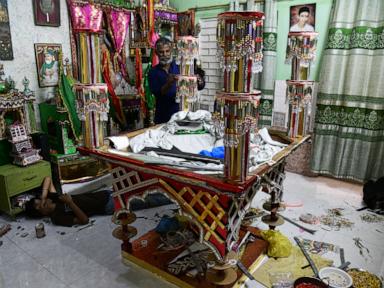
In the dust-choked streets of Sindh, an extraordinary crossover occurs every year during the Islamic month of Muharram. Pakistani Hindus, a minority frequently sidelined in national discourse, actively participate in Shiite Muslim mourning rituals for Imam Hussein. Surface-level commentary often frames this as a heartwarming tale of interfaith harmony. That narrative is incomplete. The reality is far more complex, forged by shared vulnerabilities, centuries of localized syncretism, and a mutual experience of systemic marginalization in a state that has steadily homogenized its religious identity.
To understand why a Hindu community would adopt the mourning rituals of a Muslim sect, one must look beyond the generic platitudes of peace. They are bound by a shared history of grief.
The Root of Shared Devotion
Sindh has always resisted the rigid boundaries of identity seen in other parts of South Asia. For centuries, the region practiced a fluid blend of Sufism, Hinduism, and Shiite traditions. This was not a forced state project. It grew organically from the ground up.
Hindus in Sindh do not view Imam Hussein merely as an Islamic figure. To many, he embodies the universal struggle against tyranny, a concept that resonates deeply with the righteous battles found in Hindu epics like the Ramayana and the Mahabharata. In cities like Tharparkar, Mirpurkhas, and Tando Allahyar, Hindu families maintain their own alams—the traditional Shiite mourning banners—and set up sabeels, which are stalls distributing free water and milk to fasting mourners.
This participation is not passive. It is deeply embedded.
In some villages, Hindu elders lead the procession, reciting elegies known as nohas alongside their Muslim neighbors. They beat their chests in rhythm. The grief is real, but the motivations are multi-layered.
Survival on the Periphery
Pakistan’s social stratification provides a harsh backdrop to this cultural blending. Both Hindus and Shiite Muslims face distinct pressures in the country. While Hindus contend with issues surrounding forced conversions and property rights, the Shiite community has historically been targeted by hardline sectarian militant groups.
This shared vulnerability creates a unique social contract. By participating in Muharram, the Hindu minority builds a localized shield of solidarity.
+-----------------------------------------------------------------+
|                    SINDH'S SOCIAL CONTRACT                      |
+----------------------------------+------------------------------+
| Shared Cultural Anchors          | Mutual Protection            |
+----------------------------------+------------------------------+
| - Joint veneration of Sufi shrines| - Localized communal safety  |
| - Synthesis of epic narratives   | - Resistance to extremism    |
| - Shared poetic traditions       | - Preservation of pluralism  |
+----------------------------------+------------------------------+
When the state fails to guarantee the safety of its minorities, communities turn to each other. The joint observance of Muharram acts as an unwritten pact. It signals to outside extremist elements that the local community stands unified, regardless of sectarian or religious lines. It is a defense mechanism disguised as devotion.
The Threat of Forced Standardisation
This fragile syncretism is under severe pressure. Over the last few decades, the rise of hardline, puritanical interpretations of Islam funded by external Gulf influences has systematically chipped away at Sindh's pluralistic fabric. Localized, syncretic practices are increasingly branded as heterodox or un-Islamic by orthodox clerics.
The pressure does not just come from one side. The rise of muscular nationalism across the border in India also complicates matters. Pakistani Hindus are frequently viewed with suspicion at home during times of geopolitical tension, while simultaneously being pressured by transnational narratives to conform to a standardized, codified version of Hinduism that rejects Muslim cultural influences.
Younger generations of Hindus face a dilemma. They are caught between the rich, blended traditions of their ancestors and the modern pressure to adopt rigid, distinct identities to avoid persecution.
Beyond the Romanticized Lens
International observers often romanticize these cross-communal rituals, treating them as a quaint relic of a bygone era. Doing so ignores the grit required to maintain them. It takes immense courage for a Hindu shopkeeper in a rural town to publicly sponsor a Muharram procession when sectarian organizations operate in the neighboring district.
The persistence of this shared mourning is a direct rejection of the zero-sum identity politics pushed by state centers. It proves that identity on the ground remains stubbornly local, tied to the soil and to shared ancestral memory rather than state-sanctioned textbooks.
The survival of these practices depends entirely on the resilience of local communities. As long as the rural structures of Sindh hold against the encroaching tides of orthodoxy, the alams raised by Hindu hands will continue to fly next to those of their Shiite neighbors, serving as a silent, defiant critique of a fractured nation.