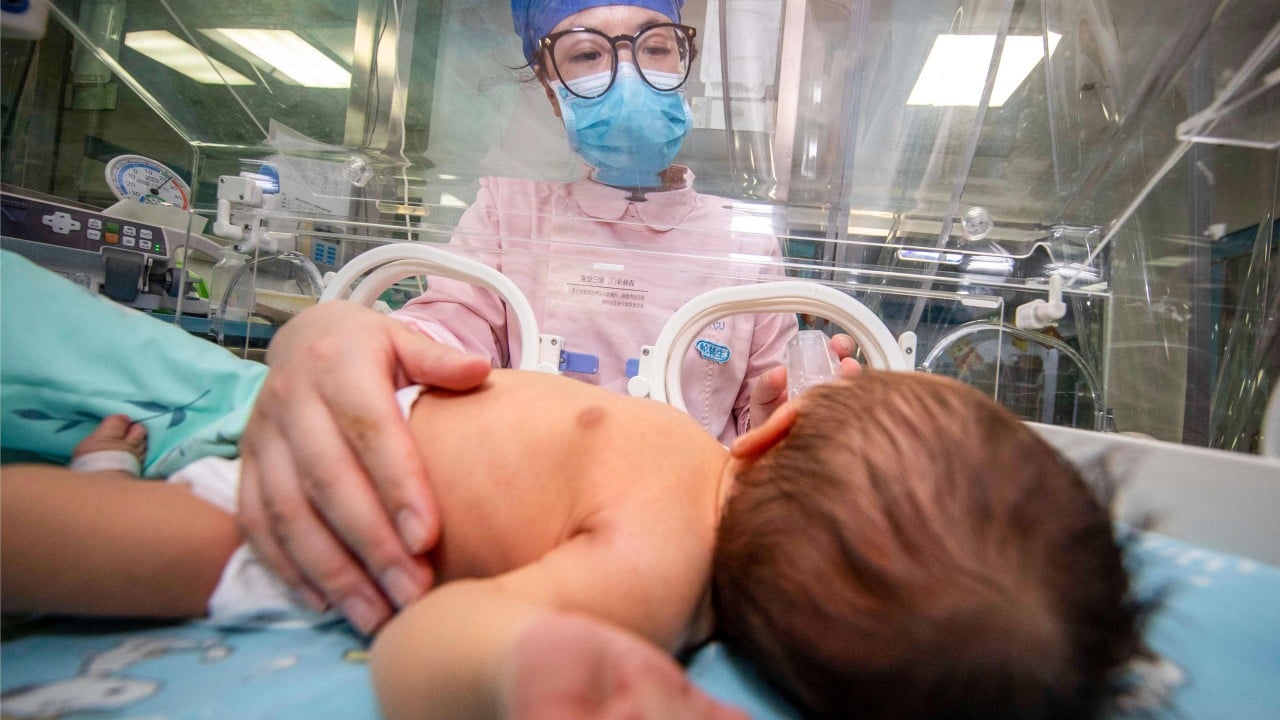
The clinic is quiet at three in the morning. In the basement of an unassuming commercial park on the outskirts of Guangzhou, the hum of a commercial incubator sounds precisely like a kitchen refrigerator running on an empty stomach. Inside those glass drawers, microscopic clusters of cells divide, watched over by a technician who has not slept a full night in four days.
Surrogacy is illegal here. It has been banned by ministerial decree since 2001, subject to administrative penalties, heavy fines, and the constant, cold shadow of police raids. Yet the incubators hum. The contracts are signed in whispered coffee shops across Shenzhen. The money moves through cryptic digital channels, disguised as software consulting fees or antique acquisitions.
Why won't it die?
To understand why a multi-billion-dollar underground fertility market survives total state prohibition, you have to look past the legal codes and look directly into the desperate eyes of a generation caught between strict demographic planning and the fierce, unyielding biological clock of modern life.
Consider a hypothetical couple, Lin and Wei. They live in a cramped apartment in Shanghai where the walls are thin enough to hear the neighbor’s television, but their ambitions are vast. They did everything the system asked of them. They studied hard, secured corporate jobs, delayed marriage until their thirties, and bought a depreciating shoe-box of a home. By the time they finally turned their attention toward building a family, the door had slammed shut. Years of chronic stress, polluted air, late-night office fluorescent lighting, and biological reality conspired against them.
Medical infertility is a quiet grief. It does not announce itself with sirens. It arrives in the form of a negative pregnancy test on a Tuesday morning, followed by a sterile medical report filled with Latin terms that translate to a single, devastating sentence: It is not going to happen naturally.
In a society where lineage is historically paramount, where the pressure to carry the family name down through an only child is an unspoken civic religion, infertility is a quiet crisis of identity. The Chinese government knows this. In fact, Beijing has spent the last several years desperately trying to reverse its plunging birth rates, offering tax incentives, extended maternity leaves, and pro-natalist propaganda campaigns in every state newspaper.
Yet, reproductive assistance remains tightly gatekept. Official policy restricts assisted reproductive technologies strictly to married heterosexual couples facing medical barriers, and it bans commercial surrogacy entirely over strict ethical concerns regarding the commodification of women's bodies and the exploitation of the poor.
The state wants more babies. Just not these babies, and certainly not made this way.
This contradiction creates a pressurized system. When you forbid a deeply desired service while simultaneously demanding that citizens multiply, you do not eradicate the market. You merely professionalize its secrecy.
The underground trade operates with chilling efficiency. Brokers act as intermediaries between desperate, middle-class couples and rural women willing to carry a child for sums that can equal a decade of local agricultural wages. A surrogate in Henan or Sichuan might receive enough money to build a brick home for her parents or fund her own children's university tuition. To her, it is not exploitation; it is an economic lifeline in a landscape of limited mobility. To the affluent couple in Beijing, it is the sole remaining lottery ticket to a complete life.
The state attempts crackdowns with predictable regularity. Ministries launch special campaigns targeting illegal agencies, raiding suburban villas converted into makeshift dormitories for pregnant women, and confiscating medical equipment. State television broadcasts dramatic footage of police breaking down doors, flashing red and blue lights reflecting off sterile linoleum floors.
For a few weeks, the forums go dark. The encrypted chat groups change their names. Brokers turn off their phones.
Then, the market adapts. It always adapts.
The operation simply fragments. Instead of large, centralized facilities that are easy for authorities to spot, the process decentralizes into a constellation of moving parts. Embryos are created in legal clinics abroad—often in Laos, Russia, or the United States—then smuggled back in liquid nitrogen dry shippers carried by unsuspecting business travelers. Prenatal checks are conducted by corruptible local doctors who look the other way in exchange for generous cash envelopes. Birth certificates are acquired through elaborate administrative workarounds, sometimes leveraging historical household registration loopholes.
The resilience of the network is fueled by a simple economic truth: demand vastly outstrips supply, and the penalties, while severe on paper, are often treated by underground syndicates as mere operational overhead.
The human cost of this prohibition-by-decree falls entirely on the margins. Because the entire industry operates outside the rule of law, there are no consumer protections, no standard medical insurance policies, and no legal guarantees for anyone involved.
If a surrogate develops severe gestational hypertension or gestational diabetes, she relies entirely on the conscience of brokers who view her primarily as a vessel. If the intended parents discover the baby has a congenital anomaly and decide they no longer want to complete the transaction, the legal vacuum leaves the newborn in an administrative purgatory with no clear parents, no citizenship status, and nowhere to go.
Children born through underground surrogacy are ghosts in the bureaucratic machine until lawyers manage to regularize their status through complex, expensive judicial gymnastics. They are loved fiercely, desperately, yet they begin their lives as legal contraband.
The authorities face an impossible paradox. To fully eradicate surrogacy would require an Orwellian level of surveillance into the medical privacy and bodily autonomy of every fertile woman of childbearing age in the country. It would require monitoring every missed period, every private bank transfer, every cross-border flight. Even for a state with the technological apparatus of modern China, that is an insurmountable task.
And so the underground persists. It thrives in the dark spaces between official policy and human desperation.
As long as the cultural imperative for lineage remains stronger than the fear of administrative punishment, and as long as modern life continues to erode natural fertility faster than policy can mend it, the hidden cradles will keep rocking. You cannot legislate away a biological yearning with a ministerial decree. You can only drive it deeper underground, where the hum of the incubator grows fainter, but never truly stops.