Everyone in Geneva, New York, and the editorial boards of legacy newspapers is popping champagne over the International Court of Justice ruling against Myanmar. They are calling it a historic triumph for international law. They are praising the moral clarity of the World Court. They are treating a stack of legal parchment in The Hague like a tactical airstrike against the Tatmadaw.
They are completely delusional.
I have spent fifteen years tracking international tribunal outcomes, sanctions regimes, and cross-border conflict zones from the Balkans to the Bay of Bengal. I have watched NGOs burn through hundreds of millions of donor dollars chasing symbolic legal victories while the actual victims rot in open-air prisons. The lazy consensus surrounding the ICJ ruling on the Muslim Rohingya confuses moral validation with operational power. It mistakes a courtroom gavel for an enforcement mechanism.
If you think a genocide ruling from the top UN court actually stops mass atrocities, forces repatriations, or topples a military junta, you do not understand how international law works. You are celebrating a receipt for a meal nobody is going to cook.
The Enforcement Illusion Inside the Peace Palace
Let us strip away the diplomatic theater and look at the cold mechanics of the International Court of Justice.
First, we need to correct a massive, deliberate conflation pushed by surface-level news coverage. The ICJ is not the International Criminal Court. The ICC prosecutes individuals and issues arrest warrants—though even those rely entirely on member states to execute them. The ICJ settles disputes between sovereign states under the 1948 Genocide Convention. Nobody goes to jail after an ICJ verdict. No generals are handcuffed. No assets are automatically seized.
When the ICJ rules that Myanmar violated the Genocide Convention during its 2017 clearance operations in Rakhine State, it issues orders for cessation, non-repetition, and reparations. Now ask yourself a basic, uncomfortable question. Who enforces an ICJ judgment when a state refuses to comply?
Under Article 94 of the United Nations Charter, enforcement falls exclusively to the UN Security Council.
Read that again. The exact same Security Council where China and Russia hold permanent veto power. Beijing views Myanmar as a strategic corridor to the Indian Ocean, pouring billions into the China-Myanmar Economic Corridor and the Kyaukphyu deep-sea port. Moscow is the junta's premier arms supplier, trading fighter jets and attack helicopters for geopolitical leverage in Southeast Asia.
Any binding resolution to enforce the ICJ's ruling through UN peacekeeping forces, comprehensive arms embargoes, or crippling economic blockades dies on arrival in New York. Vetoed before the ink dries. The legal experts cheering in The Hague know this. Yet they sell the public a fairy tale that international law possesses teeth it simply does not have.
The Fatal Trap of the Genocide Convention
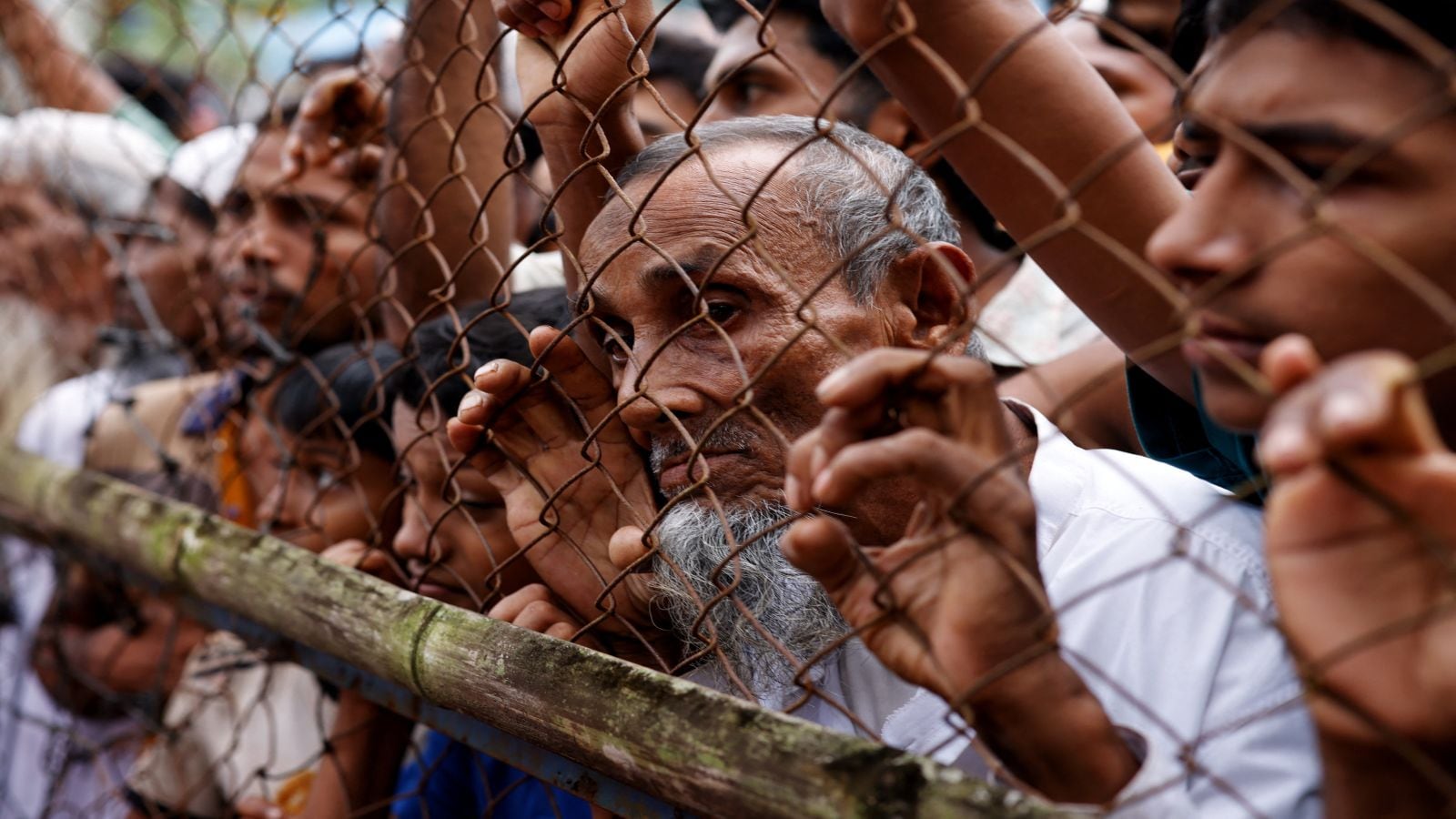
Why did this case take years of grueling litigation, massive legal fees, and endless procedural delays while over a million Rohingya languished in the squalor of Cox's Bazar in Bangladesh? Because the legal community is addicted to the word "genocide."
In the hierarchy of human suffering, activists and diplomats treat genocide as the ultimate trump card. They believe that if they can just get a court to stamp that specific nine-letter word onto a crisis, the world will be forced to act.
History proves the exact opposite.
Look at the Srebrenica ruling in Bosnia and Herzegovina v. Serbia and Montenegro (2007). The ICJ confirmed genocide occurred, yet cleared Serbia of direct responsibility because proving dolus specialis—the specific intent to destroy a group in whole or in part—is the highest, most unforgiving evidentiary bar in modern jurisprudence.
Focusing all diplomatic oxygen on proving genocide at the ICJ creates a perverse incentive structure:
- It delays immediate intervention. Governments hide behind ongoing litigation as an excuse to avoid unilateral action, claiming they must wait for the judicial process to play out.
- It narrows the scope of accountability. Atrocities that clearly constitute crimes against humanity or war crimes get sidelined because they lack the rhetorical punch of the G-word.
- It hardens the target regime. Backing a pariah military junta into a corner with a permanent label of genocidal statehood does not make them compliant. It convinces them that surrender equals total annihilation, driving them deeper into the arms of authoritarian patrons.
Raphael Lemkin coined the term genocide in 1944 to prevent future Holocausts. Today, international lawyers use his framework to conduct autopsies on slaughtered populations years after the graves have been dug. Calling it a victory when the court finally agrees on the cause of death is a sick joke.
What People Actually Ask Versus What Matters
When news of the ICJ ruling breaks, public search trends spike around predictable, flawed questions. Let us dismantle them with brutal honesty.
Does this mean Myanmar's military leaders will face justice?
No. Min Aung Hlaing and the Tatmadaw brass are not booking flights to the Netherlands. Unless they are physically overthrown by domestic resistance forces—like the Three Brotherhood Alliance and the People's Defense Forces—and handed over by a successor government, they will never see the inside of a courtroom. An ICJ ruling has zero jurisdiction over individual criminal liability.
Will the Rohingya finally be able to return home safely?
Absolutely not. Safe repatriation requires structural citizenship rights, dismantled apartheid laws, and physical security on the ground in Rakhine State. Right now, Rakhine is an active warzone contested between the Myanmar military and the Arakan Army—an ethnic armed organization that has its own complicated, often hostile history with the Rohingya population. A piece of paper from The Hague does not clear landmines, rebuild burned villages, or erase decades of state-sponsored ethno-nationalism.
Does the ruling force Western nations to sanction Myanmar?
The United States, the European Union, and the United Kingdom have already slapped sanctions on Myanmar's state-owned enterprises, military conglomerates like MEC and MEHL, and junta officials. They did not need an ICJ verdict to do it. Conversely, the nations that matter most to Myanmar's economic survival—China, India, Thailand, and Singapore—will continue doing business with Naypyidaw regardless of what the World Court says.
The Unintended Consequence Nobody Wants to Admit
Here is the part that gets you uninvited from human rights panels in Washington and Brussels. The obsession with international judicial theater actively harms the people it claims to protect.
Let us run a thought experiment. Imagine a scenario where you are a desperate donor agency or a Western foreign ministry with a finite budget of $50 million earmarked for the Rohingya crisis. You have two choices. Option A funds high-profile international legal teams, documentation centers, and diplomatic summits in Europe to secure an ICJ ruling. Option B funds vocational training, contraband communications networks, cross-border medical corridors, and direct cash transfers to refugees trapped in Bangladesh.
Over the last seven years, the international community poured staggering intellectual and financial capital into Option A because legal victories generate press releases. Meanwhile, the World Food Programme was forced to slash food rations for Rohingya refugees in Cox's Bazar down to $8 a month—roughly 27 cents a day—due to severe funding shortfalls.
Malnutrition skyrocketed. Desperate refugees turned to human traffickers, boarding rickety boats across the Andaman Sea to Malaysia and Indonesia, where hundreds drowned. Armed gangs took over the camps after dark, kidnapping, extorting, and forcibly recruiting young men.
We starved the living to pay for a legal monument to the dead.
Even worse, the international community's fixation on Myanmar's central government ignores the shifting reality on the ground. Since the 2021 coup, the junta has lost control of massive swaths of territory, including most of Rakhine State, to the Arakan Army. By treating the Myanmar state as the sole, monolithic actor in an ICJ proceeding, diplomats are negotiating with a crumbling facade while ignoring the actual power brokers who now control the Rohingya's ancestral homeland.
The Contrarian Downside
Is there a flaw in dismissing the ICJ ruling entirely? Yes, and intellectual honesty demands we confront it.
Historical records matter. Authoritarian regimes spend decades rewriting history, denying atrocities, and erasing minority populations from national memory. Look at how long denialism has persisted regarding the Armenian genocide or the Rohingya's very existence—a group the Myanmar government refuses to even name, referring to them solely as illegal "Bengali" immigrants.
An authoritative judgment from the principal judicial organ of the United Nations permanently anchors the truth in the historical record. It strips away plausible deniability for future generations. It prevents revisionists from claiming the events of August 2017 were merely a legitimate counter-insurgency operation against the Arakan Rohingya Salvation Army.
That historical baseline has long-term value. But you cannot eat a historical baseline. You cannot shelter your family from monsoon rains under a judicial precedent. Confusing an archival victory with a strategic breakthrough is fatal.
Stop Litigating and Start Disrupting
If Western policymakers and human rights organizations actually care about the survival of the Rohingya rather than their own moral vanity, they need to abandon the courtroom fantasy and adopt a ruthless, pragmatic strategy.
- Bypass the UN Security Council entirely. Stop wasting diplomatic capital drafting resolutions destined for a Chinese or Russian veto. Build targeted, unilateral coalitions of willing states to enforce secondary sanctions on financial institutions in Singapore, Thailand, and the UAE that process aviation fuel and dual-use technology payments for the Tatmadaw. Cut the jet fuel, and the junta's ability to bomb villages collapses overnight.
- Engage the actual gatekeepers in Rakhine. Western diplomats must drop their rigid adherence to state-centric protocol and open direct, high-level channels with the Arakan Army and the National Unity Government (NUG). Any realistic framework for Rohingya citizenship, land restitution, and safe return will be negotiated with the ethnic armed organizations holding the territory, not the generals hiding in Naypyidaw.
- Shift funding from legal theater to refugee autonomy. Redirect money away from Geneva conferences and directly into education, digital connectivity, and work permits inside host countries. Keeping a million people locked behind barbed wire in Bangladesh without legal employment is a slow-motion genocide of its own. Pressure Dhaka to integrate refugees into the local economy in exchange for massive bilateral trade concessions and debt relief.
- Weaponize universal jurisdiction in domestic courts. Instead of waiting decades for the ICJ, aggressively pursue criminal cases under universal jurisdiction in national courts—like the ongoing proceedings in Argentina—where targeted arrest warrants can actually restrict the physical movement of junta officials and their business cronies abroad.
The judges in The Hague have done their job. They read the briefs, weighed the evidence, and delivered a verdict that makes the international legal establishment feel righteous.
Meanwhile, in the mud of Cox's Bazar and the burning villages of Rakhine State, nothing has changed. Until the world stops mistaking a gavel for a shield, the Rohingya will remain exactly where they have always been: vindicated in the courtroom, and abandoned on the ground.