Picture a Tuesday night in November 2027.
Let us invent a voter to sit on a worn velvet sofa in a modest living room in Cedar Rapids, Iowa, watching a television screen glow blue against the dark. Call him Arthur. Arthur is fifty-eight, a retired high school shop teacher whose pension barely keeps pace with the price of groceries and copper pipe. On his screen, eight politicians stand behind brushed-aluminum podiums, smiling under studio lights that cost more per hour than Arthur earned in a month.
The moderator asks a question about prescription drug prices. Every candidate gives an answer that sounds remarkably like a lullaby.
Then, during the commercial break, an advertisement cuts in. A deep, gravelly voice warns Arthur that one of those smiling candidates wants to destroy American manufacturing. The screen flashes an organization name that sounds like a patriotic monument—something like Citizens for a Prosperous Heartland. There is no face attached to the voice. No donor list scrolls across the bottom of the screen. Just thirty seconds of fear, paid for by a legal entity that technically does not have to tell Arthur who signed the check.
That invisible check is the ghost sitting at every political podium in America.
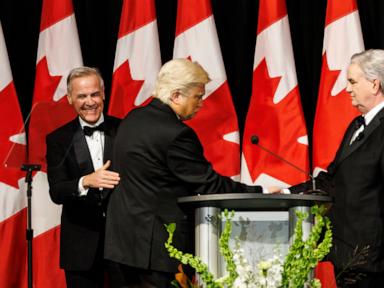
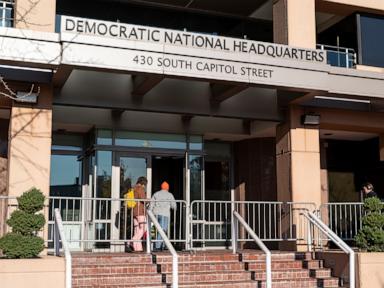
According to news reports detailing the Democratic National Committee’s early framework for the 2028 presidential primary, party leadership plans to host twelve sanctioned debates—and intends to require candidates to publicly denounce "dark money" in order to qualify for the stage.
On paper, that reads like a dry procedural memo. Twelve events. One rhetorical pledge. Move along to the sports section.
Yet beneath that bureaucratic phrasing lies a ferocious, decades-long tug-of-war over who actually owns the microphone in American democracy—and whether a public pledge on a television stage can meaningfully restrain a multi-billion-dollar shadow industry.
The Architecture of an Invisible Dollar
To understand why the Democratic National Committee is tying debate stage access to a specific stance on campaign finance, you have to understand how modern political money hides in plain sight.
Imagine walking into a crowded diner and handing the waitress a twenty-dollar bill to pay for a stranger’s breakfast, asking her not to say who left it. That is benign anonymity. Now imagine buying the diner, rewriting the menu, hiring the cooks, and paying thirty actors to sit at the counter praising the eggs, all through a shell company registered in Delaware so no customer ever knows your name.
That is the functional reality of dark money in federal elections.
Under current federal tax and campaign finance law, the term generally refers to funds spent to influence elections by nonprofit organizations—most commonly 501(c)(4) "social welfare" groups and 501(c)(6) trade associations—that are not legally required to disclose their donors. Unlike traditional political action committees, which must file regular public reports with the Federal Election Commission detailing every contributor who gives over two hundred dollars, these nonprofits can accept unlimited checks from individuals, corporations, or unions and funnel them into issue advocacy, digital blitzes, or super PACs without revealing the original source.
Since the Supreme Court’s 2010 Citizens United v. Federal Election Commission decision dismantled restrictions on independent corporate and union political expenditures, outside spending has swelled from a side stream into the main river. Nonpartisan tracking groups such as OpenSecrets have documented billions of dollars in untraceable or partially traceable funds flowing through federal cycles over the past sixteen years.
The mechanics are simple, even if the tax code is labyrinthine. A wealthy donor writes an eight-figure check to a 501(c)(4) nonprofit. That nonprofit then transfers the money to an allied super PAC. When the super PAC files its mandatory disclosure form with federal regulators, the public sees only the name of the nonprofit—an opaque corporate mask—rather than the human being or business interest behind the money.
For voters like our hypothetical shop teacher in Cedar Rapids, the consequence is disorientation. You hear a message, you feel an emotion, and you cast a ballot, all without knowing whose financial ledger your vote is balancing.
Why Twelve Debates Change the Oxygen in the Room
The number twelve is not an accident.
In recent presidential cycles, party committees have frequently compressed debate schedules, holding fewer sanctioned forums in an effort to limit intraparty bruising and preserve resources for the general election. By committing to a full dozen debates for the 2028 cycle, Democratic strategists are signaling a return to a marathon format—one that stretches across early nominating states and rewards endurance, retail agility, and sustained public scrutiny.
More stages mean more hours of unscripted friction. In a six-debate cycle, a candidate can memorize four talking points, survive a handful of ninety-second exchanges, and coast on early name recognition or big-donor air cover. In a twelve-debate cycle, the paint wears off. Voters get to watch how candidates handle fatigue, how they recover from a stumble in October, and how their answers evolve when the same question is asked three different ways between New Hampshire and Nevada.
I remember sitting in the press filing center during a crowded primary debate years ago, watching campaign aides sprint toward reporters the second the closing credits rolled. What struck me was not the polish of the candidates under the lights, but the sheer panic in the hallways whenever a contender went off-script for ten seconds. A dozen debates multiply those ten-second windows exponentially. They force candidates to stand shoulder to shoulder without the protective insulation of curated rally crowds or tightly edited digital videos.
By placing twelve dates on the calendar, the party is creating a prolonged audition where earned media—what happens live in front of cameras—competes directly against paid media.
And that brings us back to the price of admission.
The Podium Pledge and Its Paradox
Requiring candidates to denounce dark money to qualify for the 2028 debate stage is, on its face, a populist litmus test. It reflects deep frustration among grassroots Democratic voters and progressive organizers who argue that unlimited, undisclosed spending corrodes public trust and tilts policy outcomes toward corporate boardrooms and billionaire benefactors.
From the perspective of party architects, the logic is straightforward: if voters suspect that politicians on both sides of the aisle are quietly subsidized by anonymous interests, forcing candidates to draw a bright moral line in public reassures the base. It frames the primary as a contest of transparency versus secrecy.
Yet seasoned campaign observers—and critics across the political spectrum—immediately point to a glaring structural paradox.
Denouncing dark money is not the same thing as disarming it.
Under Supreme Court precedent, candidates are legally prohibited from coordinating directly with independent outside groups, including super PACs and 501(c)(4) nonprofits. That legal firewall means a candidate can stand at a podium on Wednesday night, passionately condemn undisclosed political spending, and wake up Thursday morning to find an independent nonprofit spending five million dollars on television ads praising their biography or attacking their nearest rival.
The candidate can say, "I do not want this help." The outside group, protected by First Amendment jurisprudence governing independent political speech, can legally ignore them and keep buying airtime anyway.
Consider what happens in practice. During the 2020 and 2024 election cycles, multiple candidates in both major parties pledged to reject corporate PAC money or criticized the influence of super PACs, only to benefit from tens of millions of dollars in independent spending by allied nonprofits and single-candidate committees. Critics argued that such pledges sometimes created an optical illusion of purity while leaving the underlying financial machinery untouched. Defenders countered that refusing direct PAC checks and advocating for legislative reforms like the DISCLOSE Act—which would mandate donor transparency for outside groups—was the only lawful tool available until Congress or the courts alter the rules.
The debate over the DNC’s requirement therefore splits along a fault line of credibility:
- Supporters of the rule argue that normative pressure matters. When candidates are forced on national television to repudiate anonymous money, it isolates campaigns that rely heavily on opaque outside networks, builds political momentum for statutory disclosure laws, and signals to skeptical voters that the party takes corruption seriously.
- Skeptics and conservative critics contend that a verbal denunciation amounts to cost-free political theater. They note that Democratic-aligned nonprofits spent hundreds of millions of dollars in recent federal cycles—at times outpacing Republican-aligned dark money groups—and argue that asking candidates to condemn a system their own allies actively utilize invites charges of hypocrisy rather than genuine reform.
- First Amendment advocates raise a separate objection altogether, warning that efforts to stigmatize or restrict anonymous political advocacy threaten the historical tradition of protected, unnamed speech—from the Federalist Papers to civil rights organizing—where individuals feared economic or social retaliation for their views.
Each of these arguments carries weight. Pretending the issue is simple does a disservice to anyone trying to follow the money.
What Happens When Trust Evaporates
Let us return for a moment to Arthur on his velvet sofa in Cedar Rapids.
Arthur does not read Federal Election Commission advisory opinions. He does not know the difference between section 501(c)(4) and section 527 of the Internal Revenue Code. What he knows is a feeling—a low, persistent hum of cynicism that settles in his chest every election autumn.
When every commercial break brings an attack funded by a committee whose name sounds like a charity, and every candidate insists they have nothing to do with it, the ordinary citizen draws a rational, devastating conclusion: Nobody is accountable for what I am being told.
That erosion of accountability is the invisible stake behind the 2028 debate rules.
Political scientists have long observed that high levels of perceived corruption do not merely shift votes from one party to another; they depress participation altogether. When voters believe the game is rigged by unseen hands, they stop showing up to the stadium. They tune out policy debates. They treat public service as a cynical hustle.
For the Democratic Party heading into 2028, rebuilding that trust is an existential necessity. Following bruising electoral cycles marked by voter dissatisfaction over inflation, institutional skepticism, and fierce internal debates over messaging, party leaders face an electorate that demands proof of authenticity. Twelve debates offer a sustained window to showcase ideas and test temperament. A requirement to denounce dark money attempts to draw a clear ethical boundary right at the entrance.
Still, a boundary drawn in chalk washes away in the first hard rain unless someone builds a wall behind it.
The Test Beyond the Microphone
If the 2028 primary unfolds across twelve stages, voters will quickly learn to look past the opening statements.
When a candidate steps up to the microphone and denounces dark money to satisfy a DNC qualification rule, the real story will not be the applause line in the auditorium. The real story will happen in the quiet weeks between debates, inside the campaign finance filings, the independent expenditure reports, and the willingness—or reluctance—of candidates to challenge their own ideological allies when anonymous millions flood a battleground state.
Will candidates sign binding agreements with rivals to penalize outside dark money spending on their behalf, similar to the "People’s Pledge" used in the 2012 Massachusetts Senate race, where candidates agreed to donate a percentage of any outside ad buy to charity? Or will the denunciation remain a ceremonial box checked on a qualifying form while shadow committees continue operating at full throttle?
Those questions cannot be answered by a press release in 2026. They will be answered under the hot lights of 2027 and 2028, in the unscripted moments when a moderator presses a frontrunner on why an untraceable nonprofit just bought every billboard between Des Moines and Davenport.
Imagine Arthur watching that moment.
The studio lights are still bright. The brushed-aluminum podiums still gleam. A candidate leans into the microphone, clears their throat, and prepares to explain who paid for the voice in the dark. Arthur reaches for the remote control, his thumb hovering over the power button, waiting to hear whether the answer finally has a name attached to it.