The Echo Chamber of the Supply Chain Panic
Geopolitical analysts love a good doomsday narrative.
When Beijing announced stricter export controls on tungsten, the tech press rushed out their favorite template. The headlines practically wrote themselves: China chokes the supply of critical minerals. Western and Japanese advanced semiconductor fabs face an existential threat. The AI revolution is grinding to a halt.
It is a neat, terrifying story. It is also completely wrong.
The mainstream consensus relies on lazy math. Analysts look at a pie chart, see that China controls roughly 80% of global tungsten mine production, look at a map of advanced semiconductor fabs in Kyushu and Tohoku, and draw a straight, panicked line between the two. They treat tungsten like it is the new enriched uranium—a bottleneck asset that can bring Tokyo’s semiconductor ambitions to its knees.
This narrative misses how semiconductor manufacturing actually works. It misunderstands the chemistry of tungsten hexafluoride ($WF_6$), underestimates Japan’s recycling capabilities, and ignores the reality of stockpiling.
Japan’s AI chip supply chain is not about to collapse. In fact, Beijing’s export restrictions might be the best thing that ever happened to Japanese domestic material processing.
The Chemical Illusion: You Are Measuring the Wrong Tungsten
To understand why this panic is fabricated, you have to separate raw ore from semiconductor-grade precursors.
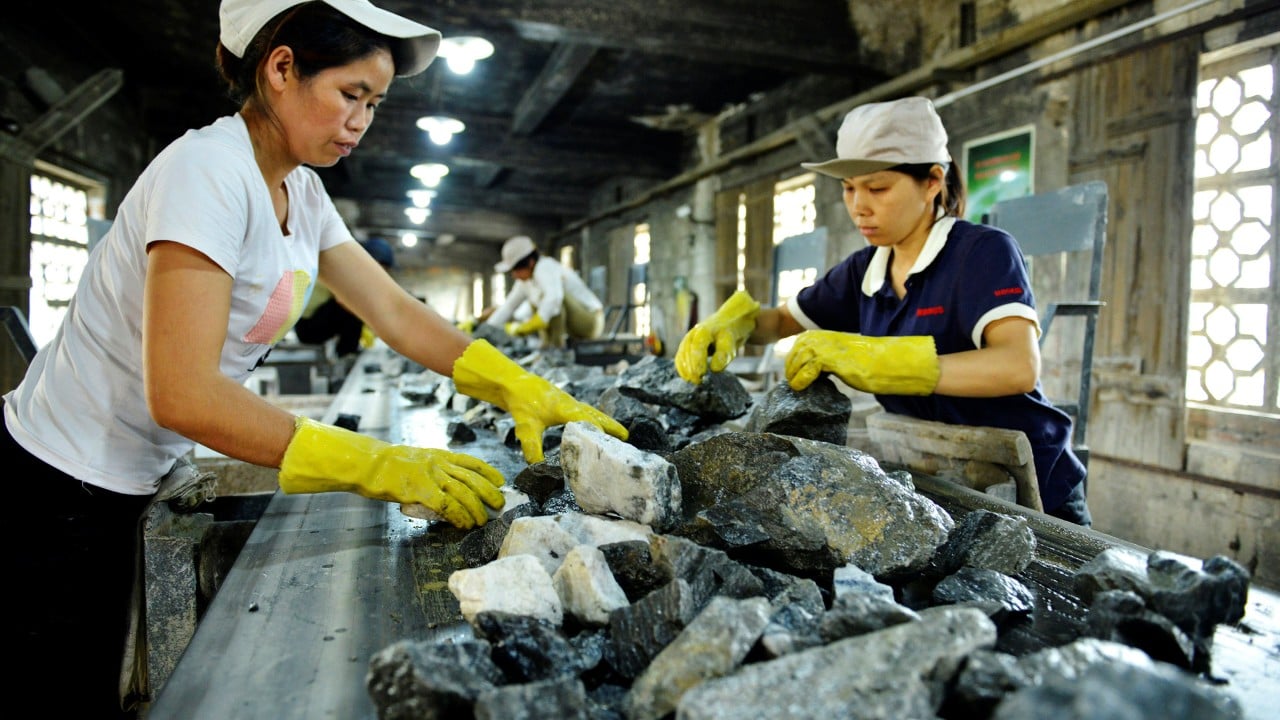
When China restricts tungsten exports, it is targeting raw concentrates, ammonium paratungstate (APT), and low-grade powders. These are the bulk materials used for drill bits, automotive parts, and military munitions.
Advanced semiconductor manufacturing does not consume raw tungsten. It consumes ultra-high-purity tungsten hexafluoride gas ($WF_6$). This gas is used in chemical vapor deposition (CVD) to create the microscopic plugs and vias that connect different layers of transistors on a wafer.
The critical link in this chain is not the mine in Jiangxi; it is the purification plant that turns crude chemical precursors into 99.9999% (6N) pure gas.
I have watched hardware executives panic over mine closures while completely ignoring the fact that the processing bottleneck is where the real power lies. Japan does not import raw dirt from China to put into Tokyo Electron’s deposition tools. It imports intermediate chemical inputs, and increasingly, it does not even need to do that.
Japan is the global heavyweight in electronic gas purification. Companies like Kanto Denka Kogyo and Showa Denko (now Resonac) dominate the specialized processing of electronic-grade gases. If China cuts off a specific channel of intermediate tungsten powder, these companies do not shut down. They shift their sourcing to non-Chinese APT or activate alternative chemical synthesis pathways that bypass Chinese supply lines entirely.
Dismantling the "People Also Ask" Myth: Can Japan Replace Chinese Tungsten?
If you search for information on critical mineral supply chains, the same questions pop up repeatedly. The answers provided by standard industry reports are universally flawed because they treat supply chains as static entities.
"Is there enough tungsten outside of China to sustain AI chip production?"
The short answer is yes, by a wide margin. The premise of the question is flawed because it assumes semiconductor manufacturing requires massive volume.
The automotive and aerospace sectors consume tungsten by the kiloton. The semiconductor industry measures its consumption of electronic-grade tungsten in metric tons. A little goes an incredibly long way when you are dealing with nanometer-scale layers on silicon wafers.
Vietnam, Russia, Canada, and Bolivia hold massive tungsten reserves. Mining companies like Masan High-Tech Materials in Vietnam already operate sophisticated processing facilities capable of delivering high-quality oxides. When Chinese export restrictions artificially inflate the price of tungsten, they do not starve the market; they make mining projects in the rest of the world economically viable overnight.
"How long does it take Japan to switch suppliers?"
The lazy consensus says it takes five to seven years to qualify a new material supplier for an advanced semiconductor fab. In a stable market, that is true. Fabs are notoriously conservative; if a chemical recipe works, TSMC, Kioxia, and Sony do not change it.
But history shows that qualification timelines melt away during a geopolitical crunch. Look at how quickly Japanese fabs diversified away from South Korean hydrogen fluoride suppliers during the 2019 trade spat, or how global fabs replaced Ukrainian neon gas within months of the 2022 invasion.
If Beijing completely cuts off tungsten precursors, Japan’s Ministry of Economy, Trade and Industry (METI) will fast-track joint qualification protocols. What normally takes years will happen in six weeks. The tools will keep spinning.
The Secret Weapon: Japan's Urban Mining Hegemony
The biggest blind spot in the Western analysis of Japan's supply chain vulnerability is the failure to account for recycling. Japan is not a resource-poor island; it is an island sitting on a massive, highly efficient, closed-loop industrial recycling infrastructure often called "urban mining."
Because Japan has spent decades facing the reality of zero domestic mineral resources, its metallurgical companies have perfected the art of secondary extraction.
[Raw Ore Sourcing] ----> [Inefficient] -> High Geopolitical Risk (China)
[Urban Mining]   ----> [Closed-Loop] -> Zero Geopolitical Risk (Domestic Japan)
Companies like Mitsubishi Materials and Sumitomo Electric Industries possess world-class technology for reclaiming tungsten from scrap carbide tools, industrial sludge, and spent manufacturing components.
- The Scrap Yield: Japan already meets a significant double-digit percentage of its domestic tungsten demand through the recycling of cemented carbide tools.
- The Diversion Strategy: In a crisis, industrial scrap processing can be rapidly redirected. Tungsten reclaimed from heavy industrial cutting tools can be chemically reprocessed into the precursors needed for electronics.
This is not a theoretical concept. I have walked through recycling facilities in Japan where scrap drill bits from domestic manufacturing are transformed back into high-purity powder faster than a container ship can travel from Shanghai to Yokohama.
To suggest that a restriction on primary mining output will immediately paralyze an industry backed by this level of secondary processing capability is a fundamental misunderstanding of Japanese industrial resilience.
The Strategic Stockpile Fallacy
The threat of an export curb only works if the target is caught empty-handed. Japan’s national stockpiling strategy is one of the most sophisticated in the world, managed systematically by the Japan Organization for Metals and Energy Security (JOGMEC).
JOGMEC maintains state-controlled stockpiles of critical minerals, including tungsten, calculated to sustain domestic industry for months under total blockade conditions. Private corporations maintain their own operational cushions.
A Chinese export restriction is not a sudden, unpredictable strike; it is a slow-moving administrative process involving export licenses and quotas. It plays out over quarters and years, giving Japanese procurement officers ample time to draw down stockpiles while activating alternative supply nodes in Southeast Asia and North America.
The True Vulnerability Is Not What You Think
To be completely fair, there is a risk here, but it has nothing to do with the mineral itself. The contrarian truth is that the threat is entirely financial and logistical, not physical.
If you opt to diversify away from Chinese tungsten, you must accept two harsh realities:
- Higher Operational Costs: Sourcing tungsten from non-Chinese mines and routing it through alternative purification channels adds a premium to the final product. Your chemical inputs become more expensive.
- Initial Yield Volatility: Even with accelerated qualification, changing a precursor supplier can introduce minor variances in chemical purity. This can temporarily impact wafer yields during the initial transition phase.
+---------------------------------+---------------------------------+
| Disruption Vector               | Actual Operational Impact       |
+---------------------------------+---------------------------------+
| Physical Material Starvation    | Zero. Alternative sources and   |
|                                 | recycling fill the void.        |
+---------------------------------+---------------------------------+
| Precursor Input Cost            | Higher. 15-20% premium for non- |
|                                 | Chinese supply chains.          |
+---------------------------------+---------------------------------+
| Advanced Wafer Yield            | Temporary 1-2% drop during      |
|                                 | supplier qualification phase.   |
+---------------------------------+---------------------------------+
But a marginal increase in the cost of a chemical vapor deposition gas does not break the AI chip supply chain. When an advanced AI accelerator sells for tens of thousands of dollars, the fraction of a cent allocated to the tungsten atoms inside its vias is irrelevant to the macroeconomics of the business. NVIDIA, AMD, and their manufacturing partners can absorb a 500% increase in raw tungsten prices without it registering as a blip on their gross margin reports.
The Counter-Intuitive Result of Beijing's Move
By overplaying its hand with export controls on critical minerals like tungsten, gallium, and germanium, Beijing is accelerating the exact outcome it wants to prevent.
Every time a new restriction is announced, it acts as a direct financial subsidy for non-Chinese supply chains. It de-risks capital expenditure for mining projects in Australia, North American processing plants, and Japanese recycling facilities. It forces conservative fab managers to do the hard work of decoupling.
China is not cutting off Japan's air supply; it is forcing Japan to build a better oxygen tank.
Stop analyzing the semiconductor supply chain through the lens of raw material volume. Start analyzing it through the lens of chemical processing agility and recycling infrastructure. When you do, the panic evaporates. Japan's advanced chip fabs will keep printing silicon, the AI infrastructure buildout will continue unabated, and the tungsten crisis will be remembered as just another paper tiger.