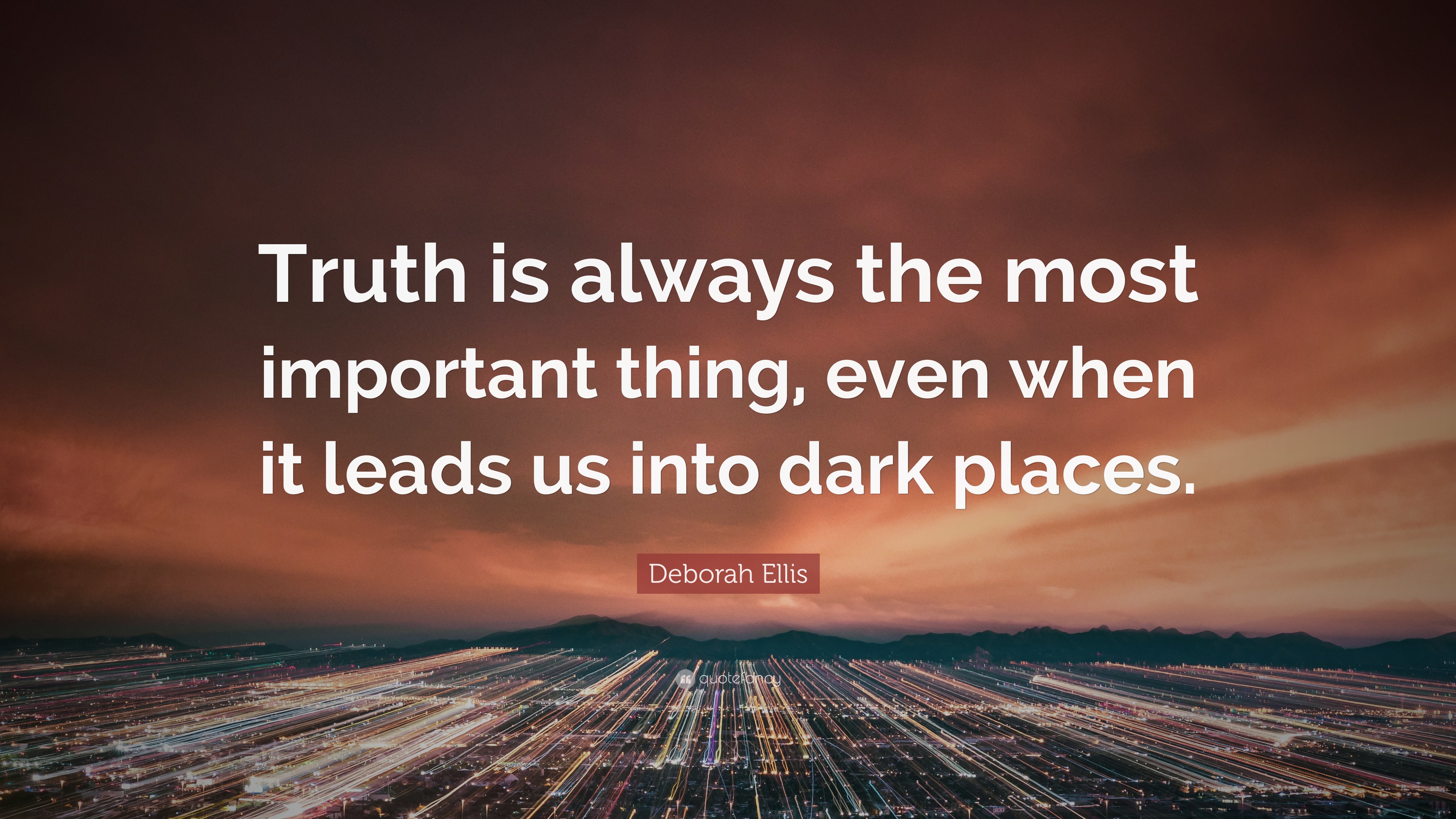
The most dangerous lie in modern discourse is the idea that free speech is a tool designed to extract "truth."
We’ve been sold a sanitized, academic version of the First Amendment that suggests we only tolerate dissent because, eventually, the "marketplace of ideas" will filter out the garbage and leave us with a shiny, objective fact. This is a fundamental misunderstanding of why we protect speech. If you wait for speech to be "true" before you value it, you’ve already signed the death warrant for innovation, dissent, and eventually, the truth itself.
The "truth-seeking" argument is a trap. It creates a permission-based society where a central authority—whether it’s a government, a tech platform’s safety council, or a mob of angry Twitter users—gets to decide what is "constructive" and what is "misinformation."
Real freedom isn't about finding the right answer. It’s about the right to be wrong, loud, and annoying without a self-appointed gatekeeper deciding your words have no value.
The Myth of the Marketplace of Ideas
The "marketplace of ideas" is a metaphor that has failed us. In a real market, if you sell a car with no engine, you get sued for fraud. In the world of speech, people try to apply the same logic: "This idea is false, therefore it should be removed from the shelf."
But speech isn't a commodity. It’s the process of thought itself. When you tell someone they can only speak if their words lead toward a "shared truth," you aren't encouraging better ideas. You are encouraging performative compliance. You’re asking people to guess what the current consensus is and parrot it back to avoid being de-platformed.
I’ve seen billion-dollar companies collapse because they built internal cultures where "truth" was defined by the CEO’s ego. No one was allowed to be "wrong" because being wrong was seen as a waste of time. The result? They missed the obvious, ugly reality of their declining market share because the "truth" had been standardized.
The same thing happens to a society. When we curate the "truth," we stop looking for it. We just start defending the version we’ve already built.
Misinformation is a Feature Not a Bug
We treat "misinformation" like a virus that needs to be eradicated. That’s a fundamentally flawed way to look at human communication.
Imagine a scenario where a scientist in 1850 suggests that invisible organisms cause disease. At the time, the "truth" was miasma—bad air. Under a system where speech is only valuable if it leads toward the (then-current) truth, that scientist is a purveyor of dangerous misinformation. He’s a crackpot. He’s "devaluing" the discourse.
Progress requires the protection of the absurd.
If we only protect speech that is "valuable" or "factually grounded," we freeze our knowledge at its current, imperfect state. The value of free speech isn't that it produces truth; it’s that it allows for the friction necessary to burn away old, dead certainties. Friction is uncomfortable. It’s messy. It involves people saying things that are provably false.
But you cannot have the breakthrough without the noise.
The Gatekeeper’s Delusion
Every person who argues that speech should be restricted to "truth-seeking" assumes they—or someone they trust—will be the one defining what is true.
This is the ultimate E-E-A-T (Experience, Expertise, Authoritativeness, Trustworthiness) failure. True expertise involves knowing the limits of your own knowledge. The moment you believe you have a firm enough grasp on "the truth" to start silencing others, you’ve lost the very expertise you claim to possess.
- The Politician wants truth to be whatever keeps them in power.
- The Corporation wants truth to be whatever protects the stock price.
- The Activist wants truth to be whatever advances the cause.
None of these entities are interested in an objective reality. They are interested in a controlled narrative. By tying the value of speech to its "truthfulness," you hand these entities a master key to the locks on our mouths.
Stop Asking if it’s True and Start Asking if it’s Free
People often ask: "How do we handle the harm caused by false speech?"
It’s a fair question, but it’s the wrong one. The right question is: "Who do you trust to decide what is harmful?"
If your answer is a "council of experts" or a "transparent algorithm," you haven't solved the problem; you’ve just outsourced your autonomy. The "harm" of a lie is often localized and temporary. The harm of a system that suppresses lies is systemic and permanent.
When you suppress a lie, you don't make it go away. You drive it underground, where it ferments, gains the allure of the "forbidden," and eventually explodes in a way that is far more destructive than if it had been allowed to wither in the light of day.
The High Cost of the "Truth" Standard
The downside of my position is obvious: the world is noisier. You have to deal with flat-earthers, vitamin scammers, and political grifters. It’s exhausting. It requires a level of mental fortidude that many people would rather trade for the comfort of a moderated feed.
But the alternative is a sterile, stagnant intellectual environment where the only "truths" allowed are the ones that have been pre-approved by a committee.
We don't protect the right to shout "fire" in a crowded theater because we think it’s a good way to find out if there’s a fire. We protect the right to speak because the second you give someone the power to define what a "fire" is, they will use it to silence anyone they don't like.
Why Consensus is the Enemy of Discovery
Most people think consensus is the goal of free speech. They’re wrong. Consensus is the end of the conversation.
In physics, the $E=mc^2$ equation didn't come from a consensus. It came from a total disruption of the existing "truth." If Einstein had been required to prove his ideas were "valuable" to the established truth of Newtonian physics before he was allowed to publish, we’d still be wondering why Mercury’s orbit looks weird.
The "truth" is a moving target. Free speech is the bow. If you try to fix the arrow to the target before you’ve even pulled the string, you aren't an archer—you’re just a guy holding a stick.
The Actionable Reality
Stop looking for "authoritative sources" to tell you what is okay to hear.
- Read the Grifters: Not because they are right, but because understanding why they are wrong sharpens your own logic.
- Defend the Inaccurate: If you only defend the speech of people you agree with, you aren't a supporter of free speech; you’re a fan of your own echo.
- Reject the "Truth" Mandate: Whenever a platform or a politician says they are "protecting the truth," realize they are actually protecting their own influence.
Speech is not a means to an end. It is not a tool for social engineering. It is a fundamental human right that exists independently of its utility.
If speech has to be "valuable" to be protected, then it isn't a right—it’s a lease. And the landlord can evict you the moment you say something he hasn't heard before.
The value of free speech isn't that it leads us to the truth. The value of free speech is that it keeps us from being slaves to someone else’s version of it.
The mess isn't a bug. The mess is the point.