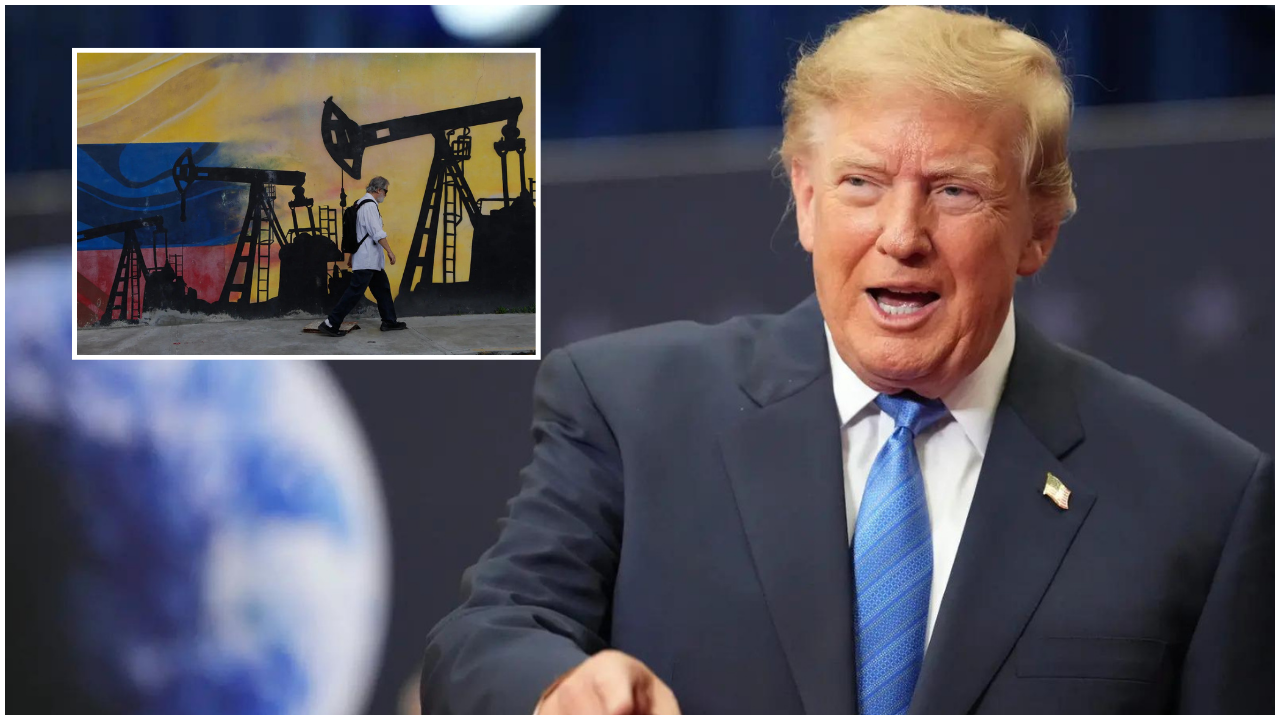
Donald Trump just announced what he calls the biggest oil deal in world history. According to the White House, a newly structured partnership with Venezuela grants the United States majority control over sixty-five billion barrels of proven crude reserves. The stated goal is simple: route that heavy crude directly into the Strategic Petroleum Reserve and drive down pain at the pump for American drivers.
Reality rarely matches campaign-style hyperbole. If you look past the bold headlines, turning political declarations into actual gasoline flowing through local pumps involves a massive logistical nightmare.
What the Agreement Actually Claims to Do
The administration rolled out the pact following months of intense geopolitical realignment in South America. Secretary of State Marco Rubio and Defense Secretary Pete Hegseth reportedly worked alongside Venezuelan interim President Delcy Rodríguez to hammer out the terms.
The core mechanics of the arrangement look like this:
- The United States secures an effective fifty-five percent stake in the output of a newly formed joint venture.
- Operations span seventeen strategic fields across the Orinoco Belt and Lake Maracaibo.
- Concessions run for a staggering one hundred years.
- Extracted oil is designated for military use and replenishing the depleted national emergency stockpile.
The Strategic Petroleum Reserve dropped below three hundred million barrels amid ongoing disruptions in the Middle East and the closure points choking Gulf oil movement. Refilling that emergency cushion sounds great on paper. Expecting it to instantly erase high fuel costs ignores how oil markets actually function.
The Infrastructure Problem Nobody is Talking About
Venezuela boasts the largest proven crude reserves on the planet. Holding oil underground and pulling it out of the dirt are two entirely different industries. Decades of chronic underinvestment, government mismanagement, and heavy international sanctions left Venezuela's petroleum infrastructure in shambles.
Production sits at roughly one million barrels per day. That figure represents a tiny fraction of global supply. Much of the remaining Venezuelan reserve consists of ultra-heavy crude. This type of oil is thick, highly viscous, and loaded with sulfur. You can't just drop a straw into the ground and pump it into a standard refinery. Processing heavy crude requires specialized facilities known as upgraders, and building those multi-billion-dollar installations takes years of heavy engineering work.
Energy experts point out that attracting tens of billions in private capital requires long-term political stability. Oil majors won't commit massive capital to greenfield projects if they fear a future administration or a shifting domestic regime might throw out the contract. A hundred-year concession signed under current conditions faces an uphill battle for lasting credibility.
Global Market Realities and Geopolitical Friction
Oil prices barely flinched when the agreement hit the news cycle. Traders understand that global crude pricing responds much faster to major chokepoints like the Strait of Hormuz than to long-term extraction agreements in South America.
China stands as another major piece of this puzzle. Beijing historically relied on discounted Venezuelan crude to fuel its massive refining sector. Pushing those barrel flows through authorized channels tied directly to American interests disrupts established Asian energy networks. Expect pushback, retaliatory trade maneuvers, and quiet diplomatic friction as international buyers adjust to Washington’s heavy-handed footprint in the region.
Domestically, voters want relief at the pump today. Even optimistic estimates suggest that modernizing Venezuelan fields and shipping the resulting product north will take considerable time. Ground-level infrastructure upgrades don't happen overnight just because a president signs a decree.
Watch the actual capital expenditure announcements from private energy firms over the coming months rather than the initial political press releases. Real barrels moving from Orinoco fields into domestic refineries will tell the true story of whether this historic pact transforms energy markets or simply fades into another piece of political theatre.



.jpg?itok=Ly4V6nyd)