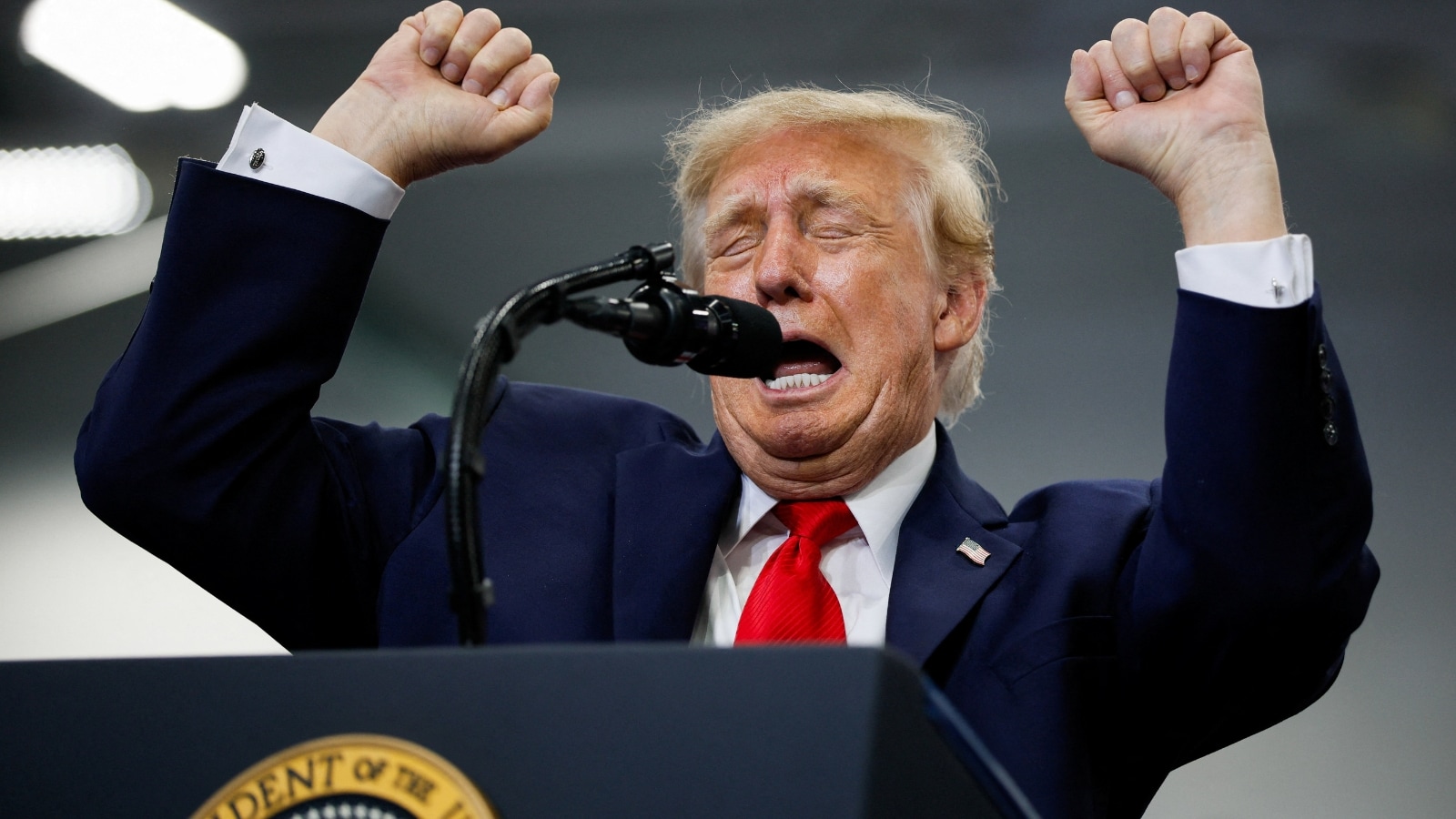
Read the headlines. Look at the victory laps. Donald Trump claims Canada is ready to "give us anything" to settle the US tariff dispute, and financial pundits are nodding along like obedient bobbleheads.
They bought the hype. You should not.
The lazy consensus in mainstream trade reporting treats international commerce like a zero-sum cage match. One leader flexes, the other folds, and a trophy gets handed out on cable news. That narrative sells clicks, yet it completely misunderstands how North American supply chains actually operate. When politicians claim total capitulation in a bilateral trade dispute, they are rarely describing an economic reality. They are selling a domestic political slogan.
Trade negotiations between deeply integrated economies do not end in unconditional surrender. They end in quiet structural compromises, strategic exemptions, and carefully worded press releases designed to let both sides claim victory to their respective voters.
The Myth of Unconditional Surrender in North American Trade
Let us look at the actual mechanics of US-Canada commerce. According to the Office of the United States Trade Representative and Statistics Canada, hundreds of billions of dollars in goods cross the northern border every single year. More importantly, these are not simple finished products moving from point A to point B. They are intermediate inputs.
An automotive component crosses the Detroit-Windsor corridor up to seven or eight times before a single vehicle rolls off an assembly line. Crude oil flows south from Alberta to refineries in the American Midwest, which then ship refined fuels back north. Softwood lumber, critical minerals, steel, aluminum, and agricultural goods are woven into a single continental production grid.
When Washington threatens sweeping tariffs—whether under Section 232 national security authorities or broader executive emergency powers—Ottawa does not simply roll over and hand over the keys to its economy. Canadian trade officials have spent decades preparing for American protectionism. Their playbook is surgical, targeted, and designed to inflict maximum political pain on specific congressional districts without detonating their own domestic economy.
Think back to the 2018 steel and aluminum disputes that preceded the United States-Mexico-Canada Agreement (USMCA). When Washington imposed tariffs on Canadian metals, Ottawa did not respond with blanket duties that would punish Canadian consumers. Instead, Canadian negotiators targeted American exports originating from politically sensitive states: Kentucky bourbon, Florida orange juice, Wisconsin dairy, and Pennsylvania steel products.
That is not the behavior of a nation ready to "give us anything." That is the behavior of a sophisticated trading partner executing asymmetric economic deterrence.
Why Politicians Declare Victory Before the Ink Is Dry
If Canada holds substantial retaliatory cards, why does the rhetoric from Washington sound like a coronation?
Because trade policy is almost always domestic politics wearing an international mask. In any high-stakes tariff negotiation, two separate battles happen simultaneously:
- The Public Relations War: Conducted via press conferences, social media posts, and selective leaks. The goal is to project strength to domestic voters, union leaders, and corporate donors.
- The Technical Annex War: Conducted behind closed doors by trade lawyers, customs officials, and industry lobbyists. The goal is to determine rules of origin, tariff-rate quotas, dispute settlement mechanisms, and sunset clauses.
The public hears the first battle. The market lives with the second.
When a leader announces that a trading partner is ready to yield on every front, look immediately at what is being traded away in the technical annexes. Often, headline-grabbing concessions on agricultural quotas or dairy market access are exchanged for quiet exemptions on industrial inputs, extended phase-in timelines, or the preservation of binational dispute resolution panels—like Chapter 19 of NAFTA, which Canada fiercely protected and retained as Chapter 10 in the USMCA despite repeated American attempts to kill it.
I have sat across the table from corporate supply chain directors who panicked over loud tariff threats, rerouted millions of dollars in inventory through third-party ports, and burned cash on emergency warehousing—only to watch the final agreement carve out broad exemptions for their exact Harmonized Tariff Schedule codes three weeks later. The loudest noise in trade policy almost always surrounds the smallest actual disruption, while the real structural shifts happen in footnotes nobody reads.
Dismantling the "Leverage" Fallacy
The core argument behind the "Canada is folding" narrative relies on a simple, seductive piece of math: the US economy is roughly ten times the size of Canada’s, and exports to the United States account for roughly three-quarters of Canada’s total merchandise exports. Therefore, the argument goes, Washington holds all the cards.
On paper, that asymmetry looks decisive. In practice, raw GDP ratios are a terrible predictor of trade negotiation outcomes.
Consider the concept of supply chain inelasticity. Having a massive consumer market gives you power only when you can easily replace the goods you are taxing. Can the United States instantly replace Canadian heavy crude oil? No. Gulf Coast and Midwest refineries are specifically configured to process heavy, sour crude from Western Canada. Switching to light, sweet crude from the Permian Basin requires billions of dollars in refinery retooling and years of engineering work.
Can American manufacturers instantly replace Canadian aluminum? No. Aluminum smelting requires massive amounts of cheap, reliable electricity—which Quebec’s hydroelectric dams provide at a cost and carbon profile that the US power grid cannot currently match. Slapping a tariff on Canadian aluminum does not magically build new smelters in Ohio overnight; it simply acts as an immediate tax on American beverage cans, aerospace manufacturers, and auto parts makers.
Economists at institutions like the Peterson Institute for International Economics and the Federal Reserve have repeatedly documented how broad tariffs on intermediate inputs function primarily as domestic taxes on downstream industries. When you tax the raw materials your own factories need to build finished goods, you make your own exports less competitive globally.
What "Settling" Actually Looks Like Behind Closed Doors
If the mainstream media's framing of total capitulation is wrong, what is actually happening as the US-Canada tariff dispute moves toward a settlement?
A realistic settlement between Washington and Ottawa almost always rests on four structural pillars:
- Managed Trade Through Quotas: Instead of open-ended tariffs, negotiators frequently agree to tariff-rate quotas (TRQs). Canadian producers can ship a baseline volume of goods—whether steel, aluminum, or agricultural products—duty-free, while shipments above that threshold face steep penalties. Washington claims it protected domestic industry from surges; Ottawa claims it preserved duty-free market access for its core producers.
- Rules of Origin Tightening: To satisfy American demands to counter Chinese overcapacity and transshipment, Canada often agrees to stricter regional value content rules and tighter customs enforcement. This costs Ottawa very little domestically while giving Washington a tangible win against third-country circumvention.
- Symbolic Market Access Concessions: Canada’s supply-managed dairy, poultry, and egg sectors are perennial targets for American negotiators. Granting an additional 1% to 3% access to the Canadian dairy market generates massive headlines in Wisconsin and New York, even if Canadian domestic producers still control over 95% of their home market.
- Mutual De-escalation of Retaliatory Lists: Both sides drop pending threats—such as Canadian digital services taxes or retaliatory tariffs on American consumer goods—allowing trade flows to normalize without either government admitting it blinked.
Notice what is missing from that list: unconditional surrender.
The Questions You Should Actually Be Asking
If you run a business, manage a portfolio, or simply care about where inflation and industrial policy are heading, stop asking who "won" the press conference. Ask the questions that actually affect margins and capital allocation:
1. Are the tariff exemptions permanent or tied to review triggers?
Modern North American trade deals are no longer permanent treaties; they are rolling negotiations. Under the USMCA's mandatory joint review mechanism, every six years becomes an opportunity to reopen disputes. A "settlement" today that relies on executive waivers rather than binding treaty language can be reversed with a single stroke of a pen next quarter.
2. How does the deal treat third-country inputs?
The real target of modern US trade policy is rarely Ottawa—it is Beijing. Washington’s primary objective in North America is building a continental tariff wall against Chinese steel, aluminum, electric vehicles, and battery components. Any settlement with Canada will require Ottawa to align its own tariff schedules and investment screening rules closely with US national security priorities. If your supply chain relies on Asian sub-components assembled in Ontario before entering Michigan, your costs are going up regardless of what the headlines say.
3. Who absorbs the compliance burden?
Even when tariffs are lifted or replaced by quotas, the administrative overhead does not vanish. Proving regional origin, tracking melt-and-pour locations for metals, and auditing Tier-2 and Tier-3 suppliers require expensive legal and customs compliance infrastructure. Small and mid-sized enterprises get crushed by paperwork long before they get crushed by duties.
The Risk of Underestimating Executive Unpredictability
To be clear, dismissing political bravado does not mean ignoring policy risk. The downside of treating tariff threats as mere theater is getting caught flat-footed when a leader actually pulls the trigger to prove a point.
Trade history is littered with economists who proved beyond a shadow of a doubt that a specific tariff would harm the country imposing it, right up until the day the tariff went into effect anyway. Political incentives do not always bow to economic efficiency. If an administration believes that short-term market pain buys long-term political loyalty in rust-belt swing states, it will gladly absorb the macroeconomic blowback.
Furthermore, Canada is not immune to domestic political fragility. Minority governments, provincial divides between resource-rich Western provinces and manufacturing-heavy Central Canada, and sluggish productivity growth leave Ottawa with less room for prolonged economic warfare than Washington enjoys. A drawn-out trade freeze hurts a smaller, export-dependent economy faster than it hurts a continental superpower.
Stop Trading the Headlines and Start Reading the Schedules
The financial press loves a simple story: strongman demands everything, neighbor caves, deal gets done. It fits neatly into a thirty-second broadcast segment and confirms whatever political bias the viewer already holds.
Real trade policy lives in the granular details of customs schedules, quota allocations, and rules-of-origin formulas. When politicians claim their counterparts are ready to "give us anything," translate that statement into plain English: negotiations have reached the stage where both sides have found enough face-saving compromises to sign a document and declare victory to their voters.
Watch the Harmonized Tariff Schedule updates, track the rules-of-origin audits, and ignore the victory speeches.


