Metal does not negotiate.
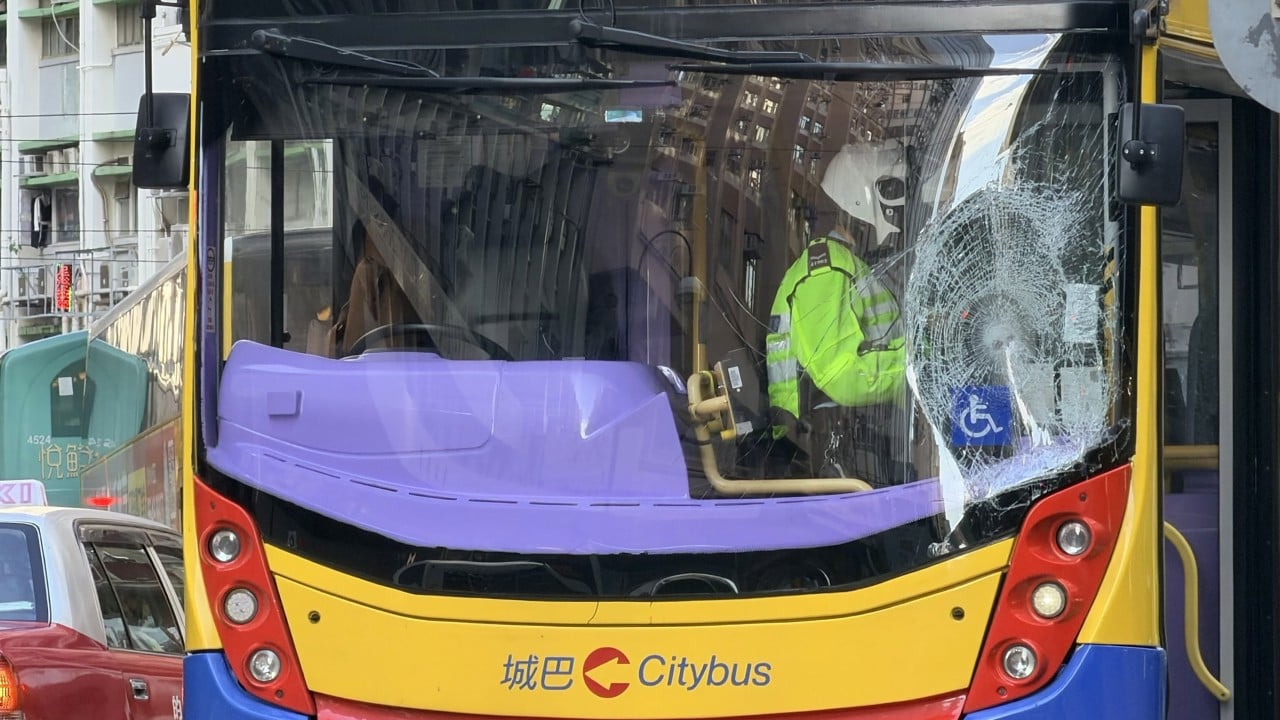
When twelve tons of double-decker steel and glass moves down King’s Road in North Point at forty kilometers an hour, physics becomes an absolute tyrant, indifferent to errands, lunch hours, or the frantic rhythm of a city that never stops checking its watch. Earlier this week, a man stepped off the curb in North Point, a bus arrived at the exact coordinates of his stride, and a life ended on the asphalt before the ambulance sirens could even slice through the afternoon humidity.
The local news reports gave the tragedy four sentences. A time. An intersection. The age of the victim, the arrest of a driver on suspicion of dangerous driving causing death, and a polite request for witnesses to call a police hotline. Then the digital ink dried, the headlines scrolled downward, and Hong Kong kept walking.
I have walked that exact stretch of North Point for eleven years. I know the smell of roasted chestnuts mixing with diesel exhaust near the MTR exits, the metallic shriek of the trams grinding along their central tracks, and the specific, suffocating geometry of sidewalks that were never built to hold the sheer volume of humanity now pressed onto them. Every time I read one of those four-sentence police blotters, my stomach drops—not because the event is shocking, but because I recognize the exact micro-decisions that preceded it.
The Architecture of a Near Miss
To understand what happened in North Point, you have to understand the geography of friction. North Point is not a wide-boulevard financial district where glass towers sit back behind manicured plazas. It is a dense, vertical canyon of aging residential blocks, wet markets, ground-floor hardware shops, and narrow pavements where bamboo scaffolding regularly juts into pedestrian space.
Here, the sidewalk is a bottleneck. People spill off the curb without thinking because the pavement is blocked by delivery trolleys, cardboard stacks, or a slow-moving crowd waiting for a green light that feels like it takes an eternity.
Consider a hypothetical commuter—let’s call him Mr. Chan, an amalgam of the thousands of residents who navigate King’s Road every afternoon. He has a bag of groceries in one hand and a ringing phone in his pocket. The sidewalk ahead is choked with people queueing for a minibus. To bypass them, he steps down into the gutter for just four paces, intending to hop back onto the curb ten meters ahead.
At that exact moment, a double-decker bus is pulling out from a stop, swinging its massive front overhang wide to clear a parked delivery van.
In that three-second window, two completely ordinary behaviors—a pedestrian seeking breathing room and a professional driver navigating a tight lane—collide. Neither person woke up intending to participate in a catastrophe. Both were simply operating inside a street design that leaves zero margin for human error.
Why Our Brains Misread the Double-Decker
When people hear about a fatal bus collision, the immediate reflex is to assign blame. Was the pedestrian looking at his phone? Was the driver speeding? Those questions satisfy our need for a simple villain, yet they miss the deeper, uncomfortable truth about how human perception fails in dense urban corridors.
Think of a double-decker bus not as a car, but as a moving building. Because its front end is flat and vertical, our visual cortex struggles to judge its closing speed accurately—a phenomenon traffic engineers call looming bias. When a sleek sedan approaches, we instinctively read its narrowing silhouette and gauge its velocity. When a flat-fronted wall of steel approaches head-on, its visual profile expands slowly until it is suddenly, overwhelmingly close.
Add to that the blind spots. A bus driver sits high above the street, surrounded by thick windshield pillars and side mirrors the size of dinner plates. At certain angles—especially when a pedestrian steps off the curb just ahead of the front left wheel—a human being can vanish entirely behind the A-pillar for two full seconds.
Two seconds at thirty kilometers an hour is nearly seventeen meters of blind travel.
I once watched a near-fatal version of this exact geometry unfold outside the North Point Ferry Pier. An elderly woman carrying two plastic bags of bok choy stepped off the island to catch a crossing signal that had already started flashing. The bus driver had his eyes fixed on his right mirror, checking for merging traffic before pulling out. The woman walked straight into the blind zone beneath his left wiper blade. Only a bystander hammering his fist against the side panel of the bus stopped the vehicle inches from her knees. The driver exited the cab shaking so violently he could barely hold his clipboard. He hadn't been reckless. He had simply been overwhelmed by a machine that demands eight pairs of eyes in a neighborhood that moves like a swarm.
The Numbers Behind the Asphalt
If this were an isolated freak accident, we could mourn it and move on. It is not.
According to data from the Hong Kong Transport Department, pedestrians consistently account for the largest single share of road fatalities in the city—often representing more than half of all traffic deaths in a given year. Among those fatalities, seniors aged sixty-five and above bear a disproportionate brunt of the risk, caught between slower walking speeds and signal timings calibrated for brisk, able-bodied commuters.
Franchised buses, despite being the backbone of the city's world-class public transit network, operate under relentless structural pressure. Every day, thousands of double-deckers thread through narrow corridors like King’s Road, Hennessy Road, and Nathan Road, sharing tight lanes with taxis stopping abruptly for fares, vans double-parking to unload crates, and pedestrians weaving between bumpers.
Drivers work long shifts under strict schedule adherence, navigating stop-and-go congestion that demands constant micro-adjustments of brake and throttle. Meanwhile, Hong Kong’s street grids—many laid out decades before modern traffic volumes were imagined—still prioritize vehicle throughput over pedestrian refuge. Guardrails line the sidewalks like cattle chutes, designed to keep people off the road, yet when a pedestrian steps through a gap to cross mid-block, those very railings trap them in the roadway with nowhere to retreat if a bus approaches.
It is an invisible tax we pay for urban density. We marvel at how efficiently seven and a half million people move across a compact territory, rarely acknowledging that the system runs razor-thin on physical safety buffers.
What Actually Changes the Odds
When a fatal crash hits the headlines, the public conversation usually stalls at two unhelpful extremes: lecturing pedestrians to "pay attention" or demanding harsher penalties for drivers. Neither solves the physics problem. Human beings will always get distracted, misjudge distance, or hurry across a street in the rain. A safe city does not demand perfection from its citizens; it builds forgiveness into its concrete.
Across global cities that have aggressively driven down pedestrian deaths—from Oslo to Tokyo—the breakthroughs rarely come from poster campaigns. They come from changing the physical environment so that a three-second mistake does not carry a death sentence.
Look at what works when street design takes human fallibility seriously:
- Curb extensions (bulb-outs): Widening the sidewalk at intersections physically shortens the distance a pedestrian must spend on the asphalt and forces turning buses to slow down and take wider, more visible angles.
- Leading pedestrian intervals: Giving walkers a three-to-five-second head start on the green light before vehicles begin turning ensures people are already visible in the middle of the crosswalk, well clear of a bus driver's A-pillar blind spot.
- Automated blind-spot detection and emergency braking: Modern transit fleets increasingly use radar and AI-assisted cameras mounted along the front and nearside of buses to alert drivers the instant a pedestrian enters a danger zone—acting as a second pair of eyes when human focus is split.
- Decluttering the pavement: Enforcing strict bans on commercial storage and illegal parking along high-footfall corridors keeps pedestrians on the sidewalk instead of forcing them into the gutter.
Hong Kong has begun piloting smart pedestrian crossings and testing collision-warning sensors on newer bus models, yet across older districts like North Point, the streetscape remains largely unchanged from thirty years ago. Progress moves in committee meetings while traffic moves at full speed.
The Weight of an Empty Curb
I walked past that North Point intersection again two evenings after the crash. The police tape was gone. The sand used to absorb the fluids on the road had already been swept away by the street-washing trucks, leaving only a faint, pale smudge against the dark tarmac.
Above the spot, the neon signs of pharmacies and noodle shops hummed as they always do. A double-decker bus hissed to a halt at the curb, its pneumatic doors folding open with a familiar sigh, swallowing twenty passengers before pulling back into the river of headlights.
Right beside the crosswalk, a young man in a delivery uniform stood with one foot poised off the curb, eyes locked on his phone screen, waiting for a gap in the traffic so he could shave four seconds off his route. Less than ten meters away, the flat yellow front of an approaching bus caught the glare of the streetlights, looming larger with every heartbeat.