The workshop smells faintly of warm oil, ozone, and spent coffee. Outside, rain drums a steady, indifferent rhythm against the reinforced glass of the laboratory window, but inside, the sound is drowned out by a high-pitched, rhythmic whir. Servo motors. Hundreds of them, flexing in microscopic increments.
I am watching a machine try to pick up a raw egg.
It is an agonizingly human pursuit, watching code and steel attempt the delicate physics of fragility. The robotic hand hovers. Its titanium fingers, sheathed in a thin layer of high-friction silicone, close with calculated precision. Too tight, and the yolk splatters across the workbench. Too loose, and the shell slips away like a wet bar of soap. For three agonizing seconds, the machine pauses. It adjusts. It recalibrates. Then, the egg lifts off the tray, unbroken.
We cheer, quietly, because we know how far we still have to go.
For years, the headlines have promised us a tomorrow filled with obedient metal servants. We were told that mechanical helpers were right around the corner, ready to fold our laundry, cook our meals, and tend to our aging parents. Silicon Valley pitch decks showed gleaming bipeds walking through suburban kitchens with the casual grace of science fiction characters. Yet, walking out onto the factory floor tells a different story. The stride is still slightly stiff. The battery life is measured in hours, not days. The cost of a single unit could easily buy a luxury sedan.
Wang Xingxing, the founder of Unitree Robotics, recently offered a sobering bucket of cold water to the fever dream of overnight transformation. The widely anticipated ChatGPT moment for humanoid robots, he suggests, is still a decade away. Ten years. A full decade of iteration, failure, battery chemistry breakthroughs, and algorithmic growing pains.
That timeline sounds like a disappointment if you are looking for immediate magic. But if you have spent any time watching technological revolutions actually unfold, ten years sounds terrifyingly fast.
Consider what we mean when we talk about a breakthrough. ChatGPT did not happen because someone suddenly invented a clever line of code overnight. It was built on decades of foundational research, billions of dollars in compute, and mountains of scraped human text. Language is cheap to process. It exists as strings of digital tokens sitting neatly on servers.
Physical reality is stubborn. Physics does not care about your software updates.
When a large language model hallucinates, a user reads a weird sentence, rolls their eyes, and prompts it again. When a humanoid robot hallucinates a spatial coordinate, it drives a multi-thousand-dollar mechanical limb through a drywall partition or drops a porcelain plate. The consequences carry mass, velocity, and sharp edges.
(Note: When I speak of a machine hallucinating physical space, I am using a metaphor for sensor drift and neural network misclassification.)
We forget how long it takes to build an intuition for the material world. A human infant spends roughly a year just learning how to keep its head upright, several more learning to navigate a living room without tripping over a rug, and decades refining manual dexterity. We take our wetware for granted. We possess six hundred muscles and over two hundred bones, coordinated by a neural network that consumes roughly twenty watts of energy—less than a dim incandescent lightbulb.
By contrast, the mechanical equivalents we build today require massive cooling fans, heavy lithium packs, and power draws that would drain a car battery in an afternoon just to walk across a flat floor at the speed of a brisk stroll.
Yet, to dismiss the next ten years as a waiting period is to misread the entire trajectory of innovation.
Walk through a modern automotive assembly plant, and you will see the precursors to our mechanical future already at work. They do not look like C-3PO. They look like heavy, yellow industrial arms bolted firmly to concrete foundations, welding chassis with remorseless perfection. They are blind, deaf, and entirely single-minded. They do not need to understand what a car is; they only need to know coordinates X, Y, and Z.
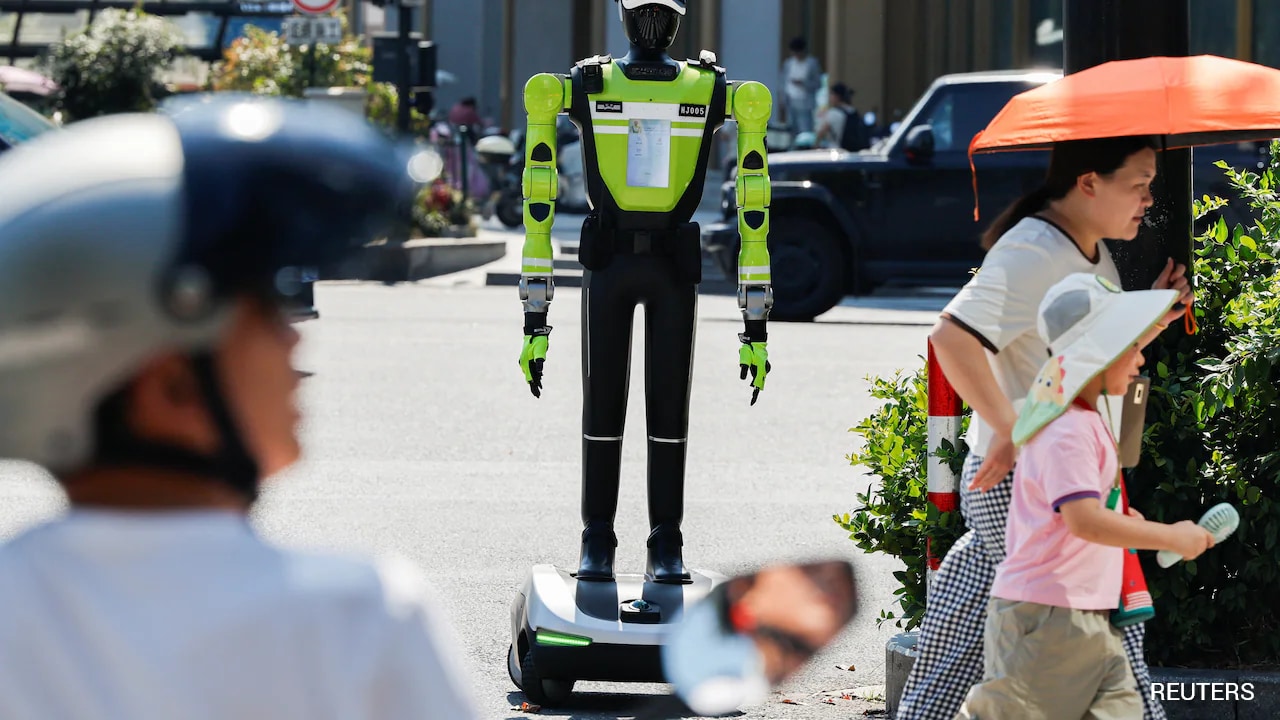
The pivot we are currently undergoing is the shift from fixed automation to general-purpose mobility. We are trying to teach machines how to step out of the cage.
To do that, a robot cannot just follow a hardcoded script. It must perceive a messy, unpredictable room. It must recognize that a crumpled shirt on a teenager's floor is not an obstacle to be avoided, but an object to be picked up and sorted. It must understand the difference between a glass of water and a ceramic mug by the acoustic feedback of its grip.
This requires an unprecedented convergence of hardware durability, edge computing, and artificial intelligence models that can translate visual input into physical torque in milliseconds.
The ten-year horizon is not a delay. It is the crucible.
Behind closed doors in robotics labs from Beijing to Boston, engineers are fighting a silent war against friction, heat, and weight. Every single actuator—the artificial muscles of the machine—must be redesigned to be lighter, stronger, and more energy-efficient. Battery manufacturers are quietly racing to double energy densities without creating high-risk thermal runaway scenarios that turn a domestic helper into a household fire hazard.
We are building the nervous system and the musculoskeletal framework from scratch, all at once.
When the breakthrough finally arrives, it will not feel like a sudden explosion. It will feel like water finding a crack in a dam. It will start quietly in logistics warehouses where floors are flat and lighting is optimized. Then it will move to construction sites where safety hazards deter human labor. Finally, slowly, hesitantly, it will cross the threshold into our homes.
Back in the workshop, the egg sits safely on the metal table. The machine is already resetting its position, preparing for the next trial. It will fail on the next attempt. It might crush the shell, sending a yellow mess across the tray. The engineers will curse, tweak a line of reinforcement learning code, and try again.
Ten years sounds like a long time to wait for the future. But standing here in the hum of the cooling fans, watching a pile of steel and copper learn how to be gentle, I realize we are not waiting for a miracle. We are forging it, one broken egg at a time.