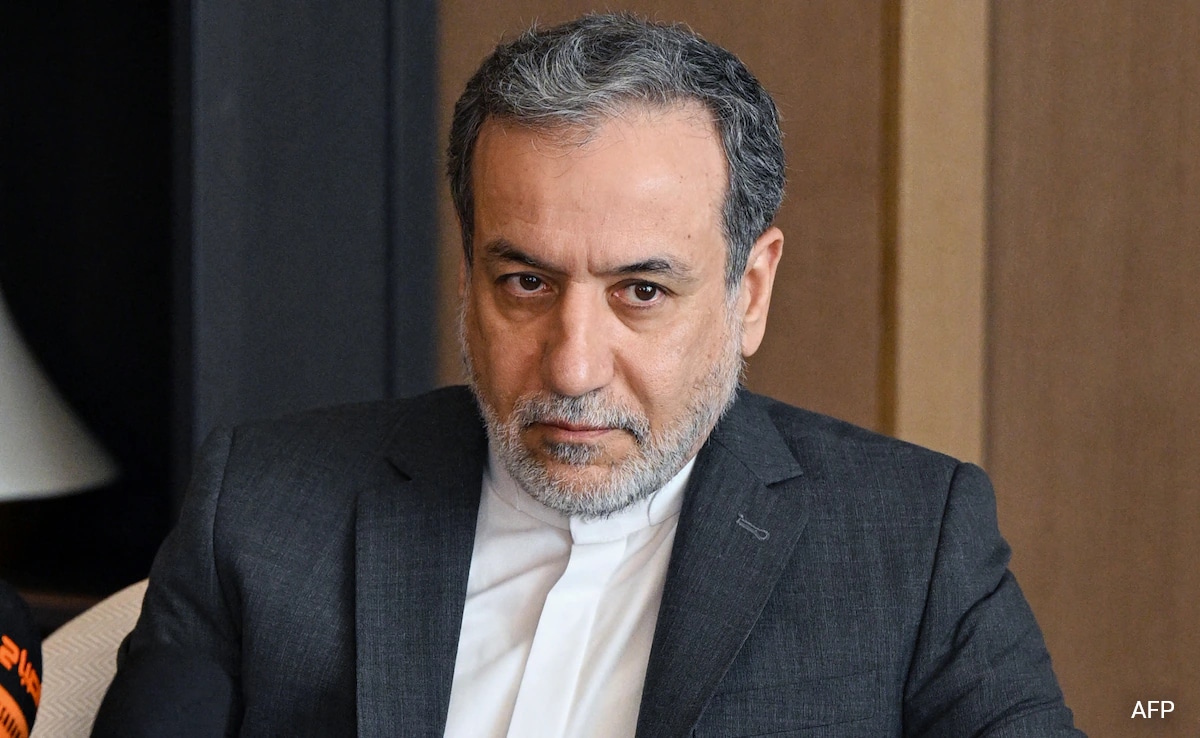
The arrival of Iranian Foreign Minister Abbas Araghchi in Beijing on May 6 was not a mere courtesy call between "comprehensive strategic partners." It was a calculated preemptive strike on the diplomatic chessboard. By landing in the Chinese capital exactly eight days before U.S. President Donald Trump is scheduled to meet Xi Jinping, Araghchi is attempting to anchor Tehran’s interests to China’s industrial survival. Iran knows that when Trump and Xi sit down on May 14, the "Iran problem" will be the primary currency of exchange. Araghchi’s mission is to ensure that Tehran is the one setting the price.
Tehran is currently operating under the weight of a dual-front economic siege. While a shaky ceasefire holds, the U.S. naval blockade continues to choke Iranian ports, and in retaliation, the Islamic Revolutionary Guard Corps has effectively shuttered the Strait of Hormuz. This is a game of chicken with global energy markets where China is the most vulnerable spectator. As the world’s largest importer of crude, Beijing cannot afford a protracted "stress test" of the global oil supply. Araghchi’s presence in Beijing serves as a reminder: China’s energy security is now inextricably linked to Iran’s political survival.
The Diplomatic Shield and the Strait of Hormuz
Araghchi’s visit is his first since the outbreak of hostilities on February 28, 2026. He did not come to beg. Instead, he came to offer Xi Jinping a "peace dividend" to use against Trump. During his talks with Chinese Foreign Minister Wang Yi, Araghchi signaled that the reopening of the Strait of Hormuz is on the table—but only if the "post-war regional architecture" respects Iranian sovereignty.
This is the "diplomatic shield" Tehran desperately needs. By briefing Wang Yi on the status of back-channel negotiations with Washington, Araghchi is effectively handing China the role of the lead mediator. This positioning is brilliant. If China can "deliver" a reopened Strait of Hormuz to the world, it validates Xi’s vision of a new, China-led security order in West Asia. It also strips Trump of his "maximum pressure" narrative. If the deal is made in Beijing, the victory belongs to the dragon, not the eagle.
However, the camaraderie in the state-released photos hides a growing friction. Beijing is losing patience. While China has ignored U.S. sanctions to buy Iranian oil for years, the current blockade of the Strait has turned a profitable partnership into a systemic liability. Wang Yi’s public call for a "prompt resumption of shipping traffic" was a rare, sharp nudge to his Iranian guest. China will defend Iran against Western regime change, but it will not sacrifice its own industrial engine to fuel Tehran’s regional brinkmanship.
The Taiwan Trade and the Grand Bargain
The real danger for the United States lies in the transactional nature of the upcoming Trump-Xi summit. Trump, ever the dealmaker, views foreign policy through the lens of the "Grand Bargain." In Washington, the whispers are getting louder: What if China offers to force Iran into a permanent nuclear freeze in exchange for U.S. concessions on Taiwan?
This is the nightmare scenario for traditionalists in the State Department. China could leverage its position as Iran’s sole economic lifeline to demand:
- A reduction in the record-breaking $11 billion arms packages to Taipei.
- A "softened" U.S. naval presence in the Taiwan Strait.
- A shift in diplomatic rhetoric toward a more rigid interpretation of the "One China" policy.
For Trump, trading a faraway island’s security for a definitive "win" on the Iran nuclear issue—something that eluded his predecessors—might be too tempting to pass up. Araghchi’s visit was designed to give Xi the specific technical assurances needed to make this offer credible. By saying "Iran after the war is different from Iran before the war," Araghchi is telling Xi that Tehran is ready to be "managed," provided the price is right.
Energy Security as a Weapon of Influence
The math for China is simple and brutal. Before the conflict, China sourced over 80 percent of its Iranian crude via the Strait. Every day the Strait remains closed, the "China Price" for global commodities creeps upward. Beijing’s strategy is to use this pain as leverage. By positioning itself as the only power that can talk to both Tehran and Washington, China has transformed a regional war into a global audition for its leadership.
Araghchi’s endorsement of China’s "four-point proposal" for regional stability is a public submission to this new order. Iran is effectively trading its autonomy for a Chinese guarantee that it will not be left alone in a room with Trump. Tehran is banking on the fact that China needs Iranian oil more than it needs a stable relationship with a volatile White House.
Yet, this dependency is a two-way street. With the U.S. blockade intensifying, Tehran has no other options. The 25-year strategic partnership signed in 2021 is no longer a long-term goal; it is a daily survival manual. Araghchi’s visit solidified this bond, but it also confirmed that Iran is no longer an independent actor. It is a piece on a board where the two biggest players are about to decide its fate.
The meeting on May 14 will not just be about trade tariffs or AI safety. It will be about whether the United States is willing to cede regional hegemony in the Middle East to China in exchange for a temporary quiet in the Persian Gulf. Araghchi has done his part. He has handed Xi the keys to the Strait. Now, the world waits to see if Trump is willing to buy them.
The stakes could not be higher. If China manages to trade Iranian compliance for a weakened U.S. stance on Taiwan, the map of global power will be rewritten in a single weekend. This isn't just diplomacy. This is the end of the post-1945 era.