We love a good redemption arc. Give the public a broken river, a burning memory from nineteen sixty-nine, and a rusted concrete wall standing in the way of pristine water, and we will cheer the second the heavy machinery rolls in.
Thirty-nine kilometers of reopened habitat sounds like a miracle. That is the lazy consensus. Pull out the concrete, let the water run free, and nature instantly resets to factory settings like a video game loading a clean map. Read more on a related issue: this related article.
I have watched billions of dollars get flushed down municipal drainpipes because bureaucrats confuse kinetic action with actual ecological recovery. Ripping out a dam is not the finish line. It is the starting gun for a chaotic, messy, and entirely unpredictable multi-decade clean-up that most cities are financially unequipped to handle.
Let us look at what happens when you pop a century-old cork out of an industrial watershed. You do not just return water to its natural state. You unleash decades of toxic sediment that has been quietly sitting behind that barrier like a chemical time bomb. More journalism by Al Jazeera delves into related views on this issue.
The Dirty Secret Beneath the Silt
Nobody wants to talk about what settles at the bottom of a stagnant reservoir. When you pin a river behind a wall for a hundred years, you create an industrial sedimentation trap. Heavy metals, polycyclic aromatic hydrocarbons, and decades of urban runoff settle into the mud layers.
When you breach that dam overnight, you do not just free the fish. You flush a toxic mudslide downstream into areas that were finally starting to clean up their act.
We treat dam removal like an environmental magic trick. Wave the wand, drop the wall, and watch the walleye return. But river management requires structural foresight, not just cathartic demolition. The true cost of removing these barriers is not the demolition contract itself. It is the management of the thousands of cubic yards of contaminated sludge that suddenly need to be dredged, trucked away, and neutralized before it suffocates the downstream ecosystem.
If you do not budget for the sediment management, you are just moving the trash from behind a wall into the living rooms of aquatic life further down the line.
The Myth of Instantaneous Equilibrium
There is this charming suburban fantasy that ecosystems are fragile china dolls that instantly shatter when disturbed, but also magical phoenixes that rise from the ashes the second you remove a human footprint.
Biology does not work on municipal election cycles.
When thirty-nine kilometers of habitat open up, you do not automatically get a balanced, native biosphere. You often trigger an ecological vacuum. Invasive species love a disturbed corridor. Zebra mussels, carp, and aggressive Eurasian milfoil do not respect your romantic notions of river restoration. They see a newly opened highway and they move right in before the native smallmouth bass even pack their bags.
Imagine a scenario where a city spends fifty million dollars removing an obsolete hydro structure, only to watch the newly exposed riverbanks erode into mud-choked gullies because the surrounding watershed is still completely paved over with asphalt parking lots.
The dam was never the only problem. It was just the most visible monument to our interference.
If the surrounding land use remains a concrete sponge that dumps warm, polluted storm runoff into the channel every time it rains five millimeters, removing the barrier just lets the poison travel faster.
The Economics of Regret
Municipalities love the ribbon-cutting ceremony for a restored riverfront. Mayors love standing in front of drone shots of flowing water, talking about green infrastructure and urban renewal.
They rarely show up fifteen years later when the bridge piers upstream start scouring out because the riverbed is actively lowering itself to find a new equilibrium grade.
When you change the base level of a river by removing a dam, the water accelerates. It eats away at its own bed and banks upstream and downstream. Bridges, sewer lines, and fiber optic cables buried safely beneath the riverbed suddenly find themselves suspended in mid-air or exposed to rapid erosion. Fixing those hidden infrastructure failures costs ten times what the original dam removal saved in maintenance.
We are trading one set of artificial maintenance costs for a much more volatile, highly unpredictable set of geomorphic liabilities.
What We Should Be Doing Instead
Stop treating river restoration as a PR campaign for city hall.
Before we drop a single blade on a dam, we need to map the sediment chemistry down to the bedrock and fund the disposal before the water starts moving. If a community cannot afford the sediment cleanup, they cannot afford the dam removal. Period.
We also need to tie dam removal to aggressive upland zoning reform. You cannot restore a river while letting developers pave every square foot of the watershed upstream. Rainwater needs soil to sink into, not concrete to slide off of.
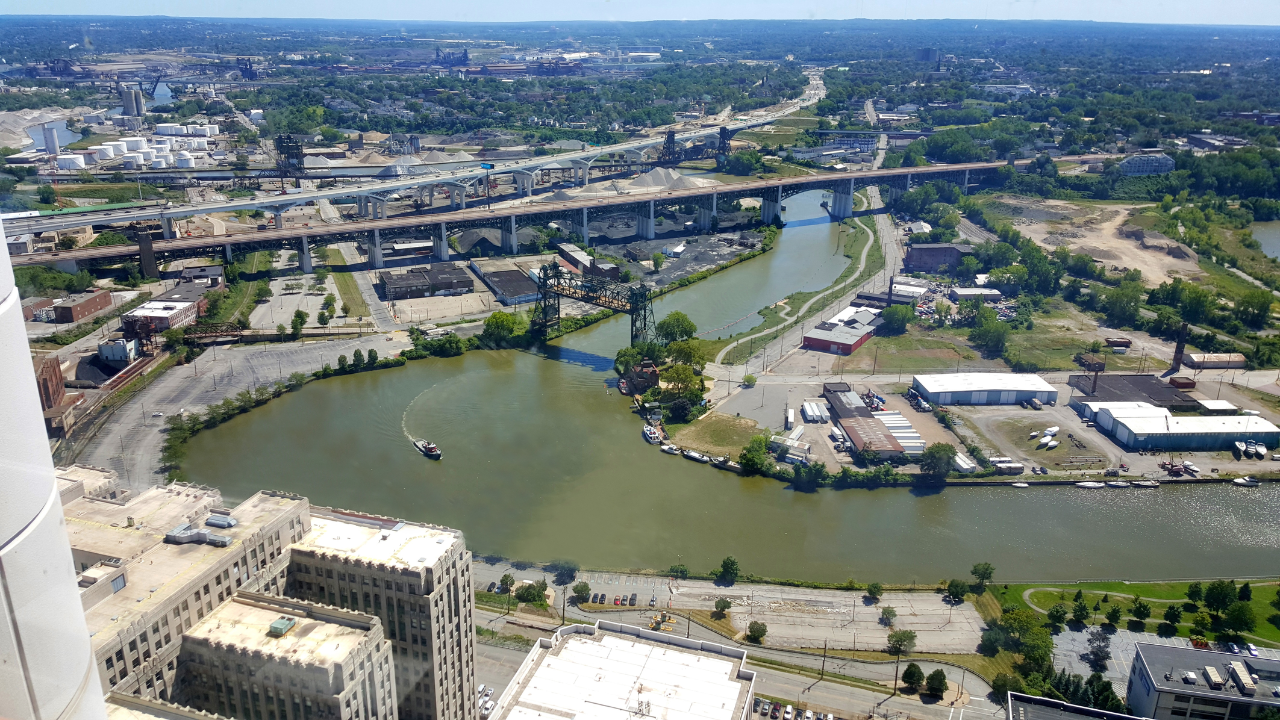
The Cuyahoga River taught us what happens when we treat our waterways like open sewers. The removal of its barriers teaches us what happens when we try to fix complex systemic failures with simple, cinematic gestures.
The river is moving again. Make sure your strategy is fast enough to keep up with it.