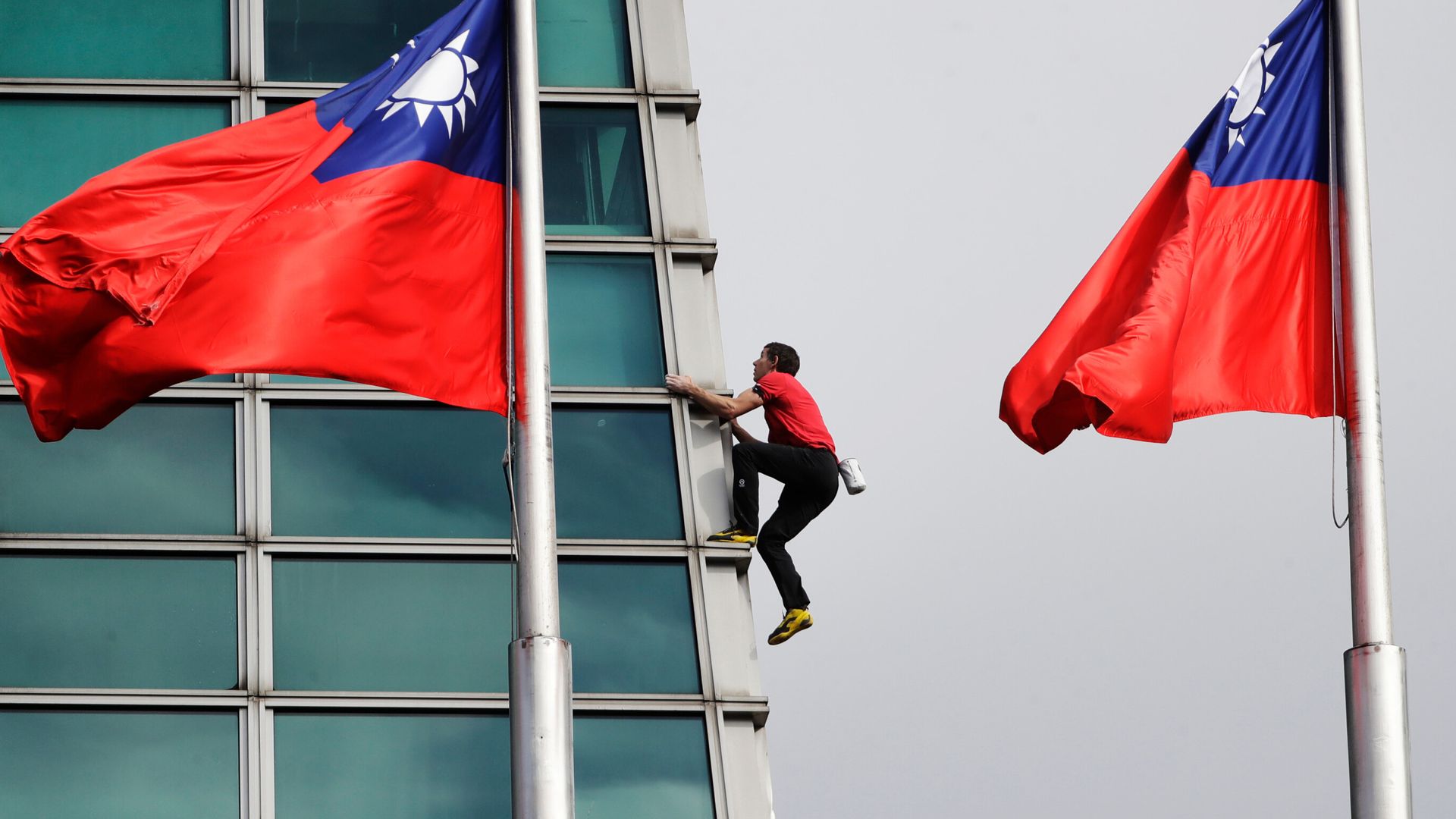
The headlines are screaming about Alex Honnold and Taipei 101. They call it a "triumph of the human spirit." They call it "the ultimate test of nerves." They are dead wrong.
What we witnessed wasn't the pinnacle of climbing. It was the commodification of risk for a digital audience that can’t tell the difference between a technical crux and a well-placed camera angle. If you think scaling a glass-and-steel monolith is the same as dancing up the Granite of El Capitan, you’ve been sold a lie by a marketing department.
Let’s get one thing straight: Taipei 101 is a ladder. A very tall, very expensive, very shiny ladder.
The Architecture of False Difficulty
When Honnold sends a route like Freerider in Yosemite, he is interacting with geological time. He is finding microscopic imperfections in 100-million-year-old rock. The friction depends on crystal density, humidity, and the literal skin on his fingertips.
Now look at Taipei 101. It’s an engineering marvel, sure. But for a climber of Honnold’s caliber, it’s a repetitive mechanical exercise. The "holds" are standardized. The spacing is uniform. The friction is predictable.
Architectural climbing—often called "buildering"—strips away the core intellectual challenge of the sport. The mental game of route-finding, which is half the battle in the wild, is gone. You look up, you see the next ledge, you move your hand exactly 45 centimeters. It’s a StairMaster with a better view.
If we’re going to be honest, we have to admit that this isn’t about the climbing. It’s about the branding. It’s about the juxtaposition of a human body against the symbol of corporate power. It’s a visual trick that exploits the lizard brain’s fear of heights while offering zero technical progression for the sport.
The Problem With Safety Theater
The "without ropes" narrative is the hook. It’s the bait for the masses. But let’s dismantle the "pure risk" argument.
When you climb a 1,600-foot building in the middle of a dense urban center, the variables are no longer in your control. On a mountain, the risks are objective: rockfall, weather, biological failure. On a building, the risks are systemic: a window washer's soap residue, a malfunctioning ventilation fan, an updraft caused by the surrounding street canyons.
By removing the rope in a city, you aren't just risking your own life. You are risking the psychological well-being of the thousands of people who would witness your messy end on the pavement below. True free soloing has always been a private conversation between the climber and the void. By bringing it to the Taipei skyline, it becomes a public hostage situation.
I’ve spent twenty years in the climbing world. I’ve seen the "purest" of the pure lose their lives because they thought they could control the chaos. To treat a skyscraper as a playground for ego is to disrespect the very mountains that gave Honnold his name.
Why the Industry is Cheering (And Why You Shouldn't)
The outdoor industry is currently obsessed with "reach." They want to sell chalk and shoes to people who have never stepped foot on a trail. The Taipei 101 climb is the perfect vehicle for this.
- Accessibility: Everyone knows what a building is. Not everyone knows what a 5.13a finger crack is.
- The Spectacle: You can’t get a drone shot of El Cap that looks as "cool" to a layman as a shot of a tiny man on a giant blue tower.
- The Sponsorship: Skyscrapers have owners. Mountains don't. You can't put a corporate logo on a granite face without a PR nightmare, but you can certainly partner with a real estate conglomerate.
The "lazy consensus" is that this event "inspires the next generation."
No, it doesn't. It confuses them. It teaches kids that climbing is a circus act performed for clicks. It suggests that the value of an ascent is proportional to the number of stories the building has. This is the "TikTok-ification" of a discipline that used to be about solitude and silence.
The Counter-Intuitive Truth: The Rope is the Tool of the Master
We have this bizarre cultural fetish for "rope-less" climbing as the only true measure of skill. In reality, the most difficult, most impressive, and most technically advanced climbs in history have been done with ropes.
Why? Because a rope allows you to push the absolute limit of human capability. It lets you try moves where the chance of success is 10%. It lets you dance on the edge of the impossible.
Free soloing, by definition, requires you to stay well within your comfort zone. Honnold isn't doing the hardest moves of his life on Taipei 101. He’s doing the easiest moves he can find, repeatedly, while managing his adrenaline.
If you want to see what human potential actually looks like, stop looking at the guys on buildings. Look at the people on the overhanging limestone of Spain or the granite walls of the Karakoram. They are doing things Honnold couldn't dream of doing without a safety line.
The Urban Deception
Let's talk about the "People Also Ask" nonsense that pops up whenever this happens:
- "Is it illegal?" It’s only illegal if you don't have a permit. If you have a permit, it’s a PR stunt.
- "How does he handle the wind?" He’s a professional. He handles it by being exceptionally good at something that isn't actually that hard for him.
- "Is he the greatest of all time?" He’s the most famous. There’s a massive difference.
The real question should be: "Why are we rewarding the pursuit of danger over the pursuit of difficulty?"
We have entered an era where "risk" is a currency. People who have never felt the grit of real stone under their nails are the ones driving the conversation. They want the thrill of the "what if he falls?" without the burden of understanding the "how did he do that?"
Stop Celebrating the Stunt
The Taipei 101 climb is a distraction. It’s a neon sign flashing in the middle of a dark forest. It’s loud, it’s bright, and it’s ultimately empty.
If we keep prioritizing these urban spectacles, we will lose the soul of climbing. We will turn it into an X-Games highlight reel where the environment is just a backdrop for a sponsor's logo.
Honnold is a generational talent. There is no denying his focus or his physical gift. But by choosing the skyscraper over the spire, he is signaling that the audience matters more than the ascent. He is choosing the applause of the crowd over the silence of the summit.
True climbing isn't about being seen. It’s about seeing. It’s about the raw, unfiltered confrontation with a world that doesn't care if you live or die. A skyscraper, built by human hands for human purposes, is the most caring environment you can find. It has stairs. It has elevators. It has a gift shop.
If you want to be inspired, go to the mountains. Look at the routes that nobody will ever film. Look at the climbers who return from a month in the wilderness with nothing but a grainy photo and a story they can't quite explain.
That is where the spirit lives. Not on the 90th floor of a Taipei office building.
Don’t be fooled by the height. The depth is what matters.