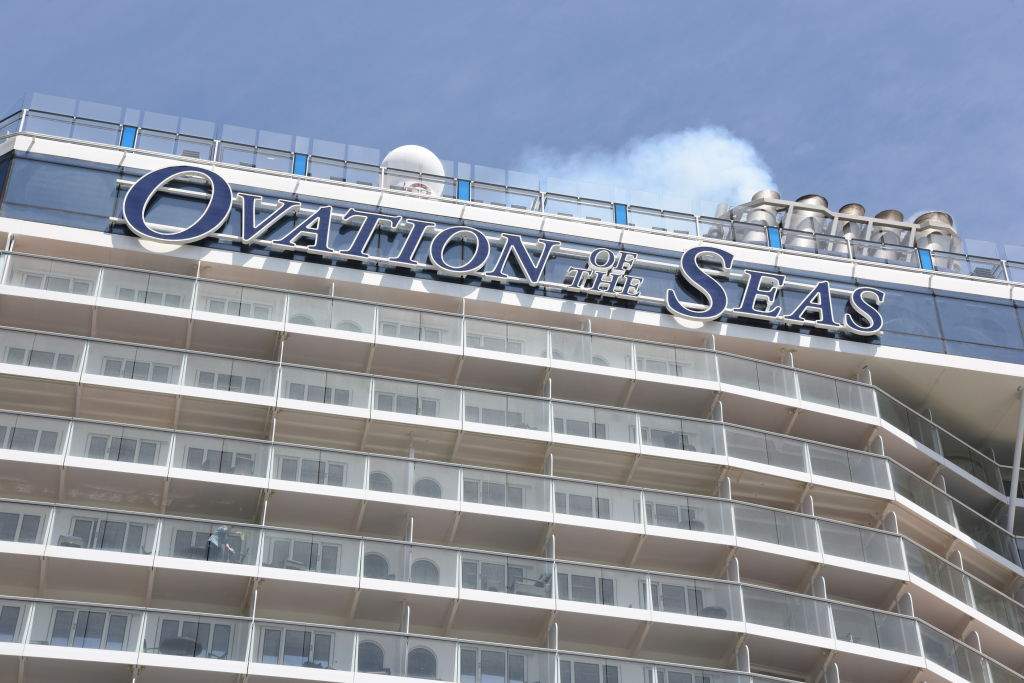
Survival after falling from a cruise ship into open ocean is an extreme outlier event governed by cold physics, search-and-rescue geometry, and human physiology. When a headline reports a pianist falling from a Royal Caribbean vessel and being recovered alive after hours at sea, standard coverage treats the outcome as a miracle. A rigorous operational analysis treats it as a multi-variable system in which several catastrophic failure modes happened not to trigger simultaneously. Because no source text or incident dossier was supplied alongside the title, this analysis maps the underlying mechanics of a man-overboard event involving shipboard crew, maritime search-and-rescue operations, and open-water survival rather than asserting unverified specifics of a single case. The blueprint below breaks down the trajectory of the fall, the physics of immersion, the timeline of search detection, and the operational bottlenecks that determine whether a person at sea lives or dies.
The Physics of a Shipboard Fall and Trajectory Divergence
A passenger or crew member going overboard from a modern cruise ship does not drop straight down into calm water. The person enters the air with the forward velocity of the vessel, which frequently cruises between 15 and 22 knots (roughly 17 to 25 mph or 27 to 41 km/h). If the fall occurs from an upper deck, vertical acceleration combines with horizontal momentum to produce a parabolic arc outward from the hull.
The first critical variable is hull clearance. A vessel traveling at speed generates a complex pressure wave and wake pattern along its sides. A person falling near the bow or midship faces a high risk of striking the hull or being drawn toward the stern by boundary-layer flow and propulsion currents. Propellers and azipod thrusters create severe localized turbulence and mechanical hazards; survival is far more plausible when a fall clears the stern wash or occurs well aft without being pulled into the propeller race.
The second critical variable is impact trauma. Even from moderate deck heights, hitting open water at speed creates high deceleration forces and risk of blunt trauma, disorientation, or aspiration of water. Performers such as shipboard pianists typically work late hours, meaning fatigue, alcohol consumption, or low-light conditions near exterior railings can precede a fall and impair initial self-rescue reflexes.
Once in the water, trajectory divergence begins immediately. The ship continues moving forward at full speed until bridge officers detect the missing person, verify the event, and initiate a Williamson turn, Anderson turn, or return-to-datum maneuver. By the time a large vessel decelerates, turns, and works back along its reciprocal track, several nautical miles can separate the ship from the datum—the estimated point of entry.
- Vessel speed at departure: Governs initial horizontal throw distance and the rate at which the ship leaves the datum behind.
- Deck height above waterline: Determines time in free fall, entry velocity, and probability of impact injury.
- Entry location along the hull: Separates clean water entry from hull impact, wake entrainment, or stern propulsion hazards.
- Sea state and swell height: Influences visibility of a floating person from bridge wings and increases the chance of wave-induced water inhalation.
- Wind and surface current vectors: Drive drift separation between the initial entry point and the actual position of the person hours later.
Immersion Physiology and the Cost Function of Hours at Sea
Surviving for hours in open water requires staying afloat, keeping airways clear, and losing body heat slowly enough to avoid fatal hypothermia or exhaustion. Standard media accounts rarely separate these mechanisms, blending them into a single narrative of endurance. In practice, they operate as a coupled cost function in which each hour degrades reserves.
Immersion in water conducts heat away from the body roughly 25 times faster than air at the same temperature. Even in warm or temperate tropical waters—where Royal Caribbean routes frequently operate—prolonged immersion can gradually pull core body temperature downward if a person remains stationary, especially overnight when air temperature drops and wind chill increases convective heat loss on exposed skin and head. In colder waters, cold shock and rapid neuromuscular cooling compress the survival window sharply.
Energy expenditure is a major hidden constraint. Treading water or swimming against chop burns calories rapidly and accelerates heat loss by pumping warm blood from the core to working limbs and increasing convective mixing at the skin surface. A person who alternates between calm floating, sculling only when a wave approaches, and conserving movement preserves metabolic energy far longer than someone thrashing continuously. Clothing adds a mixed effect: heavy fabrics can weigh a swimmer down once saturated, whereas layers can trap a thin boundary film of water and modestly slow heat exchange if buoyancy is maintained.
Psychological state acts as a multiplier on physiological endurance. Panic drives hyperventilation, increases oxygen demand, wastes energy, and raises the risk of aspirating water in choppy swells. Calm breathing and situational pacing keep energy burn closer to baseline.
Known Facts Versus Educated Hypotheses in Open-Water Survival
Distinguishing verified mechanics from educated hypotheses prevents over-interpreting dramatic rescues.
- Known fact: A large passenger ship moving at cruising speed travels hundreds of meters per minute, creating rapid spatial separation before a search can begin.
- Known fact: Water conducts heat away from the human body far faster than air, making prolonged immersion a continuous thermal drain even outside sub-freezing regions.
- Known fact: Visual detection of a single person in open ocean deteriorates sharply as swell height increases and ambient light drops.
- Educated hypothesis: When a crew member such as a shipboard musician survives for hours without specialized immersion gear, favorable water temperature, relatively calm seas, or periodic flotation aids likely kept heat loss and energy expenditure below lethal thresholds.
- Educated hypothesis: Delayed recognition of the exact moment of the fall often explains why search vessels or nearby craft spend hours scanning an expanding drift area rather than converging on a pinpoint location.
Search-and-Rescue Geometry and Detection Bottlenecks
Finding a person in the ocean is fundamentally a signal-to-noise problem. A human head above the waterline presents a tiny, low-contrast target moving irregularly across a dynamic surface of whitecaps, glints, and shadows. Even with thermal imaging cameras, radar, and trained lookouts, detection probability drops steeply with distance and sea state.
The first bottleneck in any cruise ship incident is detection lag. If a fall is witnessed directly by a crew member or captured immediately on closed-circuit television, the bridge can log a precise time and GPS position within minutes. If the person is only noticed later—for example, when they fail to report for a shift, soundcheck, or performance—search planners must reconstruct a time window rather than a single point. A wider time window expands the search area geometrically because wind and current drift accumulate over every additional hour.
The second bottleneck is drift modeling error. Surface drift is not determined by ocean current alone. Wind exerts drag on whatever portion of the body or clothing sits above the surface, creating leeway that can push a floating person in a direction angled away from the subsurface current. When sea state is rough, wave orbital motion and localized surface currents complicate drift estimates further.
The third bottleneck is asset coordination. A cruise ship has high bridge wings, optical and thermal sensors, and rescue boats, yet its large freeboard and turning radius limit close-quarters maneuvering in rough conditions. Commercial vessels nearby, coast guard units, or maritime rescue coordination centers often join the effort, requiring clear communication of datum coordinates, drift assumptions, and search patterns so vessels do not leave gaps or duplicate coverage inefficiently.
Operational Lessons for Maritime Safety and Incident Response
For cruise operators, maritime safety teams, and incident analysts, treating a rare survival as pure luck leaves systemic vulnerabilities unaddressed. A disciplined operational approach targets the choke points that delay detection or widen the search zone.
- Tighten absence-to-alert triggers for crew: Establish structured check-in thresholds for off-watch and performance personnel so unexplained non-appearance escalates to a structured cabin and deck check before hours pass.
- Pair camera coverage with rapid review workflows: Deploy optical and thermal monitoring along high-risk exterior decks, and ensure bridge and security teams can review footage rapidly to narrow the time-of-fall window.
- Standardize drift-adjusted datum calculations: Incorporate real-time wind, wave, and current inputs immediately upon alert rather than relying solely on static last-known ship coordinates.
- Maintain disciplined visual and thermal scan sectors: Assign overlapping observation sectors on bridge wings and rescue craft, rotating lookouts frequently to prevent visual fatigue during multi-hour searches.
- Preserve physiological stability during recovery: Prepare rescue teams for post-immersion hazards—including hypothermia, dehydration, aspiration injury, and rescue collapse—when lifting a survivor from the water.
Limitations of These Measures
No maritime safety system eliminates open-water risk entirely. High-density camera coverage across miles of exterior railing creates massive video volume and potential privacy or blind-spot trade-offs. Thermal cameras struggle when ambient temperatures approach surface water temperatures or when heavy spray obscures the line of sight. Even rapid rescue responses face hard physical limits in severe storms, freezing waters, or situations involving immediate impact injury.
Strategic Play for Maritime Operators and Risk Analysts
Operators and risk analysts should stop evaluating overboard incidents by headline outcomes alone and instead audit the time-to-detection-to-datum interval across every voyage. The highest-leverage move is to instrument operational readiness around early time-window narrowing—combining automated absence escalation for crew with immediate bridge review of exterior camera feeds and real-time wind-and-current drift plotting—because compressing the initial uncertainty window shrinks the search area faster than adding extra vessels hours later. Whenever an analysis of a survival story begins, start by mapping how long the clock ran before the search geometry locked onto reality; that single metric reveals whether the outcome rested on sound system response or sheer statistical grace.