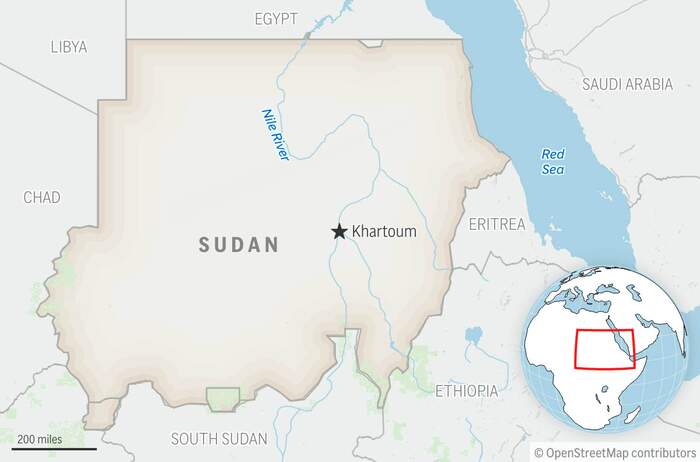
Sudan’s military just put Ahmed Haroun back in a cell, and honestly, it’s about time.
For nearly two decades, Haroun has been one of the most notorious names on the International Criminal Court’s wanted list. When news broke from his legal team that the Sudanese Armed Forces (SAF) had detained the former minister once again, international observers immediately started asking the same question. Is Khartoum finally ready to hand him over to The Hague, or is this just another cynical bargaining chip in a brutal civil war?
If you’ve followed Sudanese politics since the fall of Omar al-Bashir in 2019, you already know the answer isn't simple. Haroun isn't just a random warlord. He’s a walking vault of regime secrets, a former governor of South Kordofan, and a key architect of the Janjaweed militias that devastated Darfur in the early 2000s.
Let's break down what actually happened, why the military grabbed him now, and what this move means for justice in Sudan.
The Man at the Center of the Storm
You can't understand the weight of this detention without looking at who Ahmed Haroun actually is. Back in 2007, the International Criminal Court (ICC) issued an arrest warrant for him on 20 counts of crimes against humanity and 22 counts of war crimes.
Those aren't abstract legal numbers. They represent systematic murder, rape, torture, and the forced displacement of hundreds of thousands of people in Darfur between 2003 and 2004. At the time, Haroun served as Sudan’s Minister of State for the Interior, putting him directly in charge of the "Darfur Security Desk."
He didn't just oversee the violence. Prosecutors at The Hague documented how he personally recruited, funded, and armed the Janjaweed militias—the very same fighters who later evolved into the Rapid Support Forces (RSF) currently tearing Sudan apart.
For years, Haroun laughed off the warrants. Under Omar al-Bashir’s protection, he didn't just evade justice; he got promoted. He became the Minister for Humanitarian Affairs—a sick joke to anyone living in a Darfuri refugee camp—and later governed South Kordofan, where human rights groups accused him of repeating the exact same scorched-earth tactics against civilians in the Nuba Mountains.
How Haroun Escaped and Got Caught Again
When protesters toppled Bashir in April 2019, Haroun was swept up in the initial wave of arrests. He sat in Khartoum’s notorious Kober Prison alongside Bashir and other top figures of the dissolved National Congress Party (NCP).
For a brief moment, it looked like the transitional government might actually transfer him to the Netherlands. That hope died in October 2021 when General Abdel Fattah al-Burhan and RSF commander Mohamed Hamdan Dagalo (known as Hemedti) staged a coup, derailing Sudan's fragile transition to democracy.
Then came April 2023. Full-scale war erupted between Burhan’s regular army and Hemedti’s RSF. Amid the chaos of artillery fire and airstrikes in Khartoum, Kober Prison was breached. Haroun, along with several other high-profile Bashir-era fugitives, walked right out the front gates.
For months, his whereabouts were murky. Reports surfaced that he had fled north toward areas controlled by the SAF, quietly rallying old Islamist networks to fight alongside the military against the RSF. His lawyers' recent confirmation that the military has detained him again marks a sudden, sharp turn in how the SAF wants to position itself on the world stage.
Why Sudan’s Military Detained Ahmed Haroun Now
Don't mistake this arrest for a sudden attack of conscience by General Burhan. Militaries locked in an existential civil war don't make moves based on moral clarity. They make moves based on survival and leverage.
Right now, the Sudanese Armed Forces are desperate for international legitimacy and diplomatic backing. Throughout the conflict, Western nations and regional powers have treated both the SAF and the RSF as toxic factions responsible for catastrophic human suffering. By re-arresting an ICC fugitive, Burhan’s command can point to a concrete action and tell Washington, Brussels, and the United Nations that they are the legitimate state authority capable of enforcing the rule of law.
There's also a massive internal power struggle playing out behind closed doors.
After Haroun escaped Kober Prison, old-guard Islamists from Bashir’s former regime began gaining visible influence within the SAF’s war effort. While their fighters proved useful on the battlefield against the RSF, their presence is poison for Burhan’s diplomatic outreach. Regional heavyweights like Saudi Arabia, Egypt, and the United Arab Emirates—along with the United States—have made it clear they won't bankroll a post-war Sudan run by Bashir’s recycled cronies.
Detaining Haroun sends a blunt warning to the National Congress Party remnants. Burhan is effectively telling them that he is in charge, not the old guard, and that anyone who becomes a diplomatic liability can be put back behind bars overnight.
Will Khartoum Actually Hand Him Over to the ICC
This is the million-dollar question, and if you're betting on a flight to The Hague next week, you're going to lose your money.
Detaining Haroun inside a military facility is worlds apart from putting him on a plane to the Netherlands. Historically, Sudan’s military establishment has viewed the ICC with deep suspicion. Handing over a former senior official sets a terrifying precedent for current generals. If Haroun goes on trial in The Hague, who's to say prosecutors won't demand Burhan or other top commanders next for atrocities committed since 2023?
Look at the case of Ali Kushayb, another Janjaweed leader who surrendered himself to the ICC in 2020. His trial in The Hague has laid bare the mechanics of how Khartoum operated in Darfur, exposing the direct chain of command between government ministers and militia commanders. Haroun knows far more than Kushayb ever did. Put Haroun on a witness stand in an international courtroom, and he could implicate dozens of active military officers who are still running Sudan today.
Instead of an immediate extradition, expect the SAF to use Haroun’s detention as a negotiating card. Khartoum will likely dangle the possibility of cooperation with ICC Prosecutor Karim Khan in exchange for sanctions relief, diplomatic recognition, or weapons deals. It's a classic stall tactic that Sudan has perfected over twenty years.
The Irony of the RSF Connection
You can't ignore the dark irony sitting right at the heart of this story.
The very militias Ahmed Haroun armed and unleashed on Darfur twenty years ago are the exact same forces now besieging Sudanese cities and fighting Burhan’s army. Back in 2003, Haroun famously told militia recruits in Darfur that they had been given "all the power and authority" to crush rebels, effectively granting them total impunity to burn villages and massacre civilians.
Hemedti, the leader of the RSF, rose directly through that system. Haroun helped build the monster that eventually devoured Khartoum.
Now, the army is detaining the architect while fighting his creation. For survivors of the Darfur genocide—many of whom are currently living through a second wave of ethnic cleansing in places like El Geneina and El Fasher—watching these factions trade arrests and airstrikes feels like a cruel loop of history. Justice hasn't been served; the perpetrators have just turned their guns on each other.
What Needs to Happen Next for Real Accountability
If you care about human rights in Sudan, or if you're tracking international law, watching Haroun’s detention isn't enough. Pressure has to stay squarely on Khartoum to turn a temporary military detention into permanent legal accountability.
First, the United Nations Security Council—which originally referred the Darfur situation to the ICC back in 2005—needs to demand immediate, verifiable access to Haroun. Right now, we only have word from his lawyers and scattered reports that he's in military custody. Without independent verification from the ICC or international monitors, "detained" can easily mean "staying in a comfortable military guesthouse" until the diplomatic heat dies down.
Second, international mediators leading peace talks in Jeddah, Geneva, and Cairo have to reject any peace deal that grants blanket amnesty to war criminals. Every time Sudan's generals negotiate a power-sharing agreement, justice gets pushed to the bottom of the agenda. That cycle is the exact reason Sudan is at war today. When perpetrators like Haroun walk free without consequences, future commanders learn that mass atrocities carry zero personal cost.
Finally, keep your eyes on the ICC’s ongoing investigations into current war crimes in Darfur. Prosecutor Karim Khan has already confirmed that his office is investigating new atrocities committed during the SAF-RSF war. How Khartoum handles Haroun right now will serve as the ultimate litmus test for whether Sudan’s leadership is finally ready to break with its violent past—or if this arrest is just another political theater performance while the country burns.


