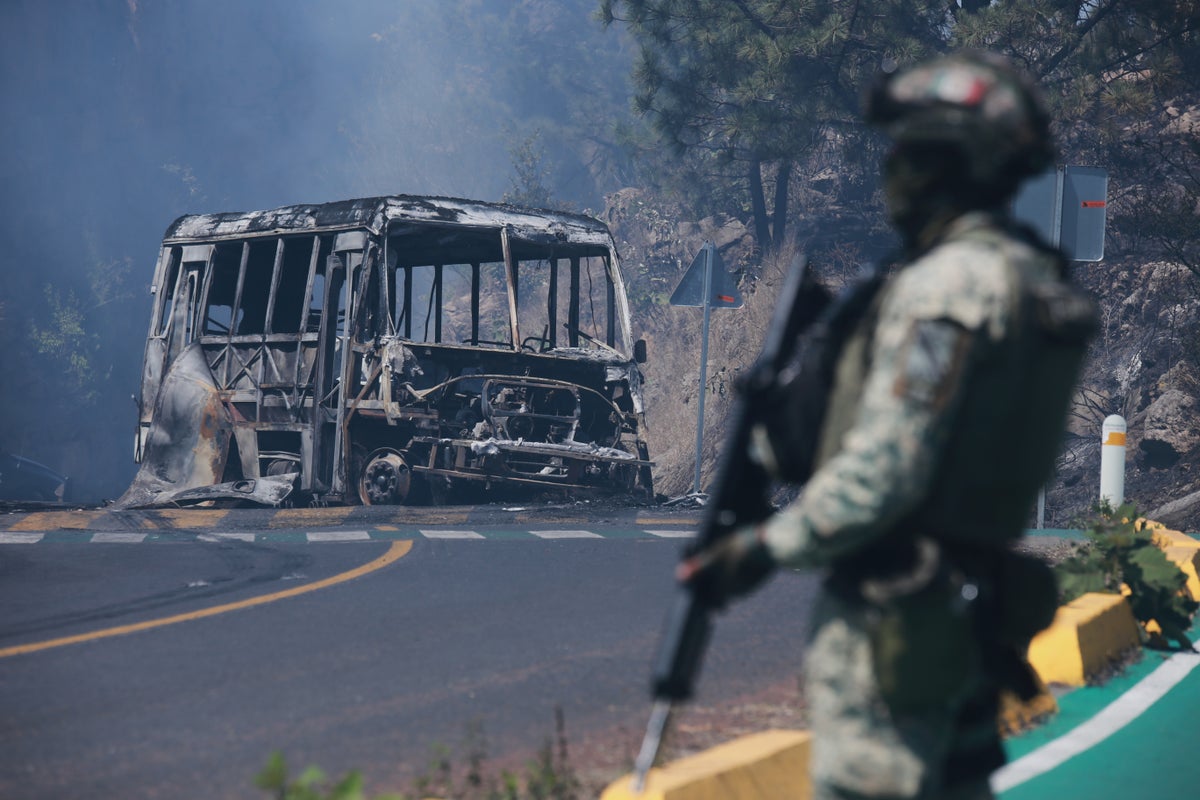
The capture of a high-ranking lieutenant within the Cartel Jalisco Nueva Generación (CJNG) is frequently framed by state actors as a definitive "major blow," yet this assessment often ignores the mathematical reality of decentralized insurgent structures. The CJNG functions less like a traditional hierarchy and more like a franchise-based logistics firm with a paramilitary edge. When a node is removed, the impact is determined by the specific function of that individual within the network’s three primary operational pillars: territorial enforcement, financial laundering, and chemical precursor procurement.
The Myth of the Kingpin Strategy
The "Kingpin Strategy," championed by security agencies for decades, operates on the assumption that removing the head of an organization leads to its systemic collapse. In the context of the CJNG, this logic fails because the organization utilizes a modular command structure.
The cartel’s resilience is built on Horizontal Redundancy. Unlike the legacy Guadalajara or Sinaloa cartels, which often relied on a single charismatic patriarch, the CJNG utilizes regional commanders who possess high degrees of autonomy. This reduces the "Blast Radius" of any single arrest. When a leader is captured, the vacancy does not trigger a collapse; it triggers a competitive selection process.
The immediate result of high-level captures is rarely a reduction in drug flow. Instead, it creates a Succession Friction Period, characterized by:
- Internal Fracturing: Sub-lieutenants vying for the vacated position, leading to localized spikes in homicide rates.
- Resource Reallocation: Rivals like the Sinaloa Cartel or the Carteles Unidos sensing a perceived weakness and attempting a "hostile takeover" of specific smuggling routes (plazas).
- Communication Blackouts: Temporary operational pauses as the network rotates encrypted communication hardware and rotates safe houses to mitigate the risk of the captive "singing" to authorities.
The Logistics of the Jalisco Model
To understand the weight of an arrest, one must quantify the specific asset classes the individual managed. The CJNG’s dominance is predicated on a "First-to-Market" strategy regarding synthetic opioids and methamphetamines.
The Precursor Chain
The CJNG has mastered the vertical integration of the supply chain. They do not merely transport goods; they control the points of entry. This involves a sophisticated interface with global shipping logistics, primarily through the ports of Manzanillo and Lázaro Cárdenas. If a captured leader was the primary liaison with international chemical suppliers in Asia, the "blow" to the cartel is significant because it disrupts the Chemical Input Ratio. Without steady access to specific precursors, the purity and volume of the final product drop, directly impacting the cartel’s profit margins and its ability to fund its private army.
Paramilitary Professionalization
The CJNG distinguishes itself through its acquisition of military-grade hardware and tactical expertise. The group employs specialized units that utilize:
- Small-Unit Tactics (SUT): Coordinated movements that mirror professional infantry.
- Weaponized Unmanned Aerial Vehicles (UAVs): Using drones to drop IEDs on rival positions or state forces.
- Anti-Material Weaponry: The use of .50 caliber Barrett rifles and RPGs to negate the armor advantage of local police.
An arrest only degrades this capability if the individual was a "force multiplier"—someone responsible for training, procurement of high-end weaponry, or tactical planning. If the captive was merely a symbolic figurehead, the paramilitary machine continues to function autonomously.
The Economic Engine: Diversification and Extortion
The capture of a leader often fails to disrupt the cartel’s diversified revenue streams. The CJNG has moved beyond narcotics into Agro-Extortion and Fuel Theft (Huachicol).
In regions like Michoacán, the cartel taxes the avocado and lime industries. This creates a "State-within-a-State" fiscal model where the cartel collects "rent" from legitimate businesses. This revenue is more stable than volatile drug shipments because it is tied to physical territory rather than international borders.
The cost function of the cartel includes:
- The Corruption Tax: Payments to local, state, and federal officials to ensure operational "blind spots."
- The Enforcement Overhead: Salaries for thousands of sicarios (hitmen), medical costs for wounded members, and equipment maintenance.
- The Social Subsidy: Funding local infrastructure or food drives to build a "social shield" among the peasantry, making intelligence gathering by the state nearly impossible.
When the state removes a leader, it rarely touches these underlying economic structures. The money continues to flow, and where there is capital, there will always be a labor force willing to fill the vacancy.
Structural Vulnerabilities and the Intelligence Gap
The true vulnerability of the CJNG is not the loss of personnel, but the degradation of its Operational Security (OPSEC). The most effective arrests are those that provide "Actionable Intelligence" regarding the cartel’s financial laundering nodes.
Money laundering is the weakest point in the CJNG's armor. While they can easily replace a gunman or a chemist, replacing a sophisticated financial manager who understands how to move billions through the global banking system is significantly harder. These individuals are "High-Value Targets" not because of their rank, but because of their Institutional Memory.
The intelligence gap remains the government's greatest hurdle. For every leader captured, the cartel’s "R&D" department adapts. They have moved toward using encrypted messaging apps and decentralized "dead drops" for information exchange, mimicking the operational security of state intelligence agencies.
The Displacement Effect and State Response
Security analysts must account for the Displacement Effect. When the Mexican military focuses heavy resources on the CJNG in Jalisco, the cartel doesn't disappear; it migrates. This "squeezing the balloon" tactic simply moves the violence to adjacent states like Guanajuato or Zacatecas.
The Mexican state’s reliance on the military for these operations highlights a failure in civil policing. The military is trained for kinetic engagement—neutralizing a target. It is not trained for the meticulous investigative work required to dismantle a multi-billion dollar financial network.
- Kinetic Engagement: High-profile raids, arrests, and seizures. Visible, politically popular, but often strategically shallow.
- Structural Dismantling: Targeting the accountants, the lawyers, and the shipping agents. Low visibility, high difficulty, but strategically devastating.
The current strategy remains heavily weighted toward the kinetic, which explains why, despite years of high-level arrests, the CJNG remains the most rapidly expanding criminal organization in the Western Hemisphere.
Predictive Modeling for Post-Arrest Dynamics
Expect an immediate "Reactionary Spike" in violence in the home territory of the captured leader. This is not a sign of cartel strength, but a symptom of internal re-stabilization.
The long-term efficacy of this arrest will be measured by two metrics:
- The Price of Product: If the street price of CJNG-supplied synthetics in the US rises, the disruption was successful in hitting the supply chain.
- The Homicide Rate in Rival Territories: If violence increases in areas contested by the Sinaloa Cartel, it indicates that rivals are attempting to capitalize on the leadership vacuum.
The strategic play for the state should move away from the "Hunting Individuals" model toward a "Starving the System" model. This involves aggressive seizure of maritime assets and the aggressive prosecution of the white-collar intermediaries who provide the CJNG with its veneer of legitimacy. Until the cost of doing business outweighs the profit of the enterprise, the removal of any single leader remains a tactical victory in a losing strategic campaign.
Focusing on the port of Manzanillo's digital manifest systems and the auditing of agricultural exports in Jalisco would do more to destabilize the CJNG than any single arrest of a lieutenant. The goal should be the disruption of the Flow-Rate of capital and precursors, rendering the leadership's command and control secondary to the survival of the logistics chain itself.