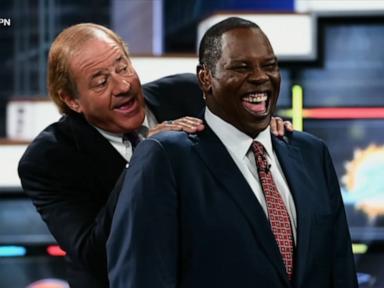
Sports media loves a safe tribute. Take a legend, sand down every jagged edge, wrap his career in soft piano music, and pretend he was universally adored from day one. That is the lazy consensus behind every glossy retrospective celebrating Tom Jackson’s extraordinary life and legacy.
It is also a complete distortion of why he actually mattered.
When networks package Tom Jackson into a neat highlight reel of catchphrases and warm studio smiles, they erase the friction that made him a giant in the first place. Before he became the elder statesman of Sunday morning television, Jackson was an undersized fourth-round draft pick out of Louisville who had to claw his way onto the Denver Broncos roster. Before he became the smiling voice next to Chris Berman on NFL Primetime, he was a disruptive, outspoken union representative and one of the fiercest critics of how the league treated its labor force.
If you celebrate the polish without examining the abrasiveness, you miss the entire point of his career.
The Myth of the Effortless Broadcaster
Most tribute pieces treat Jackson’s 29-year run at ESPN as an inevitable victory lap. He retired from playing in 1986, walked onto a Bristol set in 1987, and magic happened.
That narrative is pure fiction.
In 1987, ESPN was still fighting for legitimacy against the entrenched broadcast networks. Former players in studio roles were largely expected to act as cheerleaders—smiling, offering generic platitudes about "wanting it more," and never questioning coaching decisions or front-office competence. I have spent two decades watching network executives burn millions of dollars trying to manufacture "chemistry" by pairing a loud play-by-play host with a compliant ex-jock. It fails almost every time because compliance is boring.
Jackson succeeded because he refused to play the house mascot.
- He brought linebacker instincts to film breakdown. Instead of reciting box scores, he isolated scheme failures and called out players who quit on plays.
- He rejected manufactured hot takes. Long before debate shows turned sports television into screaming matches over fabricated narratives, Jackson operated on accountability. If a quarterback threw into triple coverage, he said so plainly. If a coach panicked in the fourth quarter, he dissected the exact tactical blunder.
- He earned locker-room credibility the hard way. Active players watched NFL Primetime religiously on Sunday nights not because the music was catchy, but because Jackson refused to carry water for owners or general managers.
Consider a scenario where Jackson debuted in today's media environment. Modern network producers would hand him a tablet, tell him to pick three viral clips, and push him to manufacture fake outrage against a star quarterback for social media engagement. Jackson’s entire ethos ran counter to that model. His authority came from restraint and precision, not volume.
The Orange Crush Was Built on Chip-on-the-Shoulder Resentment
To understand why Jackson never bowed to studio executives, look at how he survived in Denver.
When the Broncos drafted him in 1973, NFL scouts routinely dismissed linebackers under 220 pounds as liabilities against power running schemes. Jackson played around 220 pounds in an era dominated by bruising fullbacks and straight-ahead ground attacks. He had no margin for error. Every snap required superior diagnosis, violent leverage, and relentless pursuit.
Under defensive coordinator Joe Collier, Denver installed the 3-4 defense—a scheme still considered unconventional in the mid-1970s—and built the famed "Orange Crush" unit around speed and blitzing angles rather than sheer bulk. Alongside Randy Gradishar, Lyle Alzado, and Rubin Carter, Jackson transformed what scouts viewed as a physical limitation into a tactical weapon.
The numbers from that era tell the real story:
- Three consecutive Pro Bowl selections (1977–1979) at a time when AFC linebacker spots were dominated by household names from Pittsburgh and Oakland.
- 20 career interceptions, an absurd total for a strongside linebacker playing in a run-heavy decade.
- 14 seasons in a single uniform (1973–1986), anchoring a franchise that went from perennial laughingstock to three Super Bowl appearances.
Yet mainstream retrospectives routinely gloss over the political warfare that defined his playing years. Jackson served as Denver’s NFL Players Association representative during the brutal 1982 strike. While fans demanded uninterrupted Sunday entertainment, Jackson stood on picket lines arguing for free agency, pension protections, and a fair share of television revenue. Owners hated him for it. Local columnists painted him as greedy. He absorbed the blowback without flinching.
You cannot separate the television analyst from the union rep. The same spine that allowed him to stare down NFL ownership in 1982 allowed him to look into a camera lens in 1995 and tell millions of viewers that a superstar had dogged it on third down.
Why Modern NFL Studio Shows Fail Where Primetime Thrived
Whenever people search for why NFL Primetime became cultural appointment viewing, they usually credit the highlight format or Chris Berman’s nicknames. Both mattered, but neither explains why the show held audiences captive for over an hour every Sunday evening before the internet made instant clips ubiquitous.
The secret was structural discipline.
Today, sports networks drown viewers in seven-person panels shouting over each other from sterile desks. Producers assume audiences have zero attention span, so they cut away from game footage after four seconds to show reaction shots of analysts laughing at their own jokes.
Jackson and Berman trusted the game.
| Era / Format | Primary Focus | Analyst Role | Viewer Takeaway |
|---|---|---|---|
| Classic NFL Primetime (1987–2005) | Extended game narratives, momentum shifts, scheme execution | Context provider, tactical translator, moral compass | You understood why a team won or lost |
| Modern Studio Panels | Manufactured controversy, gambling lines, social media clips | Performer, partisan debater, brand builder | You remember who yelled loudest |
Jackson understood pacing. He knew when to let a replay breathe and when to drop a single, devastating sentence over the footage. When he said a team had "no answer" or criticized a defense for losing its composure, those words carried weight because he didn't waste them on every routine play.
There is a downside to Jackson’s uncompromising approach, and pretending otherwise would be dishonest. His bluntness occasionally alienated coaches and front offices, cutting off the cozy insider access that modern reporters rely on for scoops. He was never going to be the guy breaking transaction news five minutes before free agency opened because he refused to trade favorable coverage for leaked information.
In an industry obsessed with access journalism, Jackson chose independence. He paid for it with fewer back-channel tips, and the audience benefited from unfiltered honesty.
The Question Fans Should Actually Be Asking
When a figure like Tom Jackson is celebrated, the standard public reaction is nostalgia: Why don't they make broadcasters like him anymore?
That is the wrong question. Networks haven't forgotten how to hire smart former players. They have simply changed the incentives.
Media companies discovered that nuance is expensive to produce and hard to monetize in 30-second vertical video clips. Outrage travels faster on algorithms than film breakdown. If a former player spends three minutes explaining how a weakside linebacker’s alignment forced a running back to cut back into pursuit, half the casual audience changes the channel. If that same ex-player calls a quarterback "fraudulent," the clip gets two million views by Monday morning.
So if you want to honor Tom Jackson’s actual legacy, stop watching rage-bait studio shows that insult your intelligence. Stop rewarding networks that treat football analysis like professional wrestling promos.
Look instead for the rare voices—whether on independent podcasts, All-22 film channels, or the few remaining serious broadcast desks—who respect the craft enough to tell you what actually happened between the whistles without begging for clicks.
The Real Meaning of "He Could Go All the Way"
Chris Berman supplied the soundtrack to NFL Primetime, and he deserved every ounce of praise he received for inventing a new dialect of sports broadcasting. But Berman himself repeatedly acknowledged that the show would have collapsed into pure shtick without Jackson sitting to his left.
Jackson was the anchor. When Berman went high, Jackson went grounded. When a game turned ugly, Jackson brought gravity. When tragedy struck the league—whether a career-ending injury on the field or the death of a player off it—ESPN didn't turn to a corporate PR statement. They turned to Tom Jackson, because viewers knew he wouldn't fake an emotion he didn't feel.
His famous sign-off wasn't a catchphrase cooked up in a marketing meeting. His signature delivery came from a man who had bled on artificial turf in Mile High Stadium, fought owners in boardrooms, and earned every syllable he spoke on air.
Turning Tom Jackson into a harmless nostalgia piece is the ultimate disrespect to a man who spent his entire life refusing to be harmless. Celebrate the warmth, celebrate the partnership with Berman, and celebrate the Hall of Fame career. Just don't forget the teeth underneath the smile.