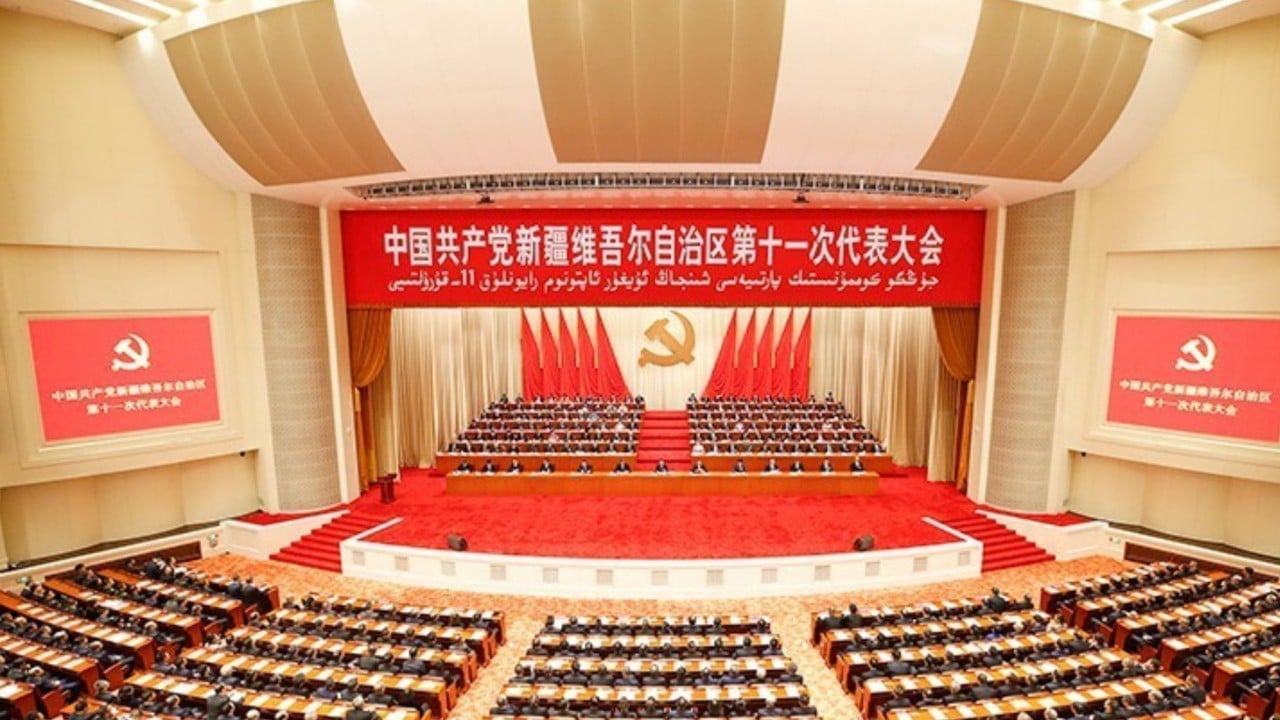
Every time Beijing shuffles a provincial party secretary, a cottage industry of Western analysts, risk consultants, and financial journalists scrambles to update their spreadsheets. They squint at resumes. They trace university alumni networks. They map out supposed factional alliances like detectives stringing red yarn across a corkboard.
They are wasting their time. And if you are making capital allocation or supply chain decisions based on their forecasts, you are burning money.
The lazy consensus in modern sinology holds that regional leadership changes are the ultimate leading indicator for the future of the Chinese Communist Party. The theory goes like this: provinces are the proving grounds for the Politburo. By watching who gets promoted to govern Guangdong, Zhejiang, or Chongqing, outsiders can reverse-engineer the ideological direction of the central government, spot rising reformers, and predict policy shifts years before they hit the national stage.
That framework belonged to a political era that died over a decade ago.
Continuing to use 1990s Kremlinology-style personnel tracking to understand today’s Beijing is like trying to navigate a modern metropolis using a hand-drawn map from the Qing Dynasty. The terrain has been completely paved over. Regional reshuffles no longer signal ideological succession or policy experimentation. Instead, they are an administrative mechanism for political risk management, debt containment, and absolute centralization.
The Ghost of Deng Xiaoping’s Experimentation Engine
To understand why the current analytical consensus is broken, you have to look at why it used to work.
During the reform and opening-up period initiated under Deng Xiaoping, provincial leadership actually mattered for policy direction. The central government operated on a model of "crossing the river by feeling the stones." Beijing set broad macroeconomic targets, and provincial chiefs were given immense leeway to figure out how to hit them.
This system created genuine policy divergence. A party secretary in a coastal province could pioneer special economic zones, privatize state-owned enterprises, or court foreign capital in ways that looked radically different from the heavy-industry preservation happening in the northeast. Promotion up the ladder—from governor to provincial party secretary, and eventually to the Politburo Standing Committee—was heavily weighted toward economic performance, specifically GDP growth.
Analysts got addicted to this model because it made Chinese politics legible. You could look at a cadre’s track record in a province, label them a "market reformer" or a "conservative," and reasonably assume they would bring that exact playbook to Beijing.
I have watched multinational corporations blow millions of dollars on market-entry strategies built entirely on this outdated premise. Several years ago, a European manufacturing client poured capital into an inland province purely because the newly appointed party secretary had a background in coastal tech hubs. Their consultants promised a wave of local deregulation and Western-friendly subsidies. Two years later, the executive team was blindsided by aggressive local state-owned enterprise consolidation and sudden compliance crackdowns. They read the man's resume, ignored the system he answered to, and paid the price.
The mistake was assuming the provincial chief was an autonomous CEO. In the current political architecture, a provincial party secretary is not a visionary founder. They are a branch manager executing a strict franchise manual written in Zhongnanhai.
The Mechanics of Modern Cadre Management
Under Xi Jinping, the incentive structure for regional cadres underwent a structural overhaul. GDP growth is no longer the primary metric for advancement. It is not even in the top tier.
Today, the evaluation matrix for regional officials is dominated by political loyalty, ideological alignment, debt resolution, and social stability. When the Central Organization Department—the secretive body that manages all senior personnel appointments—moves a cadre from one province to another, they are not rewarding a bold policy innovator. They are deploying a troubleshooter to enforce central directives.
Consider the three mechanisms that actually drive regional appointments today:
- The Anti-Localism Firewall: Beijing aggressively rotates officials across different regions every few years to prevent them from building local patronage networks. If a governor stays in one province too long, they develop ties with local business elites, municipal banks, and regional military commanders. Rapid rotation ensures a leader’s sole allegiance remains upward to Beijing, never downward to the territory they administer.
- Technocratic Firefighting: Look closely at the resumes of officials moved into heavily indebted provinces like Guizhou, Liaoning, or Yunnan. You will rarely find flashy economic visionaries. You find former bankers, financial regulators, and disciplinary inspectors. Their mandate is not to spark a growth miracle; it is to restructure trillions of yuan in hidden local government financing vehicle (LGFV) debt without triggering a systemic default.
- The Zero-Tolerance Accountability Trap: Through the expanded discipline inspection apparatus and lifetime accountability rules for major decisions, Beijing has engineered a system where taking unapproved initiative carries catastrophic personal risk. If a provincial leader experiments with a new economic policy and it fails, they face career ruin or corruption charges. If they sit tight and rigidly execute central documents, they survive.
When you understand these mechanics, the obsession with factional labels falls apart. There are no competing ideological factions left in the upper echelons of the Party. The "Youth League" faction and the "Shanghai Gang" are historical artifacts. Every senior regional leader operating today passed through the same ideological vetting process. Distinguishing between them based on which province they governed twenty years ago is an exercise in confirmation bias.
Dismantling the Wrong Questions
Because the media insists on framing personnel changes as a palace intrigue drama, investors and observers end up asking the wrong questions. Let us tear down the three most common misconceptions driving the current narrative.
Does a reshuffle in a major economic hub mean pro-market reforms are coming?
No. When Beijing appoints a new party secretary to Shanghai, Guangdong, or Jiangsu, analysts immediately scour the appointee's past speeches for mentions of "private enterprise" or "foreign investment." When they inevitably find those phrases, they declare a pro-business pivot.
This misses the entire point of how Chinese political communication works. Every official repeats the exact same central slogans. If a coastal leader talks about supporting the private sector, it is because the Politburo issued a directive to stabilize business confidence, not because that specific official harbors secret free-market sympathies. Furthermore, local leaders have virtually zero fiscal room to launch independent stimulus anymore. With land sales revenue—the traditional lifeblood of provincial budgets—having collapsed during the property downturn, regional governments are strapped for cash. A new party secretary cannot conjure tax breaks or massive infrastructure spending out of thin air when their municipal balance sheet is underwater.
Can we spot the next generation of supreme leaders in today’s provincial governors?
Stop looking for an heir apparent. In the pre-2012 era, the Party maintained a predictable, institutionalized succession timeline. Two generations of future leaders were groomed in parallel, moving through specific provincial postings on a strict schedule so everyone knew who would take over ten years in advance.
That system was dismantled when term limits were abolished in 2018. Without a fixed retirement age or a mandatory two-term ceiling at the very top, the grooming pipeline has been deliberately obscured. Promoting a younger cadre—say, someone born in the 1970s—to a provincial vice-governor or ministerial slot does not make them a designated successor. It simply ensures a deep bench of compliant administrators. Anyone claiming to identify the next paramount leader from current provincial rosters is guessing.
Do regional promotions reflect shifting power balances between Beijing and the provinces?
The power struggle between the center and the periphery is over, and Beijing won decisively. Throughout Chinese history, central rulers fought a constant battle against regional autonomy, summed up by the old proverb: "The mountains are high, and the emperor is far away."
Modern digital surveillance, centralized fiscal transfers, and unified anti-corruption campaigns have flattened those mountains. Beijing has real-time visibility into provincial tax collection, local debt issuance, and cadre behavior. Regional reshuffles do not reflect a negotiation between local interests and central authority; they are the physical manifestation of Beijing’s total administrative control.
What Serious Analysts Watch Instead
If tracking provincial musical chairs is a dead end, where should you actually focus your attention to understand the trajectory of the Chinese Communist Party?
You need to stop watching the actors and start reading the script. In a hyper-centralized system, power flows from institutional mandates, budget allocations, and regulatory bodies—not from the personal charisma of regional governors.
1. Follow the Central Commissions, Not the Provinces
Real policy power in Beijing has shifted away from traditional state ministries and provincial governments toward Party commissions—specifically the Central Financial Commission, the Central Science and Technology Commission, and the Central Commission for Comprehensively Deepening Reform. These bodies sit directly under the top leadership and bypass provincial bottlenecks entirely. When you want to know where China is heading, read the work reports coming out of these commissions. They dictate the exact rules that provincial leaders are forced to obey.
2. Track Fiscal Transfers and Debt Swaps
Ignore what a provincial governor says at an international business forum; look at how much money the Ministry of Finance is transferring to their province. The true health and strategic priority of any region can be measured by its reliance on central fiscal transfers versus its local tax base. Watching how Beijing structures special refinancing bonds to bail out insolvent provinces tells you far more about the Party's real priorities—such as preventing banking contagion while starving local vanity projects of capital—than any personnel announcement ever could.
3. Watch the Technocrats in Security and Tech, Not Generalist Politicians
Notice the changing background of the few officials who actually hold genuine operational influence today. They are increasingly drawn from the military-industrial complex, aerospace, artificial intelligence, and state security apparatuses. Figures with backgrounds in defense engineering or cyber-governance are being placed in key administrative roles because Beijing views economic survival through the lens of national security and technological self-reliance. A regional leader with a background in aerospace engineering tells you one thing: that province is being tasked with executing Beijing’s industrial policy on hard tech, regardless of what it costs in short-term commercial efficiency.
The Necessary Caveat: Where Regional Nuance Still Exists
To argue that regional leadership is irrelevant to macro-direction is not to say that local execution is uniform across the country. Admitting the limits of a centralized thesis is essential for accurate analysis.
While provincial leaders no longer set strategic direction, they still control the intensity and competence of policy enforcement. When Beijing issues a broad, ambiguous directive—such as "rectify local financial risks" or "promote high-quality development"—different regional leaders will interpret the required rigor differently based on their own risk tolerance.
An anxious, career-obsessed party secretary in an inland province might over-correct, launching heavy-handed crackdowns on local businesses just to prove ideological zeal to inspectors from Beijing. Meanwhile, a seasoned administrator in a trade-dependent coastal city might apply the exact same directive with a lighter touch to avoid spooking foreign exporters, provided they stay strictly within Beijing's red lines.
This distinction matters immensely if you are operating a factory on the ground in Suzhou versus Chengdu. Local execution determines whether your customs clearance takes two days or two weeks, or whether local regulators audit your tax filings aggressively.
However, do not confuse variations in local bureaucratic friction with shifts in national political trajectory. A flexible mayor in a coastal city is not a signal that the Party is returning to Western-style economic liberalization. They are simply managing local stability within the strict parameters set by the center.
How to Audit Your China Intelligence
If you are an executive, investor, or policy analyst relying on external briefings to navigate China, it is time to audit your information diet.
Throw out any report that spends three pages analyzing the hometowns, alma maters, or supposed patronage ties of newly appointed provincial officials. If an analyst uses terms like "reformist faction" or "pragmatic wing" to describe current Politburo members or provincial secretaries, stop reading. They are selling you nostalgia dressed up as intelligence.
Instead, demand structural analysis. Ask how central fiscal mandates constrain local spending. Examine how industrial subsidies are flowing into strategic sectors like semiconductors, green energy, and advanced manufacturing. Study the legal and regulatory frameworks governing data security, cross-border capital flows, and state-owned enterprise reform.
The Chinese Communist Party is not a black box whose secrets can be unlocked by guessing the personal loyalties of regional bureaucrats. It is an explicit, rule-bound, hyper-centralized organization that publishes its strategic intentions in plain sight through five-year plans, central commission directives, and budgetary allocations.
Stop staring at the provincial musical chairs. Look at the person controlling the music.