Every time a administration revokes a handful of press credentials, the media ecosystem suffers a collective stroke. Pundits dust off their favorite dystopian tropes, invoke authoritarian playbooks, and weep over the supposed death of the First Amendment. Editorial boards across the country run frantic columns warning that democracy is hanging by a thread because a few network correspondents cannot sit under the chandeliers of the West Wing briefing room.
It is high time to drop the pretense.
The frantic hand-wringing over White House press bans is not a defense of journalism. It is a defense of professional comfort, institutional laziness, and a broken, performative theater that has done more to damage public trust in the news than any politician ever could.
I have spent years watching the sausage get made inside Washington media loops. I have seen newsrooms trade hard-hitting investigations for the privilege of an early morning background leak. I have watched star reporters become more concerned with their seating charts than the actual substance of executive power. The corporate press did not lose its teeth yesterday; it surrendered them decades ago in exchange for a permanent desk, free coffee, and the illusion of proximity to power.
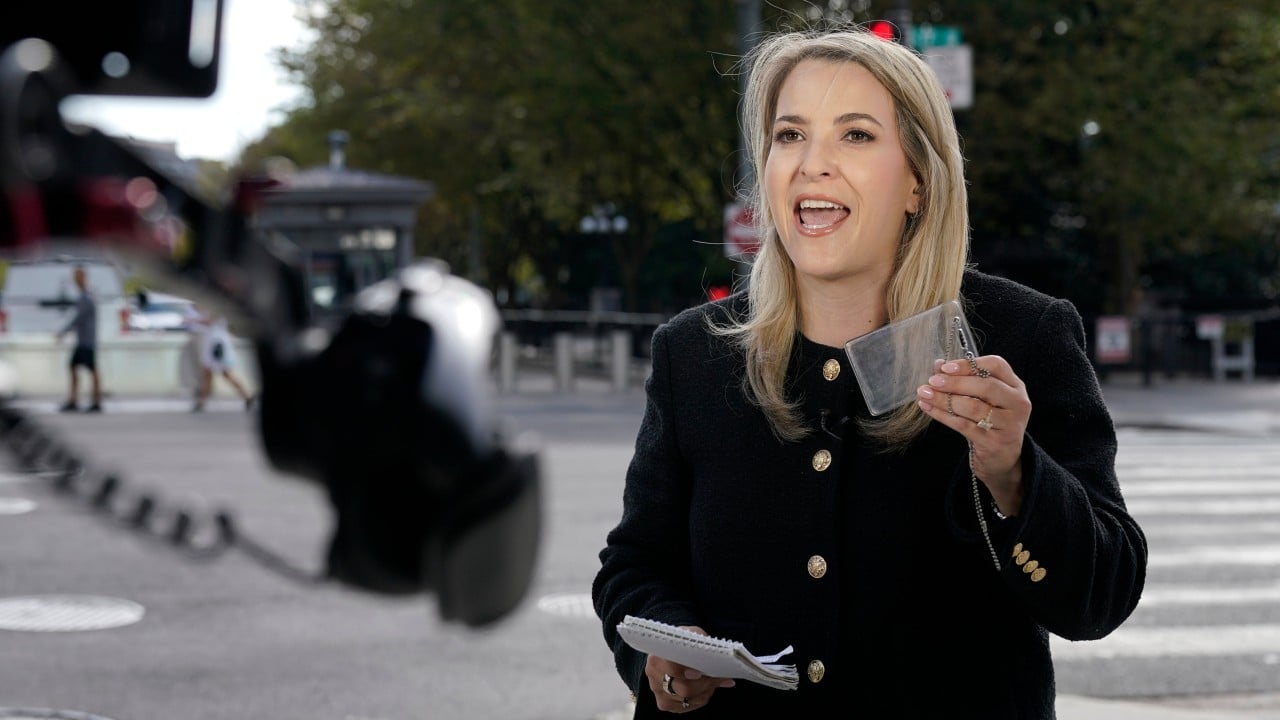
When outlets like CNN, MSNBC, and Politico get frozen out of a press briefing, the reaction from their peers is treated like a crisis of constitutional magnitude. Let us look at the reality of what actually happens inside that room. It is not an inquisitorial tribunal holding the executive branch's feet to the fire. It is a television studio where reporters posture for their producers, ask pre-vetted or predictable questions designed to generate a snappy clip for the evening news, and validate the administration's premise simply by showing up to play their assigned roles.
The lazy consensus is that barring reporters from the briefing room silences dissent. The empirical truth is the exact opposite. Some of the sharpest, most damaging investigative reporting on executive overreach in modern political history was executed by reporters who never set foot in the White House briefing room. Real reporting happens in federal court records, through Freedom of Information Act requests, via whistleblowers hiding in secure communication channels, and by chasing down procurement data in forgotten agency databases. It does not happen by raising your hand faster than the reporter from the wire service so you can ask a trap question about a tweet.
The obsession with the briefing room reveals a deep-seated professional vanity. For legacy media corporations, a press pass is a status symbol. It tells the subscribers and the corporate advertisers that the network is part of the inner circle, that the anchors are whispering in the ears of decision-makers, and that the brand matters. When an administration takes that badge away, it does not impair the network's ability to report the news. It impairs their ego and their business model.
Notice how the outrage over banned credentials always correlates with a spike in digital subscriptions and cable viewership. Exile is a fantastic marketing strategy. When an outlet gets locked out of the room, they instantly pivot to martyrdom. They run banner alerts, publish breathless updates about executive tyranny, and watch their engagement metrics skyrocket. The administration gets a temporary rhetorical win with its base by punishing a hostile entity, and the network gets a cash injection from outraged loyalists. It is a symbiotic grift disguised as a constitutional crisis.
We need to redefine what access actually means in the digital age. For generations, the executive branch controlled the flow of information by acting as the gatekeeper to physical spaces. If you did not have a pass, you did not get the handout, you did not hear the official spin, and you could not report on the daily schedule. That model made sense in the era of three television networks and afternoon print runs.
In a decentralized information environment, that physical gatekeeping is obsolete. The White House press office is essentially an internal public relations agency for the sitting executive. Treating exclusion from their daily PR blitz as a censorship disaster is like crying foul when a private company revokes your VIP pass to their corporate retreat. You are not being barred from speaking truth to power; you are being uninvited from a corporate marketing pitch.
The institutional press has become so addicted to spoon-fed access that they have forgotten how to hunt. When you spend forty years sitting in a designated seat waiting for a press secretary to call on you, you atrophy. You stop digging. You rely on stenography instead of investigation. You repeat talking points with contrarian spin attached to them just to satisfy daily quotas.
Consider the mechanics of the daily briefing. A press secretary steps up to the podium, armed with a binder of defensive pivots and rehearsed evasions. The reporters sit down and lob questions that have already been anticipated by a room full of communications strategists. Thirty minutes later, everyone leaves with a few quotes that tell the public precisely what the administration wants them to think about that day's news cycle. Nothing of substance was uncovered. No accountability was enforced. Millions of viewers walked away feeling informed, when in reality, they just watched a scripted piece of theater.
When a network gets banned from that theater, they do not lose a tool of accountability. They lose their prop.
The defenders of the status quo argue that if we do not protect the physical presence of mainstream media in the West Wing, the administration will control the narrative completely. This argument assumes that the mainstream media was successfully controlling or dismantling the narrative when they were in the room. Look at the historical record. Did the presence of a full complement of network reporters prevent major policy blunders, intelligence failures, or expansions of executive power over the last thirty years? Absolutely not. In many cases, the press corps served as the willing megaphones for institutional catastrophes, amplifying official narratives without sufficient skepticism because access was too precious to risk over a hard truth.
Complicity requires proximity. When you are inside the tent every single day, eating the food, sharing the air, and building social relationships with the staffers and officials you are supposed to be scrutinizing, capture is inevitable. Anthropologists call this native adoption. Washington journalists call it doing the job. You start speaking the language of the bureaucracy. You adopt their framing. You begin to care more about access preservation than about the citizens who rely on you to tell them what is actually broken.
Being kicked out is the best thing that can happen to a reporter's integrity. It forces them back into the cold, outside world where real stories live. It strips away the comforting delusion that you are part of the governance team. It reminds you that your allegiance is to the public record, not to the social hierarchy of the executive mansion.
If major networks wanted to respond to these bans with genuine strength, they would not run weeks of self-pitying segments about their credential status. They would quietly walk away from the briefing room entirely. They would reallocate those reporting budgets away from the Washington insider circuit and pour them into regional investigative desks, local corruption trackers, and deep-dive data analysis. They would prove that the briefing room is irrelevant by consistently breaking major stories without ever stepping foot inside it.
That will not happen, of course, because the briefing room is cheap to cover. Sending a correspondent to stand under a television camera and ask a predictable question costs a fraction of what it takes to maintain an investigative unit that spends six months auditing federal spending or tracking municipal code violations. The outrage over press bans is cheaper still. It requires zero investigative heavy lifting; it is pure editorial commentary packaged as righteous fury.
The next time an administration bars a major outlet, do not look for the defense of democracy. Look for the balance sheet. Look for the drop in ratings that needs a jolt, or the subscriber push that needs an enemy.
Journalism does not die because a reporter loses a parking space at 1600 Pennsylvania Avenue. Journalism dies when reporters start believing that their right to ask questions depends on the government's permission slip, and when the public falls for the performance. Stop weeping for the pundits in the front row. They are not fighting for your right to know the truth. They are fighting for their seat at the table.