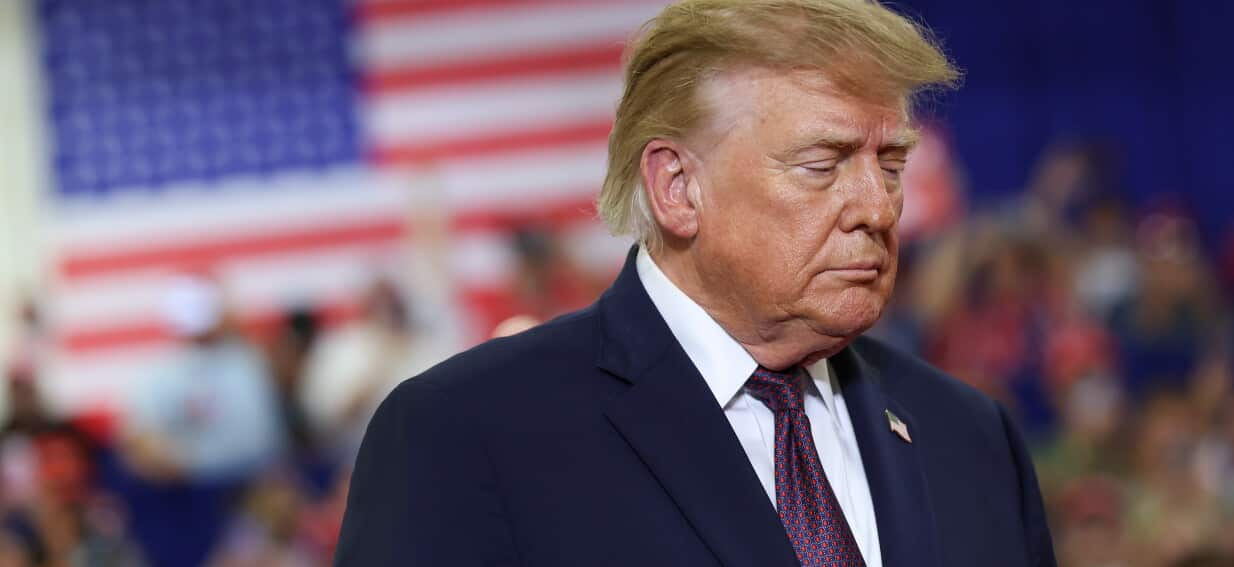
Every two years, Washington pundits dust off the exact same breathless script. They treat the US midterm elections like a sudden-death overtime match for the sitting president. This cycle, the mainstream press is screaming that Donald Trump’s entire political survival hangs in the balance.
They are wrong. Completely, fundamentally wrong.
The lazy consensus assumes that losing the House or the Senate strips a president of real authority. It treats the American government like a parliamentary system where a bad Tuesday in November functionally ends an administration. If you actually understand how executive power operates in the modern era, you know that legislative majorities are increasingly irrelevant to how a president governs.
I have spent over a decade watching campaign strategists, lobbyists, and corporate boards burn tens of millions of dollars trying to predict and influence midterm waves. They pour cash into swing-district House races believing they are buying policy outcomes. Then, six months after the election, they sit stunned in K Street conference rooms wondering why the administration just bypassed Congress entirely to rewrite the rules of their industry.
You are asking the wrong question. Stop asking whether Donald Trump's power is on the line. Start asking why we still pretend Congress holds the leash.
The Myth of the Midterm Mandate
Look at the historical baseline that political reporters love to cite. Since the Civil War, the president’s party has lost an average of roughly 28 House seats and four Senate seats in midterm elections. It is one of the most reliable gravitational pulls in American politics. Voters get buyer's remorse, turnout drops among the incumbent's base, and the opposition party rides a wave of frustration back into committee chairmanships.
Mainstream guides treat this predictable pendulum swing as an existential crisis for the White House. They frame a flipped House as a brick wall that stops an administration dead in its tracks.
That framing relies on a textbook view of the Constitution that died somewhere around the mid-twentieth century.
In reality, a midterm loss often liberates a second-term president. Think about the mechanics of legislative gridlock. When a president holds a narrow majority in Congress, they spend half their political capital babysitting vulnerable members in swing districts. They have to water down bills, delay controversial appointments, and beg moderates to take tough votes.
Once the opposition takes the gavel, that burden vanishes. The president stops playing defense for vulnerable lawmakers and pivots entirely to executive action, foreign policy, and regulatory warfare. They get a built-in foil. Every economic hiccup, every stalled initiative, and every government shutdown threat can be pinned directly on the newly empowered opposition.
The Imperial Presidency Doesn't Need a Majority
To see why midterm panic is overblown, you have to look at the actual levers of power sitting on the Resolute Desk. None of them require a single vote from a freshman representative in suburban Pennsylvania.
First, consider the administrative state. Whether a president wants to dismantle regulations or expand them, the real battlefield is the Federal Register, not the House floor. Through executive orders, agency rulemaking, and enforcement discretion, the White House dictates how laws already on the books are applied.
If an administration decides to shift antitrust enforcement, alter environmental compliance standards, or rewrite immigration processing rules, a hostile Congress can hold all the hearings it wants. They can haul cabinet secretaries before cameras for six hours of viral soundbites. What they cannot easily do is undo the rule without passing new legislation—legislation the president will immediately veto. Override-proof two-thirds majorities in both chambers are practically extinct in our polarized era.
Second, look at trade and national security. Over the last eighty years, Congress steadily handed away its constitutional authority over tariffs and war powers. Under statutes like Section 232 of the Trade Expansion Act and the International Emergency Economic Powers Act, a president can unilaterally slap massive tariffs on foreign goods or freeze global financial assets with the stroke of a pen. Trump demonstrated the sheer scale of this unilateral tariff power during his first term, and no midterm election touches those statutory delegations.
Third, there is the federal judiciary. While Senate confirmation is required for lifetime appointments, a president who enters a midterm cycle with a favorable Senate map—or who has already spent two years reshaping the appellate courts—has locked in ideological influence that will outlast any two-year House majority by decades.
Dismantling the Subpoena Panic
When you dig into the "People Also Ask" sections surrounding midterm elections, one question dominates the anxiety of partisan observers: Will a flipped House impeach the president or paralyze the White House with investigations?
Let's answer this brutally honestly. Yes, an opposition House will launch dozens of investigations. Subpoenas will fly like confetti. Committee chairs will spend millions on outside counsel to dig through tax records, agency emails, and foreign business dealings.
And almost none of it will alter the trajectory of executive power.
We have run this experiment repeatedly over the last thirty years. Bill Clinton was impeached by a Republican House in 1998; his approval ratings went up, and he finished his term without being removed. Donald Trump was impeached twice; he remained in office both times and returned to the White House years later. Joe Biden faced an impeachment inquiry and relentless House oversight; his administration continued issuing sweeping student loan forgiveness rules and climate regulations right up until the end.
The modern congressional subpoena has been reduced to a fundraising tool. When the White House invokes executive privilege, a subpoena triggers a multi-year legal battle in federal court. By the time an appellate court resolves the dispute over a single batch of documents, the two-year congressional term is often over, and another election is already underway.
Oversight is theater. Policy is power. Do not confuse the two.
Where the Contrarian Thesis Breaks Down
I am not claiming midterm elections have zero consequences. Intellectual honesty requires admitting where this thesis hits a wall. If you ignore the genuine constraints a flipped Congress imposes, you will misread the board just as badly as the cable news pundits.
Here is where a midterm wipeout actually hurts a sitting president:
- The End of Judicial Confirmations: If the Senate flips, the judicial pipeline freezes instantly. An opposition Senate Judiciary Committee will simply refuse to hold hearings on appellate or Supreme Court nominees. For a president banking on long-term legal legacy, losing the Senate is a hard stop.
- The Power of the Purse: A president cannot print money for new domestic programs without congressional appropriations. While continuing resolutions keep the lights on, major legislative ambitions—tax overhauls, infrastructure packages, entitlement reforms—die completely the moment the opposition takes either chamber.
- Debt Ceiling Brinkmanship: Every few years, the statutory borrowing limit turns into a hostage crisis. An opposition House can use the debt ceiling to extract spending caps or policy concessions that the White House would never accept under normal circumstances.
Notice what all three of these constraints have in common. They stop a president from building new statutory frameworks. They do almost nothing to stop a president from wielding the vast, pre-existing machinery of the executive branch.
The Real Power Centers You Should Watch Instead
If you are an investor, a business leader, or simply a citizen trying to understand where the country is actually heading, stop refreshing election forecast models every ten minutes. Your attention is being monetized by an industry that profits from false urgency.
Shift your focus to the places where binding decisions are actually made:
- The Office of Information and Regulatory Affairs (OIRA): This obscure corner of the White House Office of Management and Budget is the nerve center of federal power. Every major regulation passes through OIRA. Watching what gets approved or blocked here tells you infinitely more about the economy's direction than a dozen House floor votes.
- The Federal Reserve: Monetary policy moves markets, dictates borrowing costs, and shapes employment far faster than fiscal legislation ever could. The tension between the White House and the Fed Chair is a vastly more consequential power struggle than the speaker's gavel.
- Appellate Court Dockets: Following the death of Chevron deference—the legal doctrine that forced courts to defer to federal agencies' interpretations of ambiguous laws—federal judges are now the ultimate referees of executive action. A single ruling from the Fifth Circuit or the D.C. Circuit can gut an entire administration's agenda overnight, regardless of who won the midterms.
- State Attorneys General: Real resistance to presidential power no longer lives in the minority party on Capitol Hill. It lives in coordinated lawsuits filed by state attorneys general. When a president issues a sweeping executive order, twenty states immediately sue in a friendly district court to secure a nationwide injunction. That is the actual check on the presidency today.
Stop Buying the Two-Year Circus
Political journalism survives on manufactured cliffhangers. It needs every election to be the most important election of our lifetimes, and every midterm to be an existential referendum on the ruler in the White House.
Step back from the noise. Look at the structural reality of the American system. Over decades of partisan paralysis, Congress voluntarily surrendered its core constitutional muscle to the executive branch and the courts because lawmakers realized it was safer to let presidents take the blame for hard decisions.
A midterm election can change the faces on the Sunday morning talk shows. It can change who holds the gavel during televised hearings. It can pause the confirmation of federal judges.
What it cannot do is put the imperial presidency back in the bottle. The power isn't on the line in November—because Congress gave it away years ago.