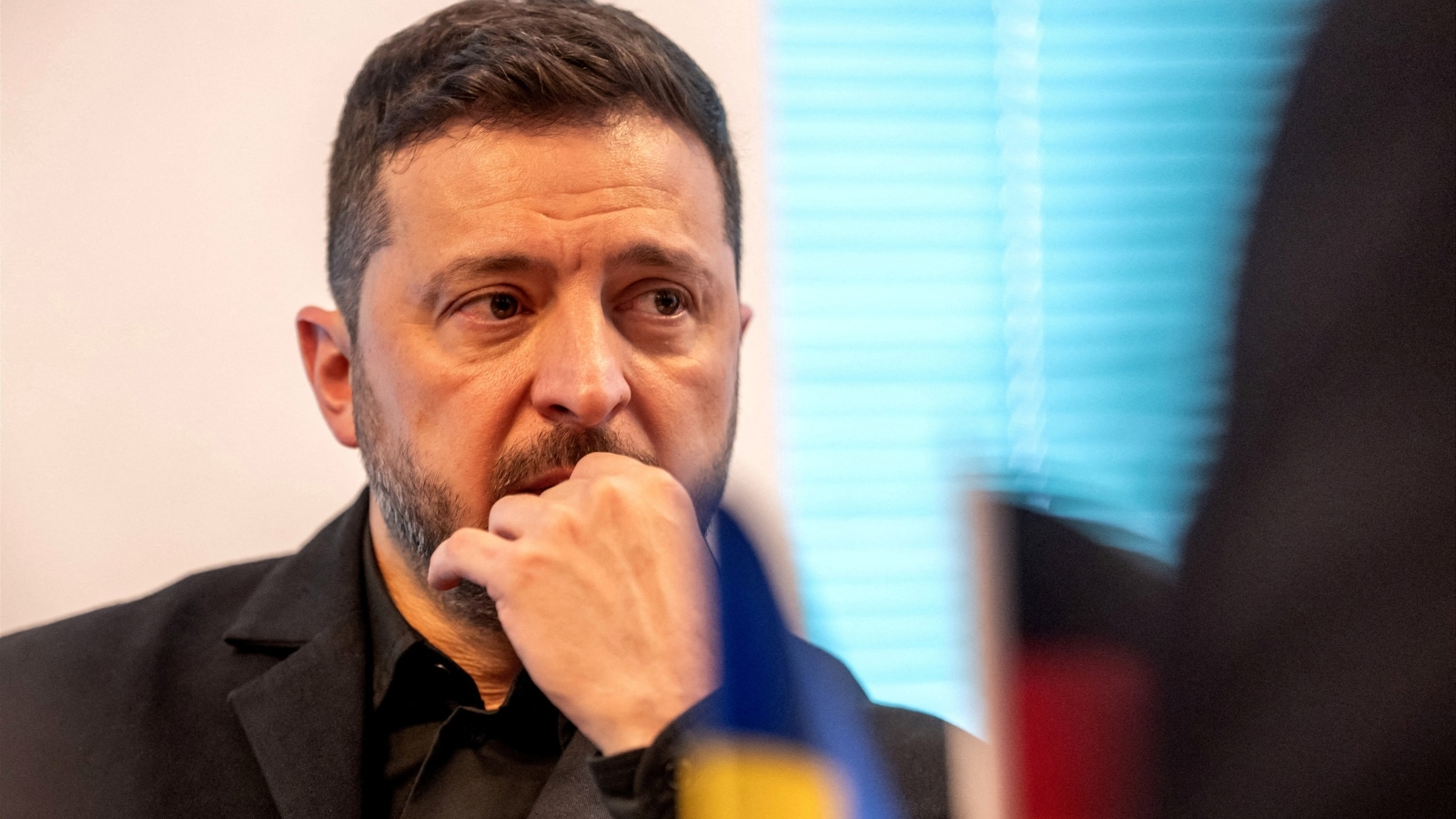
Every wire service on earth just ran the same lazy headline. Volodymyr Zelenskiy is flying to Turkey for talks, and the foreign policy establishment is tripping over itself to frame it as a diplomatic breakthrough.
They are wrong. Completely, dangerously wrong.
If you read the standard press coverage, you get fed a comforting fairy tale about momentum, de-escalation, and the quiet magic of shuttle diplomacy. Journalists love a plane ticket because a plane ticket is easy to photograph and even easier to turn into a narrative arc. Leader gets on jet. Leader lands in Ankara or Istanbul. Leader shakes hands with Recep Tayyip Erdogan. Peace gets a chance.
That is not what happens in the room. I have spent twenty years watching bilateral summits in the Black Sea region collapse before the coffee gets cold, and the pattern never changes. When a wartime president flies to a neutral-ish intermediary like Turkey, he is rarely going there to sign a peace treaty. He is going there to manage leverage, lock down supply chains, and stop his host from cutting a side deal behind his back.
The Lazy Consensus on Ankara
The mainstream media treats Turkey as a benign referee sitting at the crossroads of Europe and Asia, patiently waiting for Kyiv and Moscow to tire themselves out. That framing ignores basic geography and naked self-interest.
Turkey is not a referee. Turkey is a stakeholder with an active, competing agenda in the Black Sea.
To understand why Zelenskiy actually boards a plane to Turkey, you have to understand the Montreux Convention of 1936. This international agreement gives Turkey control over the Bosporus and Dardanelles straits, regulating the transit of naval warships. When Russia launched its full-scale invasion in 2022, Ankara invoked Article 19 of the convention, effectively closing the straits to belligerent warships. That single legal maneuver prevented the Russian Navy from reinforcing its Black Sea Fleet from the Mediterranean and Northern fleets.
Without that closure, Odesa falls. Without Odesa, Ukraine becomes a landlocked rump state strangled off from global agricultural markets.
Zelenskiy does not go to Turkey to beg for a ceasefire. He goes to Turkey to ensure Erdogan keeps the gate locked, keeps the grain corridors open, and keeps Turkish defense contractors—like Baykar, the makers of the Bayraktar drone—building factories inside Ukraine rather than pivoting toward Russian energy subsidies.
Why "Peace Talks" Is the Wrong Question
Search engines are flooded right now with people asking the exact same flawed questions. Is Ukraine ready to negotiate? Will Turkey broker a ceasefire? What territory will Zelenskiy give up?
You are asking the wrong questions because you are operating on a peacetime definition of diplomacy.
In a high-intensity war of attrition, diplomacy is not the alternative to combat. Diplomacy is combat conducted by other means. Carl von Clausewitz wrote that war is the continuation of politics by other means, yet modern commentators forget the inverse: wartime politics is simply the continuation of war at a conference table.
Let’s look at the actual mechanics of why Zelenskiy shows up in Turkey:
- Pre-empting Western Fatigue: Washington and Brussels are perpetually tempted by the illusion of a frozen conflict. By proactively engaging in high-profile talks in Turkey, Zelenskiy steals the narrative. He demonstrates to skeptical lawmakers in the United States and Europe that Kyiv is reasonable, active, and diplomatic—making it politically harder for them to cut off military aid under the excuse that Ukraine refuses to talk.
- Containing Erdogan’s Balancing Act: Erdogan is the undisputed grandmaster of transactional geopolitics. He sells drones to Kyiv while buying S-400 air defense systems from Moscow and expanding Turkish trade volume with Russian oligarchs. If Zelenskiy leaves a diplomatic vacuum in Ankara, Vladimir Putin fills it within forty-eight hours. Physical presence is the price of relevance.
- The Prisoner Swap Machinery: Quietly, away from the podiums, Turkey has served as the primary logistical hub for complex prisoner-of-war exchanges, including the release of Azovstal commanders in 2022. These exchanges require face-to-face guarantees at the highest executive level because neither Kyiv nor Moscow trusts a piece of paper signed by a deputy minister.
The Trap of the "Frozen Conflict"
Whenever a headline mentions talks in Turkey, pundits immediately dust off the Istanbul Communiqué from March 2022. They argue that Ukraine walked away from a viable framework then and must return to it now.
This is historical revisionism masquerading as realism.
The 2022 talks in Istanbul did not fail because Zelenskiy was stubborn. They collapsed because the Russian military committed mass atrocities in Bucha while simultaneously demanding that Ukraine cap its armed forces at a size incapable of defending a single major city, all while Russia refused to withdraw from the territory it had already seized. A ceasefire that leaves an aggressor entrenched on twenty percent of your sovereign land with no security guarantees is not peace. It is an intermission.
Imagine a scenario where Kyiv agrees to a Turkish-brokered freeze along current front lines tomorrow. Russia stops firing artillery. The headlines celebrate. Within eighteen months, Russian defense factories—running on a 24/7 war economy—replenish their depleted missile stockpiles, reconstitute their armored brigades, and launch a third invasion from stronger, fortified positions. Meanwhile, Western attention spans evaporate, sanctions quietly erode, and Ukraine is left exposed.
Experts like Lawrence Freedman and Phillips O’Brien have repeatedly pointed out this exact flaw in conventional ceasefire logic: wars do not end when the shooting stops; wars end when the political objective that caused the shooting becomes impossible to achieve.
Right now, Moscow’s political objective remains the total subjugation of Ukrainian sovereignty. Until that calculation changes on the battlefield, any talk in Istanbul or Ankara is strictly tactical.
What Actually Happens Behind Closed Doors
If you want to read the real outcome of Zelenskiy’s trip to Turkey, ignore the joint press conference. Joint press conferences are theater designed for domestic television audiences. Look instead at three specific indicators over the next thirty days:
- Maritime Insurance Rates in the Black Sea: Watch Lloyd’s of London. If war-risk insurance premiums for commercial vessels heading to Ukrainian ports drop, it means Zelenskiy successfully extracted new naval security guarantees or minesweeping commitments from Ankara.
- Defense Industrial Joint Ventures: Watch for quiet announcements regarding Ukrainian engine manufacturers (like Motor Sich or Ivchenko-Progress) supplying turbines for Turkish fighter jets and heavy drones. Turkey desperately needs Ukrainian aerospace engineering to bypass Western export restrictions. That industrial dependency is Kyiv’s strongest card.
- Energy Transit Rhetoric: Pay attention to how Ankara talks about TurkStream and Black Sea gas pipelines. Every handshake in Istanbul has a cubic-meter price tag attached to it.
The Uncomfortable Truth About Leverage
I need to be brutally honest about the downside of this strategy, because pretending Zelenskiy holds all the cards is just as dishonest as pretending he is surrendering.
Relying on Turkey as a diplomatic and logistical pressure valve carries massive risk for Kyiv. Erdogan’s loyalty is strictly to Ankara’s economic survival and regional dominance. Inflation in Turkey has battered the lira for years, making cheap Russian energy and Russian tourist rubles intoxicating to the Turkish treasury. Furthermore, Turkey’s refusal to join Western sanctions against Moscow creates a massive backdoor for dual-use electronics to flow straight into Russian glide bombs and cruise missiles.
Zelenskiy knows he is shaking hands with a partner who actively profits from both sides of the war. He does it anyway because geopolitics does not offer pure choices. It only offers leverage.
How to Read War Diplomacy Without Getting Played
The next time a major outlet runs a breathless breaking-news alert about Zelenskiy heading to Turkey, stop consuming the coverage like a sports broadcast. Apply a cold, analytical filter to what you are actually seeing:
- Separate Venue from Intent: Just because talks happen in a city famous for previous peace negotiations does not mean peace is on the agenda. Venue is optics.
- Follow the Logistics, Not the Quotes: Quotes about "territorial integrity" and "lasting peace" are boilerplate filler. Look at who was on the plane with him. If the Minister of Strategic Industries and the head of intelligence are in the delegation, it is a war-fighting trip, not a peace summit.
- Watch Moscow’s Reaction, Not Ankara’s: Erdogan will always claim progress because claiming progress makes Turkey look indispensable. You only know a nerve was struck when the Kremlin issues an unprompted, furious statement accusing NATO or Kyiv of undermining regional stability.
Journalists will keep writing that Zelenskiy went to Turkey to talk about ending the war. They will keep treating diplomacy like a magic wand that operates independently of artillery shells, naval drones, and aerospace supply chains.
They are wrong. Zelenskiy did not fly to Turkey to end the war—he flew there to make sure Ukraine has the hardware, the sea lanes, and the diplomatic cover to keep fighting it.