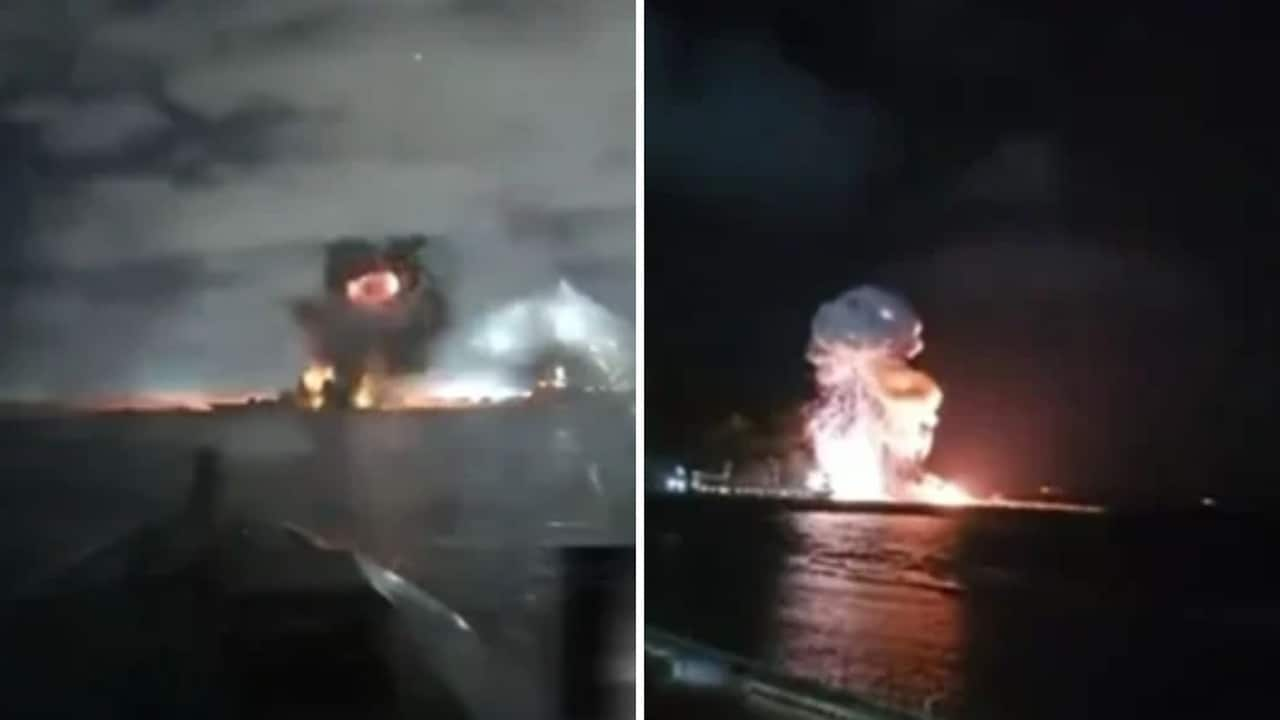
Thirty-six people vanish into smoke and ash. Three bodies are pulled from twisted steel. Search and rescue teams comb through smoldering rubble in Indonesia while wire services pump out the exact same copy-and-paste tragedy narrative they ran last year, and the year before that.
You know the script by heart. A local factory catches fire. Emergency responders scramble. Reporters quote a distressed municipal official promising a thorough investigation. Then, the lazy consensus settles in like soot: corrupt local enforcement and greedy, corner-cutting factory owners are to blame.
That narrative is comforting because it keeps the blood off your hands. It allows global brands, Western procurement officers, and everyday consumers to shake their heads in moral superiority while buying products priced below the physical cost of safe manufacturing.
Blaming local Indonesian plant operators for industrial infernos is like blaming a corner drug dealer for the pharmaceutical cartel that supplied the product. The fire didn't start with a frayed wire or a locked fire exit in Java or Sumatra. The fire started on a spreadsheet in a glass-walled corporate headquarters thousands of miles away.
The Myth of the Rogue Operator
Mainstream coverage treats every industrial disaster in Southeast Asia as an isolated failure of local governance. Journalists point to missing building permits, blocked stairwells, and non-functional sprinkler systems as if factory owners wake up each morning plotting ways to incinerate their own capital investments.
Think about the basic economics of that assumption. A factory owner's entire net worth is tied up in physical machinery, raw inventory, and real estate. When a plant burns to the ground, that owner faces financial ruin, criminal prosecution, and total asset liquidation. Nobody burns down their own livelihood out of sheer malice.
They strip away safety margins because global supply chains force them into a mathematical death spiral.
I have walked the floors of manufacturing facilities across Southeast Asia for over a decade, auditing everything from textile mills to chemical processing plants. I have watched factory directors weep in back offices because a multinational buyer demanded a 12 percent unit price reduction on a renewal contract while local minimum wages and raw material costs climbed by 8 percent.
When your operating margin shrinks to 1.5 percent, you do not have the capital expenditure budget for automated fire suppression, explosion-proof electrical conduits, or widened egress corridors. You buy the cheapest solvent. You stack flammable inventory against emergency doors because you cannot afford off-site warehousing. You lock exterior gates to satisfy a buyer's anti-theft compliance checklist—a mandate that directly contradicts fire safety codes.
How Compliance Theater Kills Workers
If you want to understand why 36 workers get trapped inside a burning building, stop reading local police blotters and start reading corporate Environmental, Social, and Governance (ESG) audit reports.
The modern global supply chain relies on a multi-billion-dollar industry of third-party social compliance auditing. Brands hire firms to inspect factories once a year, check boxes on a clipboard, and issue passing grades so the brand can print "ethically sourced" on its packaging.
This system does not prevent fires. It manufactures illusions.
- Scheduled Audits Create Potemkin Factories: Almost all compliance audits are announced weeks in advance. Plant managers unlock the fire doors, clear the aisles, hang fresh evacuation maps, and coach workers on what to say. The day after the auditor flies home, the padlocks go back on the doors and raw materials pile back into the stairwells.
- The Audit-to-Fire Pipeline: Historical data from major industrial disasters—including the 2012 Tazreen Fashions fire in Bangladesh and the 2017 Tangerang fireworks factory explosion in Indonesia that killed 49 people—shows a disturbing pattern. Many deadly facilities passed safety inspections months before burning down.
- Conflicting Buyer Mandates: Global brands enforce strict security protocols to prevent intellectual property theft and inventory pilferage. They require barred windows, single-entry choke points, and locked perimeter gates. When a flash fire erupts, those anti-theft measures transform a workshop into a furnace.
The competitor's reporting focuses entirely on the heroic rescue effort and the grim body count. By framing the story strictly as a breaking emergency and a local regulatory failure, they completely miss the structural architecture that guarantees these headlines will repeat every quarter.
Answering the Questions Nobody Wants to Ask
When an Indonesian factory burns and dozens go missing, search engines light up with predictable queries. People want simple villains and instant regulatory fixes. Let's dismantle the actual mechanics behind the questions people are asking.
Why are Indonesian factory fires so frequently fatal?
It is rarely just the flames. Industrial fires in developing manufacturing hubs become mass-casualty events because of flashover dynamics combined with illegal mezzanines.
To maximize square footage without paying for new land or permits, operators frequently construct unauthorized wooden or light-steel second floors inside high-ceilinged warehouses. These mezzanines lack fireproofing and direct exterior exits. When highly flammable materials—such as synthetic textiles, adhesives, petrochemicals, or pyrotechnic compounds—ignite on the ground floor, heat and toxic hydrogen cyanide or carbon monoxide gas race upward.
Workers on upper levels are incapacitated by toxic smoke within 90 seconds, long before structural collapse occurs. By the time municipal fire brigades navigate congested industrial corridors, the building is already an unsurvivable thermal trap.
Can stricter Indonesian labor laws stop these disasters?
No. Indonesia already possesses comprehensive occupational safety statutes on paper, anchored by Law No. 1 of 1970 on Occupational Safety and subsequent Manpower Ministry regulations. Passing another law does nothing when the enforcement apparatus is structurally starved of resources.
Consider the ratio of labor inspectors to registered enterprises across the Indonesian archipelago. A single regional inspector is often responsible for overseeing thousands of facilities spread across vast, traffic-choked provinces. Even an incorruptible, hyper-diligent inspector could not physically visit every high-risk plant once every five years.
Furthermore, local governments face a brutal economic trade-off. If a regional administrator shuts down every non-compliant workshop in their district, unemployment spikes overnight, tax revenues evaporate, and manufacturing contracts immediately flee to neighboring provinces or competing nations like Vietnam and Cambodia. Strict local enforcement without buyer accountability simply exports the hazard down the road.
What actually forces factories to become fire-safe?
Money and binding legal liability. Nothing else moves the needle.
Look at what happened in the Bangladeshi garment sector following the 2013 Rana Plaza collapse and the Tazreen fire. Voluntary corporate codes of conduct failed for twenty years. Things only changed when global unions and brands signed the Accord on Fire and Building Safety in Bangladesh—a legally binding contract that forced Western brands to finance structural renovations, open inspection results to the public, and face international arbitration if they failed to fund safety upgrades.
Over 1,600 factories were inspected, tens of thousands of fire and electrical hazards were remediated, and workplace fatalities plummeted. When brands were forced to pay for the safety they demanded, the fires stopped.
The Anatomy of a Preventable Inferno
Imagine a scenario where a mid-sized Tier-2 supplier in West Java produces packaging components for multinational consumer goods companies. The facility employs 120 workers on a single shift.
To win a contract, the supplier bids 15 percent below its competitors. To survive at that price point, the operator leases an aging agricultural warehouse not zoned for chemical processing. Because the local electrical grid suffers frequent voltage drops, the plant runs high-load machinery off aging step-down transformers without thermal circuit breakers.
- The Ignition Source: Overloaded wiring behind a storage rack arcs during peak production. Dust and volatile adhesive vapors ignite instantly.
- The Fuel Load: Months of uncollected production offcuts and drummed solvents sit stacked against the interior walls because paying a licensed hazardous-waste hauler would wipe out the month's net profit.
- The Trap: The building has two exterior doors. One is welded shut to prevent unauthorized access from an adjacent lot. The other opens inward—a fatal violation of basic fire physics—meaning panicked workers rushing toward the exit press against the door, pinning it shut with their own body weight.
- The Communication Blackout: There is no automated alarm connected to the municipal fire station. Supervisors waste critical minutes trying to fight a chemical fire with inadequate dry-powder extinguishers before calling emergency services, terrified of the regulatory fallout.
Every single link in that chain is visible before a single spark flies. Every single link is a direct byproduct of price compression.
The Uncomfortable Downside of Real Reform
If we abandon the myth of the rogue factory owner and force multinational buyers to co-finance fire safety and pay true production costs, the consequences will hurt. Consumers and executives alike prefer to ignore the trade-offs, so let's put them on the table.
First, retail prices will rise. You cannot pay living wages, maintain pressurized sprinkler systems, build reinforced concrete fire walls, and fund independent structural engineering audits while selling a t-shirt for six dollars or disposable consumer electronics at rock-bottom margins. Inflation on basic manufactured goods is the literal price of human survival.
Second, smaller factories will die. Enforcing genuine, uncompromised fire safety standards requires massive upfront capital expenditure. Small and medium-sized enterprises—which employ the vast majority of Indonesia's industrial workforce—cannot afford $250,000 fire-suppression retrofits. Consolidating supply chains into massive, compliant mega-factories will put hundreds of thousands of informal and semi-formal workers out of jobs in the short term.
Third, supply chains will slow down. Fast fashion and just-in-time manufacturing thrive on chaotic subcontracting. When a primary factory gets overwhelmed with a rush order, it quietly farms the work out to uninspected shadow workshops down the street. Eliminating unauthorized subcontracting means longer lead times and less inventory agility for global retailers.
How to Actually Fix Industrial Fire Safety
Stop writing checks for awareness campaigns and stop pretending annual checklists save lives. If regulators, industry leaders, and supply chain operators want to stop counting bodies in the ashes, four structural shifts must happen immediately.
- Mandate Joint Financial Liability: Any brand sourcing from a facility must share legal and financial responsibility for fire and structural safety. If a brand's procurement team negotiates a unit price that mathematically precludes compliance with national building codes, the brand is complicit in the resulting hazard.
- Outlaw Inward-Opening Exit Doors and Barred Windows Immediately: You do not need a million-dollar engineering grant to fix basic egress. Outward-opening panic bars and unobstructed exit corridors cost a fraction of a single shipping container's value. Regulators should impose immediate, non-negotiable criminal penalties on any facility manager who locks an active exit during operating hours—regardless of buyer security requests.
- Shift from Audits to Continuous Sensor Monitoring: A human auditor visiting once a year is useless. Modern industrial IoT sensors—monitoring ambient temperature, electrical load spikes, smoke particulates, and door-lock status—cost pennies per square foot and transmit real-time alerts directly to fire authorities and brand headquarters. Tampering with a sensor triggers automatic contract suspension.
- Ring-Fence Safety Capital in Procurement Contracts: Separate the cost of safety from the unit price of goods. Require buyers to pay a dedicated, non-negotiable safety surcharge into an escrow account earmarked exclusively for electrical upgrades, ventilation, and fire suppression maintenance.
Stop Mourning and Start Pricing the Risk
Right now, rescue workers in Indonesia are digging through unstable concrete and twisted sheet metal looking for 36 human beings whose families are waiting behind police tape. Tomorrow, commentators will call it a tragedy. Next week, another container ship will leave port loaded with cheap goods produced under identical conditions.
A factory fire that kills dozens of workers is not an accident, an act of God, or an isolated failure of Indonesian bureaucracy. It is an unpriced externality functioning exactly as the global market designed it to function. Until safety is priced into the purchase order before the machines turn on, the only question left is which factory burns next.