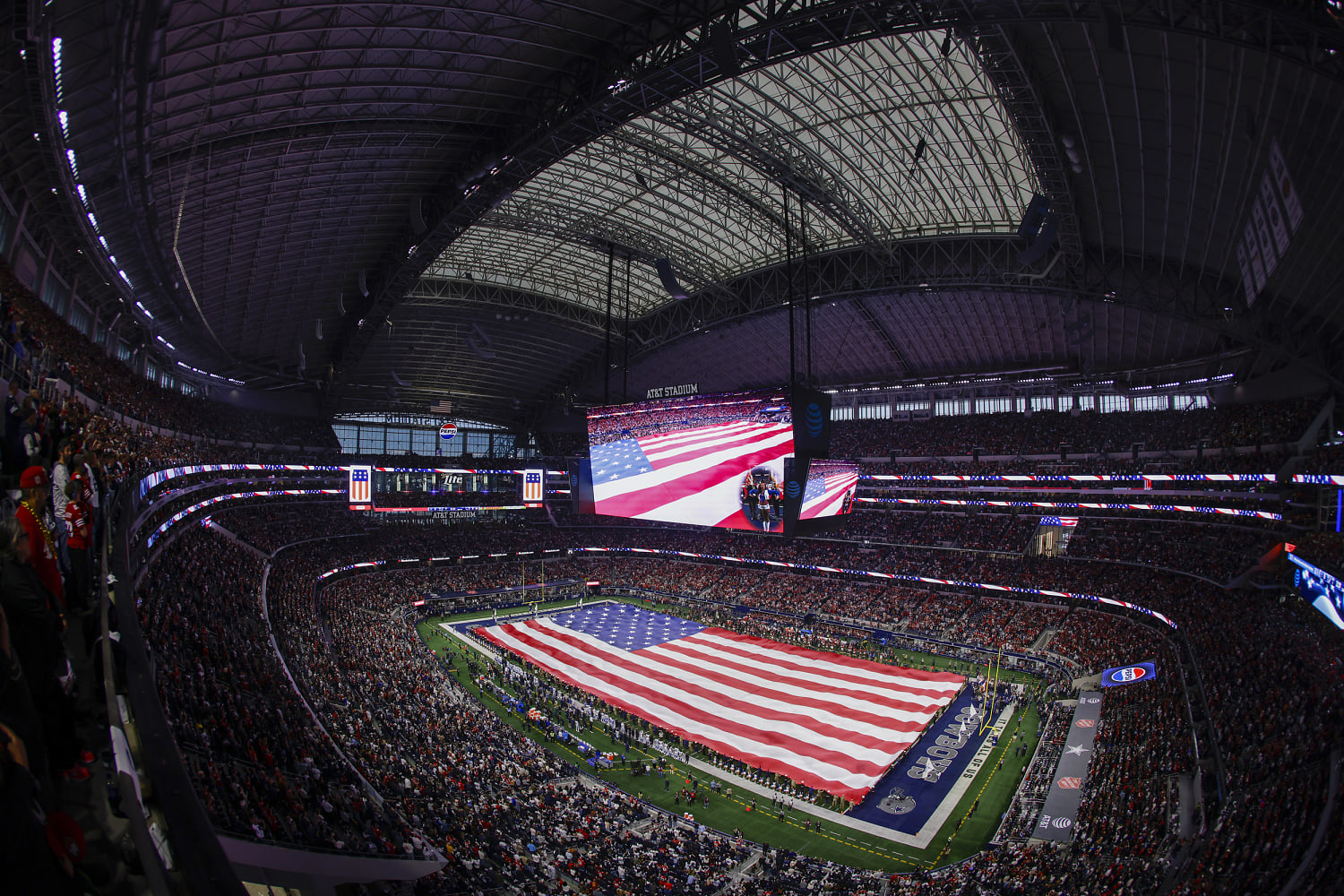
Fatalities resulting from spectator altercations at professional sporting events are rarely isolated anomalies; they represent the terminal failure point of crowd management, alcohol velocity, and spatial bottlenecks. When local law enforcement initiates a homicide or aggravated assault investigation following a death at an NFL venue—such as the fatal incident following an altercation at a Dallas Cowboys game—standard news coverage defaults to a linear, reactive narrative. Media reports typically focus on the immediate physical confrontation, the subsequent medical transport, and the pending criminal investigation. That framing obscures the systemic operational variables that allow a verbal dispute in a concourse or parking lot to escalate into a lethal event.
To understand how a stadium environment transitions from high-energy entertainment to a fatal crime scene, analysts must isolate the structural mechanics of large-scale venue operations. A modern NFL stadium operates as a temporary municipality housing between 70,000 and 100,000 individuals within a compressed footprint. Within this closed system, three primary risk vectors converge: physiological impairment driven by concession economics, acoustic and spatial stress, and the transition gap between private venue security and municipal law enforcement.
The Economics of Impairment and Alcohol Velocity
Professional sports venues rely heavily on high-margin food and beverage sales, creating an inherent operational tension between revenue maximization and crowd control. Unlike traditional bars or restaurants, where a bartender observes a patron over several hours in a static environment, stadium alcohol distribution is decentralized and high-velocity.
Decentralized Point-of-Sale Friction
Patrons acquire alcohol through fixed concession stands, portable kiosks, and roaming vendors. Because points of sale are distributed across multiple levels and concourses, a patron can bypass individual server intervention simply by moving to a different vendor. This structural anonymity neutralizes traditional Dram Shop safeguards, which rely on continuous behavioral monitoring by a single server.
The Third-Quarter Cutoff Paradox
Standard NFL league policy mandates the cessation of alcohol sales at the end of the third quarter. While designed to allow a 60-to-90-minute sobriety buffer before fans drive home, this rule frequently triggers an unintended behavioral spike known in venue management as terminal bingeing. Anticipating the cutoff, intoxicated patrons purchase maximum allowable quantities—often two 16-to-24-ounce beverages per transaction—during the late third quarter. Consuming high volumes of alcohol rapidly just before the game's highest-stress moments (the fourth quarter and immediate egress) peaks blood alcohol concentration precisely when spatial density reaches its maximum.
Environmental Stressors and Escalation Mechanics
Alcohol alone does not generate lethal violence; it lowers the cognitive threshold for aggression when combined with specific environmental triggers. Behavioral criminology and crowd dynamics identify three physical stressors unique to mega-venues that accelerate conflict.
- Acoustic Overload and Cognitive Narrowing: Modern stadiums are engineered to trap and amplify crowd noise, regularly exceeding 100 decibels. Sustained exposure to high-decibel environments elevates cortisol and adrenaline levels while inducing cognitive narrowing—a state where an individual's ability to process peripheral social cues or de-escalate verbal friction drops sharply.
- Spatial Compression During Egress: The seating bowl acts as a pressure-release valve during gameplay, keeping spectators relatively stationary. The moment the game concludes, tens of thousands of individuals funnel simultaneously into narrow concourses, stairwells, and exterior plazas. Personal space evaporates, accidental physical contact becomes inevitable, and impaired patrons frequently misinterpret incidental bumping as intentional provocation.
- The Parking Lot Transition Zone: A significant percentage of fatal stadium altercations occur not inside the seating bowl, but in the exterior parking lots and tailgating zones. These areas suffer from lower lighting, reduced camera density, and a severe drop in uniformed personnel per square foot compared to the interior concourses. Furthermore, tailgating introduces unregulated alcohol consumption prior to entry, meaning a subset of the crowd enters the venue already impaired and leaves into an environment with minimal physical barriers.
The Security Response Gap
When a physical altercation erupts, the survival probability of the victim depends entirely on response latency—the time elapsed between the initial blow and medical stabilization. In mega-venues, response latency is governed by the friction between two distinct operational entities: private event security and sworn municipal police officers.
Jurisdiction and Use-of-Force Asymmetry
Private security personnel, typically hired through third-party contractors, constitute the bulk of a stadium's visible workforce. Their operational mandate is deterrence, ticket scanning, and verbal de-escalation. Private guards generally lack arrest powers, carry no defensive tools, and are instructed under corporate liability policies not to physically intervene in violent brawls. Instead, they act as observers who radio dispatch for sworn law enforcement.
This creates a critical multi-minute delay. Dispatchers must relay the location—often complicated by poor radio acoustics and imprecise sector descriptions from witnesses—to an off-duty municipal police officer working a stadium detail. By the time sworn officers navigate through dense egress traffic to reach the scene, a fistfight has often concluded, leaving one party with severe blunt-force trauma.
The Lethality of Blunt-Force Falls
In fatal stadium altercations, death rarely results from prolonged combat or weapons, which are largely filtered out by magnetometers and bag policies at the perimeter. Instead, fatalities are overwhelmingly caused by single-strike blunt-force trauma followed by an unprotected fall onto concrete. When an intoxicated individual is struck in the head or jaw, impaired motor reflexes prevent them from breaking their fall. The secondary impact of the skull against concrete concourse flooring or asphalt parking surfaces produces subdural hematomas or basilar skull fractures. Without immediate airway management and rapid extraction to a Level 1 trauma center, these injuries prove fatal within minutes.
Forensic Investigation Protocols in Mega-Venues
When an altercation results in a death, the operational posture of the venue shifts instantly from event management to homicide investigation. Law enforcement agencies executing these investigations face unique evidentiary challenges despite the high-tech infrastructure of modern stadiums.
- CCTV Blind Spots and Resolution Limits: While NFL stadiums feature hundreds of high-definition cameras, coverage is heavily weighted toward entry gates, ticketing plazas, and the seating bowl. Concourse corners, restrooms, stairwell landings, and outer parking lot perimeters often rely on wide-angle lenses that capture movement but lack the pixel density required for facial identification in low-light conditions.
- Digital Exhaust and Transaction Mapping: Investigators overcome visual gaps by triangulating digital footprints. Point-of-sale credit card timestamps, mobile ticket scan logs, and stadium Wi-Fi connection pings allow detectives to reconstruct the exact movement timeline of both victims and suspects. If a suspect purchased a beverage five minutes prior to an altercation, receipt timestamps isolate the exact register, allowing investigators to pull high-resolution camera footage from that specific kiosk.
- Witness Dispersion: Unlike a neighborhood crime scene where witnesses remain localized, a stadium crowd disperses across an entire metropolitan region within 45 minutes of the final whistle. Law enforcement must rely on rapid public appeals, social media video scraping, and geofenced subpoenas to identify bystanders who recorded the altercation on mobile devices.
Limitations of Current Deterrence Models
Venue operators routinely respond to high-profile violence by increasing visible security headcount or issuing public reminders regarding fan codes of conduct. Both measures exhibit diminishing returns.
Fan codes of conduct rely on rational actor theory—the assumption that spectators weigh the consequences of arrest or lifetime bans before acting. Acute intoxication and adrenaline neutralize rational cost-benefit analysis. Similarly, simply adding unarmed private security personnel fails to reduce response latency during violent escalations, as those personnel cannot legally or physically stop an assault in progress.
Strategic Mandate for Venue Risk Mitigation
To reduce the frequency of fatal altercations, stadium operators and municipal law enforcement agencies must abandon passive deterrence and restructure egress and alcohol management around physical intervention and rapid medical extraction.
- Eliminate Hard Alcohol Cutoffs in Favor of Dynamic Throttling: Replace the third-quarter hard cutoff with digital transaction limits tied to mobile ticketing IDs, capping total purchases per attendee across the entire event to eliminate terminal bingeing.
- Deploy Embedded Trauma Medics in High-Density Egress Nodes: Station two-person paramedic teams alongside sworn police officers at high-friction bottlenecks—specifically main concourse exits and primary parking lot pedestrian bridges—during the fourth quarter and for 60 minutes post-game. Reducing medical intervention time from eight minutes to under ninety seconds is the single most effective variable in preventing blunt-force head trauma from becoming fatal.
- Reallocate Sworn Officers to Perimeter Transit Corridors: Shift sworn law enforcement deployment outward 15 minutes before the end of the game. Moving officers from the interior seating bowl to the exterior parking lots and rideshare zones places arrest-capable personnel directly into the highest-risk spatial compression zones before crowd density peaks.


