Industrial trawlers are stripping the ocean floor clean off the coast of Malindi, Kenya. Local fishers who used to bring back 100 kilograms of fish now return with less than 30 kilograms. For decades, the narrative around East African fisheries focused almost exclusively on men who sailed into deep waters. But that misses half the story. Women make up nearly 47 percent of the small-scale fisheries workforce across the supply chain, handling processing, marketing, and trading.
When the fish disappear, women get hit hardest.
Warming waters, unpredictable Indian Ocean storms, and corporate competition are forcing a massive shift. You can't catch what isn't there anymore. Instead of waiting for fish stocks to magically recover, coastal women from Kenya to Zanzibar are aggressively pivoting. They're rewriting their economic survival by taking over the conservation space, turning mangrove restoration, ecotourism, and deepwater aquaculture into real, cash-flowing businesses.
The Crushing Reality of Shifting Oceans
Climate change isn't a vague future threat for communities along the Swahili coast. It's an active economic disaster. Rising sea surface temperatures induce massive stress on nearshore ecosystems, destroying coral reefs and driving fish into deeper, cooler waters where small-scale boats can't go.
Look at what happened in May 2024. Cyclone Hidaya, the strongest storm ever recorded to hit Tanzania, brought 137 mph winds and massive waves that tore up shallow-water infrastructure. For the seaweed farmers of Pemba and Zanzibar—88 percent of whom are women—the storm wiped out months of labor in a single morning. Nonstop torrential rains flooded the beaches, rotting the few harvested crops women tried to save.
Traditional shallow-water farming using wooden pegs and lines is no longer viable on its own. When sea temperatures spike, the seaweed suffers from "ice-ice" disease, a condition where changes in salinity and light cause the tissues to whiten, harden, and die. Production of high-value cottonii seaweed plummeted ten-fold because of this warming trend. Relying purely on traditional harvesting means choosing financial ruin.
Moving From Extraction to Restorative Business Models
Survival requires adapting to the environment rather than fighting it. In Kilifi County, Kenya, the women of the Friend of Nature Community-Based Organization took over 100 hectares of degraded mangrove forests. Mangroves are critical because they act as fish nurseries and protect shorelines from erosion, but they've been heavily deforested for timber.
The women didn't just plant trees; they treated the hypersaline, compacted soil through relentless trial and error. They hit an 80 percent seedling survival rate. More importantly, they monetized the conservation. By building a mangrove nursery and setting up beekeeping initiatives within the restored canopy, they created an entirely separate revenue stream through honey production and ecotourism.
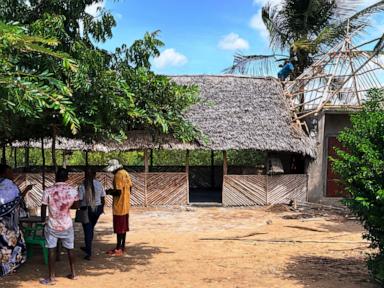
Ten kilometers from Malindi, near where the Sabaki River meets the ocean, a 30-member women’s self-help group called ReSea built a beachside restaurant and ecotourism hub right next to their mangrove nursery. They use fishing nets as decor, but the business model is purely hospitality and conservation education. The logic is simple: if the shallow waters aren't producing fish, you monetize the protection of the coast itself.
The Deepwater Shift and Financial Self-Reliance
For women who want to stay in aquaculture, the solution is moving away from the vulnerable shallows. Organizations like the Aqua-Farms Organization (AFO) and Blue Ventures are funding a shift toward deepwater tubular nets. Deeper water means lower temperatures, stable salinity, and safety from the worst wave energy.
It works, but deepwater equipment is expensive. Coastal women rarely have access to traditional bank loans because they lack land titles for collateral. To bypass this barrier, cooperatives utilize rent-to-own microcredit models.
- Scale up the lines: Groups in the Tanga region of Tanzania increased their production capacity from 10–30 ropes to between 35–100 ropes per farmer.
- Boost the income: This operational scale translated directly into a 41 percent increase in average household income.
- Gain market leverage: When women produce high-quality, disease-free deepwater seaweed at scale, their bargaining power with corporate buyers shifts dramatically. They aren't stuck accepting rock-bottom prices anymore.
Increased income changes community dynamics. In places like Matondoni in Lamu, women-led prawn processing groups now act as the primary breadwinners, funding household health insurance and putting children through school. They are stepping directly into leadership roles within Beach Management Units (BMUs), which are the local governing bodies that dictate fisheries policy.
The Strategy for True Coastal Resilience
If you run a coastal community group, an environmental NGO, or local development program, relying on standard fishing practices is a dead end. To replicate the successes seen in Kenya and Tanzania, implement these three tactical shifts immediately:
- Stop funding shallow aquaculture: Pivot all capital investments toward deepwater tubular nets and offshore equipment to protect crops from escalating sea temperatures and ice-ice disease.
- Form formal financial cooperatives: Don't look for commercial bank loans. Establish local savings mobilization and microcredit groups within women's self-help organizations to fund equipment purchases internally.
- Monetize the conservation loop: Link mangrove and seagrass restoration directly to tangible products like honey production, crab-shack ecotourism, or verified carbon-offset programs so that protecting the environment pays immediate dividends.
The changing climate is forcing a complete restructuring of the coastal economy. By moving away from purely extractive fishing and embracing resilient, managed aquaculture and restoration, East African women are ensuring their communities survive the shift.