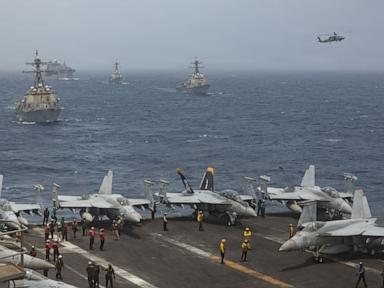
Six months after a joint United States and Israeli air campaign shattered Tehran's command structure and killed Supreme Leader Ayatollah Ali Khamenei, the conflict has curdled into an exhausted, grinding stalemate. Washington insists that its naval blockade of the Strait of Hormuz and punishing economic measures have achieved their core objectives, yet the region remains locked in a high-stakes freeze. Nineteen American service members are dead and over seven hundred fifty have been wounded, while billions of dollars in military ordnance have been expended to lock down a vital trade corridor that remains permanently jittery. This is not the clean strategic realignment that architects of the offensive promised back in February. Instead, it is an open-ended quagmire where neither side can secure a decisive victory nor afford a graceful exit.
To understand how the conflict reached this half-year mark, one must look past the triumphalist rhetoric emanating from Washington and examine the mechanical reality of the maritime choke point. The Strait of Hormuz functions as the jugular vein of global energy transport. When the White House declared a naval blockade to starve Tehran of oil revenues, it simultaneously disrupted the flow of commercial tankers, forcing dozens of vessels to anchor or alter routes. Global markets absorbed an immediate shock. Inflationary pressures rippled outward, proving that modern economic warfare waged against a major hydrocarbon producer inevitably bounces back onto the domestic consumer base.
Inside Iran, the civilian population bears the brunt of a collapsing currency and crippled supply lines. Essential commodities have skyrocketed, with basic food staples climbing beyond the reach of the urban middle class. Yet the political architecture of the state has not imploded as predicted. Following the assassination of Ali Khamenei, the clerical establishment elevated his son, Mojtaba Khamenei, into the leadership circle, maintaining the regime's rigid ideological posture. Direct military interventions rarely produce docile democracies overnight. When external powers drop hundreds of precision munitions on a sovereign nation's capital and infrastructure, the immediate sociological reflex is often nationalistic consolidation rather than popular rebellion against the ruling authority.
Diplomatic channels remain profoundly broken. Mediators from Pakistan, Qatar, and Oman have shuttled between capitals for months, attempting to broker a permanent cessation of hostilities, only to run aground on non-negotiable demands. Tehran insists that all economic pressure and naval restrictions must lift before trade talks resume. Washington demands total capitulation regarding nuclear enrichment and regional proxy funding. With neither side willing to grant unilateral concessions, foreign policy architects have defaulted to a holding pattern. The White House signals that it is in no immediate rush to reopen talks, pivoting its public messaging toward long-term containment while quietly preparing to redeploy diplomatic personnel back to regional missions.
The human cost of this strategic stalemate continues to accumulate away from the headlines. Regional stability has fractured along sectarian and national lines, leaving Gulf allies vulnerable to retaliatory asymmetric strikes and drone incursions that treat American bases and local infrastructure as interchangeable targets. Congressional critics from both sides of the aisle are beginning to question the lack of a defined exit strategy, warning that an indefinite blockade invites accidental escalation. A single miscalculated missile launch or intercepted cargo vessel in the Persian Gulf can instantly reignite a full-scale regional conflagration. Six months into a war billed as a quick corrective, the United States finds itself trapped by its own momentum, guarding a troubled waterway with no clear horizon for peace.