The lights inside the control room do not flicker, but the men and women watching the monitors are holding their breath. It is 7:15 PM in July. Outside, the summer heat is still radiating from the asphalt, pushing millions of air conditioners to their absolute limits. On the massive digital map plastering the wall, a line representing power demand is climbing straight up, resembling a jagged mountain peak.
At the same time, the sun is dipping below the horizon.
This is the daily crisis of the modern world, a quiet emergency that happens everywhere, every single evening. For the last ten years, we have been told that wind turbines and solar panels will save us. We wanted to believe it. But the sun sets when it wants to, not when we need to cook dinner. The wind dies on the hottest afternoons.
A power grid is a monstrous, delicate machine that requires a perfect, instantaneous balance between supply and demand. If the balance tips by even a fraction of a percent, things break. Transformers explode. Cities go dark.
For decades, the only way to handle this evening surge was to fire up "peaker plants"—expensive, heavily polluting gas turbines that sit idle most of the day just to burn fuel for a few frantic hours. It was a dirty, unsustainable compromise.
But tonight, in this particular control room, nobody is turning on a gas turbine. Instead, a technician clicks a mouse. Miles away, inside a cluster of anonymous white metal shipping containers sitting in a fenced field, trillions of lithium ions begin to move.
Power floods into the grid. Quietly. Cleanly. Instantly.
This is the energy storage revolution. It is not about electric cars or sleek smartphones. It is about fixing the fundamental flaw of renewable energy. And at the absolute center of this global shift sits a single Chinese company that most people have never heard of, despite the fact that it is quietly changing the financial math of the entire planet.
The Giant in the Suburbs of Ningde
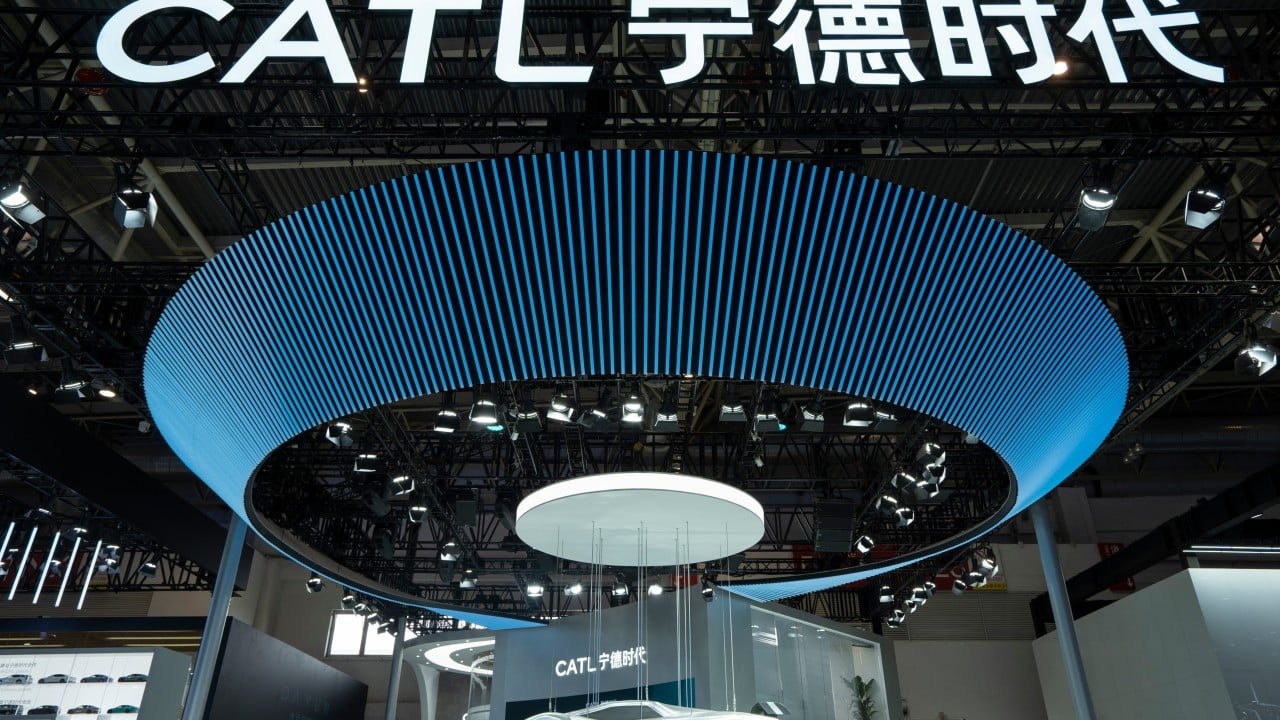
To understand how we got here, you have to look at a map of Ningde, a coastal city in China’s Fujian province. Thirty years ago, it was a quiet area known mostly for agriculture and fishing. Today, it is the capital of the global battery empire. This is the home of Contemporary Amperex Technology Co. Limited, or CATL.
If you drive an electric vehicle, there is a massive chance CATL built the heart of it. They supply Tesla, BMW, Volkswagen, and almost every other major automotive brand you can name. But while the public has been hyper-focused on the race for electric cars, CATL has been quietly pivoting toward a much larger, much more lucrative target: the electrical grid itself.
Consider the sheer scale of what is happening. Building a battery for a car is difficult. You have to worry about weight, crashes, and extreme temperatures. But building a battery system for a city? That requires a different level of engineering entirely. You are no longer talking about a pack that fits under a backseat. You are talking about rows of mega-structures filled with liquid-cooled cells, capable of holding enough electricity to power thousands of homes for days.
For years, skeptics on Wall Street looked at these grid-scale batteries as a luxury item. They argued that lithium was too expensive, that the technology was too volatile, and that utility companies would never abandon their trusted fossil-fuel plants for giant chemistry sets.
They were wrong.
The financial analysts at Goldman Sachs recently took a long, hard look at the data coming out of the energy sector. What they found caused them to issue a massive course correction. They didn't just tweak their models; they tore them up. The investment bank issued a forecast predicting a staggering 50% surge in CATL’s stock price.
Why? Because the market for energy storage is not just growing. It is exploding.
The Math of the Sunset
Let us look at the cold numbers through a simple analogy. Imagine you run a bakery, but your ovens only work when the wind blows. Some days you have ten thousand loaves of bread; some days you have zero. You cannot run a business that way. You cannot run a civilization that way either.
The only way to make the bakery work is to build a massive warehouse to store the bread on the days the ovens are running at full blast.
In the world of energy, that warehouse is the stationary storage battery.
Goldman Sachs realized that the demand for these industrial-scale warehouses is growing far faster than anyone anticipated. It is a matter of simple economics. As governments around the world mandate more solar and wind power, they are inadvertently creating a massive, desperate need for storage. You cannot have the former without the latter.
But why CATL? Why will this specific company capture the lion's share of that 50% financial leap?
The answer lies in the brutal realities of manufacturing execution.
In the battery world, scale is everything. The larger your factories, the cheaper your raw materials. The cheaper your raw materials, the lower your price per kilowatt-hour. CATL has spent the last decade building a supply chain so deeply integrated that it is almost impossible for Western competitors to match their pricing. They own shares in the mines that dig up the lithium, the processing plants that refine the chemicals, and the automated assembly lines that piece the cells together.
When a utility company in California or Texas needs to install a massive battery farm to protect their grid from blackouts, they look at the bottom line. CATL can deliver systems that are not only cheaper but have a proven track record of reliability over millions of cycles.
It is a virtuous cycle for the Chinese giant: their dominance breeds efficiency, which lowers costs, which guarantees more dominance.
The Invisible Stakes of the Transition
It is easy to get lost in stock tickers and percentage gains. A 50% jump looks great on a spreadsheet in New York. But the true stakes of this narrative are felt on the ground, far away from financial trading floors.
Think about the vulnerability of our current infrastructure. Every winter, freezing temperatures threaten to collapse regional grids. Every summer, heatwaves push power plants to the brink of failure. We live in a society that assumes the electricity will always flow when we flip a switch, yet that assumption is growing more fragile by the year.
The transition to a cleaner world is terrifying because it requires us to rebuild the foundation of modern life while we are still standing on it. We are trying to change the engine of the airplane mid-flight.
If the battery storage boom fails, the green energy transition fails with it. We will be forced to choose between carbon emissions or rolling blackouts. That is the dark reality that keeps grid operators awake at night.
This is why the sudden bullishness from institutions like Goldman Sachs matters. It is a signal that the private capital of the world has finally recognized where the bottleneck lies. Money is pouring into the sector because the sector has become essential for survival.
The Friction in the Machine
Nothing about this path is guaranteed, and it would be foolish to pretend otherwise. The journey toward a battery-backed world is fraught with geopolitical tension and supply chain anxieties.
Governments in the West are increasingly uncomfortable with the fact that a single company in China holds the keys to the future of the global electrical grid. Tariff walls are being built. Protectionist rhetoric is rising. There are constant efforts to fund local competitors in Europe and North America, desperate attempts to break the monopoly.
But building a battery industry from scratch is not like building a software app. You cannot just write code and scale it overnight. It requires billions of dollars in physical infrastructure, decades of specialized chemical engineering knowledge, and access to raw materials that are tightly controlled.
Every time a competitor tries to catch up, CATL introduces a new chemistry. They announce batteries that use sodium instead of expensive lithium, or cells that can last for twenty years without losing their capacity to hold a charge. They move the goalposts just as the opposition gets ready to kick.
That is the story behind the Goldman Sachs report. It is an acknowledgment that despite the political headwinds, despite the tariffs, and despite the global tension, the world simply cannot buy batteries fast enough to meet its targets without turning to the giant in Ningde.
The line on the control room monitor finally begins to plateau. The evening peak is passing. The air outside is cooling down, and across the city, millions of people are drifting off to sleep, entirely unaware of the invisible electronic dance that just kept their fans spinning and their refrigerators humming.
They do not know what CATL is. They do not know about the trillions of lithium ions that just held their world together. They do not need to.
But on the charts of the world’s largest investment banks, the message is clear. The future is no longer about who generates the power. It is about who holds it.