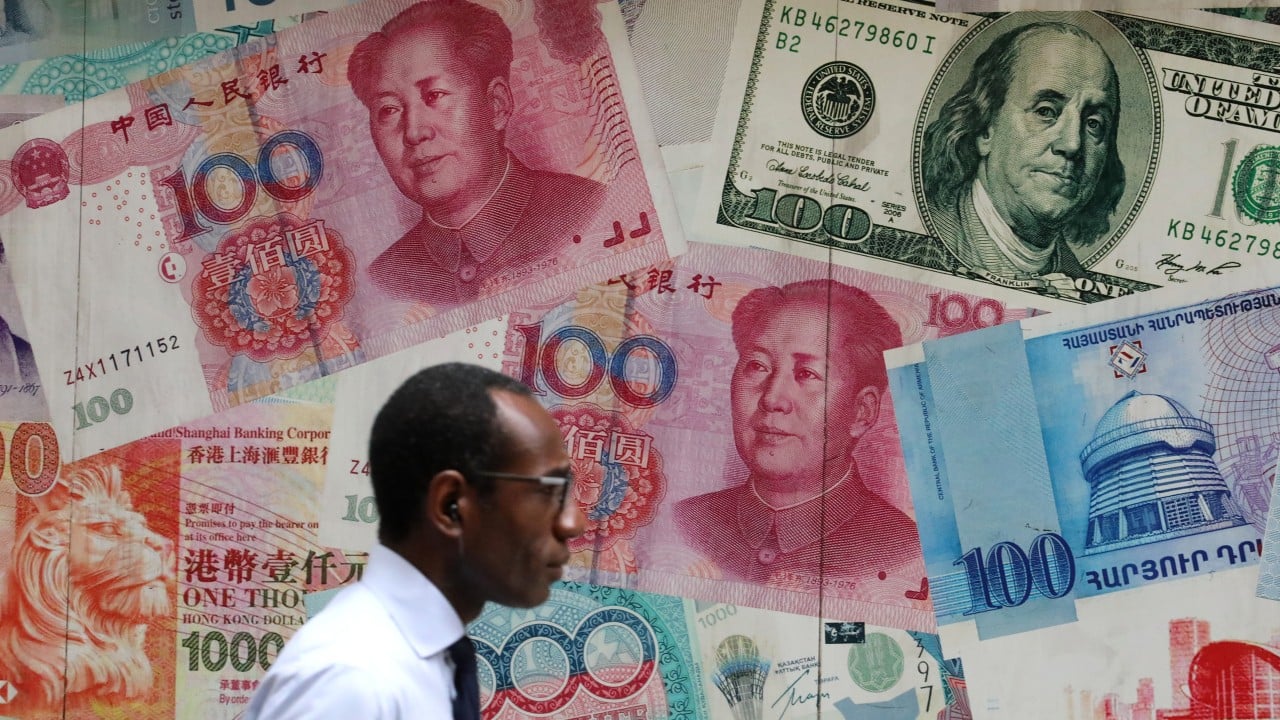
The shift is happening quietly. Across trading floors from Nairobi to Johannesburg, the Chinese yuan is carving out a permanent footprint in African commerce. It is no longer just a theoretical alternative to Western dominance. It is becoming the functional currency for major infrastructure projects, commodity swaps, and bilateral trade agreements.
Western financial institutions spent decades treating African currency markets through the narrow lens of aid and conditional lending. Beijing bypassed that entire apparatus. By offering direct bilateral currency swaps, loans denominated in yuan, and digital settlement systems, China solved a persistent liquidity bottleneck that had crippled African importers for generations.
African central banks face a structural foreign exchange dilemma. Dollars are scarce, expensive to acquire, and tied to monetary policies set in Washington rather than local economic realities. When the Federal Reserve raises interest rates, borrowing costs spike across the African continent regardless of domestic inflation rates. This vulnerability exposed a fundamental flaw in post-colonial monetary structures.
Enter the yuan.
Bilateral currency swap agreements between the People's Bank of China and nations like South Africa, Nigeria, Egypt, and Zimbabwe allow local businesses to settle trade invoices in renminbi and local currencies without touching US dollars. For an importer in Lagos buying industrial machinery from Guangzhou, bypassing the dollar saves significant transaction fees and removes foreign exchange volatility that can wipe out a profit margin overnight.
To understand the mechanics driving this transition, look at the commodities market. China remains the primary buyer of African copper, cobalt, lithium, and crude oil. For years, these transactions were priced exclusively in dollars, forcing African nations to export raw materials, hold dollar reserves, and then spend those dollars buying manufactured goods back from international markets.
Bilateral agreements are changing this equation. When African resource exporters accept payment in yuan, they gain immediate purchasing power in China, the world's largest manufacturing hub. They can buy solar panels, heavy equipment, and telecommunications gear directly. The transactional friction disappears.
Yet, framing this solely as a grand geopolitical masterstroke misses the messy operational reality on the ground.
Local commercial banks in many African nations lack deep liquidity pools for the yuan. Converting local currency into renminbi still requires intermediary steps in many jurisdictions, adding costs that smaller traders struggle to absorb. Furthermore, China's strict capital controls mean that yuan acquired in African markets cannot always be freely reinvested or repatriated without navigating bureaucratic hurdles imposed by Beijing.
There is also the matter of debt sustainability. Many of the infrastructure projects financed by Chinese state banks over the past two decades were denominated in dollars, creating massive debt servicing pressures when local currencies depreciated. While newer agreements incorporate local currencies or the yuan to mitigate this risk, the legacy debt overhang remains a heavy anchor on national balance sheets.
Critics argue that replacing Western financial hegemony with Eastern financial influence simply swaps one master for another. That critique holds merit. Sovereignty in the twenty-first century is denominated in currency. When a nation relies heavily on a foreign power for trade settlement and liquidity support, its economic autonomy narrows.
However, pragmatism often outweighs theoretical sovereignty when an economy is starved for growth capital.
African trade ministers are not blind to the risks of currency entanglements. They are playing a multi-polar game. By opening doors to the yuan, they create leverage in negotiations with the International Monetary Fund and Western creditors. It is an exercise in financial hedging. If traditional Western institutions refuse to restructure debt or provide adequate development finance, alternative channels stand ready.
The expansion of the Pan-African Payment and Settlement System introduces another layer of complexity. Designed to facilitate intra-African trade in local currencies under the African Continental Free Trade Area, PAPSS aims to reduce reliance on any single foreign currency, whether the dollar or the yuan. Yet, intra-African trade currently accounts for a fraction of the continent's total commerce compared to trade with Asia and Europe. Until regional industrial capacity deepens, external currencies will dictate terms.
Technology is accelerating this shift. The expansion of cross-border interbank payment systems and central bank digital currencies provides the plumbing for a post-dollar trade architecture. China's digital yuan experiments, while primarily domestic, offer a glimpse into a future where trade settlements bypass traditional Western clearinghouses like SWIFT entirely. If African central banks integrate with these alternative rails, the decoupling from Western financial surveillance becomes structural rather than temporary.
We are witnessing a slow-motion rewiring of global trade routes. The dominance of the US dollar in African commerce is not collapsing overnight, but it is eroding at the margins where it hurts traditional Western influence the most.
The trajectory points toward a fragmented monetary ecosystem. The yuan will not completely replace the dollar across Africa, nor should it be viewed as a silver bullet for local structural deficiencies. Instead, it is becoming a permanent pillar of a multi-currency reality, rewriting the rules of engagement for the global south and forcing a reluctant West to reckon with its declining financial monopoly.