The fluorescent hum of a hospital corridor sounds identical in every hemisphere. It does not care about titles. It does not soften its pitch for vestments, gold rings, or the weight of a billion prayers pressing against the glass doors outside.
Fragility.
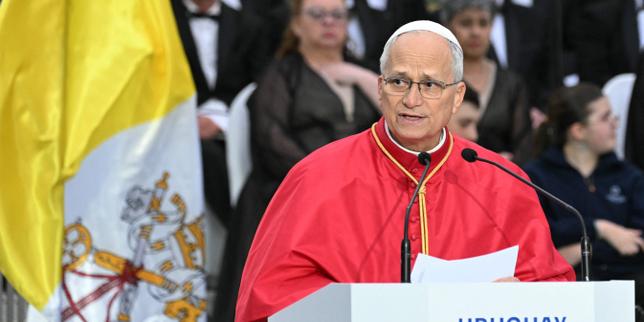
That single word hung over Montevideo in November 2026 like the humid mist rolling off the Río de la Plata, turning a routine papal itinerary into something raw, unscripted, and deeply uncomfortable for anyone who prefers their institutions invincible. Pope Leo XIV—Robert Francis Prevost, the Chicago-born Augustinian friar who ascended to the Chair of Saint Peter—did not arrive in Uruguay to deliver a polished treatise on bioethics from an ivory balcony. He came carrying the invisible scar tissue of his own medical ordeal. And when he spoke about healthcare, he did not speak as a sovereign head of state lecturing a congregation on charity. He spoke as a patient who had stared at a ceiling tile, felt the sudden, terrifying subtraction of bodily autonomy, and realized how quickly a human being becomes a line item.
Most coverage of the papal tour through Latin America treated this moment as a diplomatic footnote. A pious nod to social justice before the motorcade moved on to the next plaza. That reading misses the entire earthquake beneath the floorboards. To understand why a pontiff invoking his own illness on Uruguayan soil matters—not just to Catholics in South America, but to anyone who will eventually sit in a cold examination room—you have to look at the silent bargain modern medicine forces us to sign every single day.
The Geography of a Fever
Consider a hypothetical scene that plays out ten thousand times a morning across the Americas, from the outskirts of Lima to the rural departments of northern Uruguay. Let us call her Elena. She is fifty-eight, a retired primary school teacher whose knees ache when the pampero wind blows north from Argentina, and she has noticed a persistent, dull pressure beneath her ribs for three months.
Elena does not ask whether the scan she needs exists. She knows it exists. She has seen the gleaming machines on television news segments about medical breakthroughs. Her question—the question that wakes her at three in the morning while the kettle sits cold on the stove—is far simpler and infinitely more brutal: Which door am I allowed to walk through?
In almost every healthcare system on earth, illness triggers a second, parallel sickness. The first attacks your cells. The second attacks your dignity. You are suddenly asked to navigate a labyrinth of deductibles, regional specialist shortages, bureaucratic referrals, and quiet calculations about what your survival will cost your children. When you are healthy, you argue about healthcare policy in the abstract—GDP percentages, public-private partnerships, actuarial tables. When your blood pressure drops or a biopsy comes back ambiguous, those abstractions evaporate. You are just a body waiting for someone with a clipboard to decide your worth.
I have sat in those plastic waiting-room chairs, holding a crumpled number slip while watching a clock tick backward in my head. The sensory memory never leaves you. The smell of antiseptic mixed with burnt coffee from a vending machine down the hall. The way your voice shrinks when you ask the receptionist if a specific test is covered, bracing for the slight shake of the head that means not here, not for you, not unless you pay out of pocket. There is a particular shame engineered into modern medical scarcity—a subtle suggestion that if you cannot afford the faster lane, your pain is somehow less urgent than the pain of the person sitting three feet away.
Now imagine the man wearing the white cassock in Montevideo.
Historically, popes did not get sick in public. Not really. For centuries, the Vatican treated papal illness as a state secret, an embarrassing glitch in the machinery of divine continuity. Even in the modern era, sickness at the apex of the Church was usually framed as heroic martyrdom—a silent offering of suffering endured behind thick walls while Swiss Guards stood motionless at the gates.
Leo XIV broke that script by doing something disarmingly ordinary. He admitted vulnerability. Standing before crowds in Uruguay—a nation with a fiercely secular, laïcité-rooted civic identity that once stripped religious holidays from its calendar and renamed Christmas "Family Day"—the Pope bypassed theological abstraction entirely. He reached into his own hospital gown, figuratively speaking, and pulled out the one currency that crosses every ideological border in Montevideo: physical mortality.
Why Uruguay Was the Exact Right Stage
To grasp the quiet electricity of that address, you have to understand the room he was standing in.
Uruguay is an anomaly in Latin America. Small, flat, wedged between the giants of Brazil and Argentina, it built one of the earliest and most ambitious welfare states in the Western Hemisphere under José Batlle y Ordóñez in the early twentieth century. Its Sistema Nacional Integrado de Salud—the National Integrated Health System—guarantees universal coverage through a mix of public providers and mutualistas, nonprofit collective health institutions that form the backbone of Uruguayan daily life. By regional standards, Uruguay is a success story. Life expectancy tops seventy-eight years. Infant mortality is among the lowest in the Americas.
Yet even here, inside a system designed around solidarity, the fractures are widening.
Walk into a clinic in Montevideo's affluent Pocitos neighborhood, and then take a bus forty minutes north to Casavalle, or drive four hours into the interior toward Artigas or Rivera. You will see the invisible fault lines that haunt every universal healthcare model on the planet. Waiting times for specialized oncology or neurology consultations stretch across months. High-cost medications—the targeted biologics and immunotherapies that turn fatal diagnoses into manageable chronic conditions—frequently require judicial injunctions, recursos de amparo, forcing desperate families to sue the state just to obtain a prescription before the tumor grows another centimeter.
And across the broader Latin American continent that Leo XIV was traversing on this historic journey—the first papal visit to Uruguay since John Paul II stood before a wind-whipped crowd in 1988—the gap is not a crack. It is a canyon. According to Pan American Health Organization data, roughly thirty percent of the population in the Americas still lacks access to care due to financial barriers, geographic isolation, or systemic underfunding, while out-of-pocket medical spending pushes millions of families back below the poverty line every single year.
This is the backdrop against which Leo XIV stepped up to the microphone.
He did not arrive in Montevideo as a conquistador of souls, nor as a distant European aristocrat. Having spent decades as a missionary and bishop in Peru—living in Chiclayo, walking muddy streets where clinics lacked basic oxygen tanks long before he ever wore a red cardinal's biretta—Robert Prevost knew what medical abandonment smelled like from the outside. Then, his own illness taught him what helplessness felt like from the inside.
When he invoked his personal brush with sickness to demand healthcare "accessible à chacun"—accessible to each and every person—he collapsed the distance between the altar and the triage desk.
The Architecture of a Human Right
Think of healthcare access like a bridge spanning a gorge during a storm.
Most politicians and technocrats stand on the riverbank admiring the engineering blueprints. They point to the steel cables of universal coverage laws, the concrete pillars of public budgets, the impressive tonnage the structure is theoretically rated to carry. But if the approach ramp on the far side is washed out—if there is no bus route to reach the bridge, or a tollbooth demands three months' wages before lifting the gate—then for the person bleeding on the mudbank, the bridge is a hallucination.
That distinction—between theoretical availability and lived accessibility—is the exact nerve Leo XIV pressed in Uruguay.
In Catholic social teaching, going back to Pope John XXIII's 1963 encyclical Pacem in Terris, medical care has long been classified alongside food, shelter, and rest as a foundational human right, not a consumer commodity. Yet in the decades since 1963, global medicine underwent a quiet revolution. As pharmaceuticals grew more sophisticated and diagnostic technology grew more miraculous, healthcare drifted inexorably toward a market logic. We began talking about "healthcare consumers," "medical tourism," and "return on investment" in hospital administration.
The Pope's own medical experience pierced that tidy economic vocabulary. When your body fails, you are not a consumer shopping for a competitive service tier. You are a human being hanging by a thread. And when Leo XIV connected his personal recovery to the plight of ordinary Uruguayans and Latin Americans, he was exposing a profound moral contradiction at the heart of the twenty-first century: we have never possessed greater power to heal human bodies, yet we still ration that mercy according to accident of birth and bank balance.
Consider what happens next when a society normalizes tiered survival.
First, solidarity erodes quietly. Wealthier citizens opt out of public systems, buying private supplemental insurance that guarantees immediate MRIs and private rooms. Once the people with political voice no longer sit in the public waiting room, political urgency to fix the public waiting room evaporates. Second, prevention collapses. When a working father in Maldonado or Paysandú delays a checkup because taking a morning off costs him a day's wages and a co-pay, a manageable hypertension case quietly mutates into a catastrophic stroke five years later—costing the state ten times more and shattering a household forever.
Leo XIV's insistence on care accessible to everyone was not romantic idealism. It was cold-eyed realism about what keeps a society from cannibalizing itself.
The Theology of the Waiting Room
There is a reason his words landed with unusual weight in a country famously skeptical of clerical authority.
Uruguayans do not easily swoon over religious figures. Since the early twentieth century, this small republic has prided itself on rationalism, secularism, and blunt egalitarianism—the quiet ethos captured in the local phrase nadie es más que nadie, nobody is better than anyone else. A pope who arrived in Montevideo issuing moral decrees about private bedroom behavior or demanding political deference would have met polite, stony silence.
Instead, Leo XIV arrived talking like a neighbor who had just come home from the clinic.
By grounding his message in his own bodily fragility, he practiced a form of authority that modern leaders—political and religious alike—almost never dare to risk. Usually, power protects itself through projection of strength. Presidents jog for cameras; CEOs boast of four-hour sleep schedules; institutions polish their press releases until every human flaw is buffed away. We are taught that admitting weakness invites dismissal.
The opposite happened in Montevideo.
Vulnerability, when offered without self-pity, is disarming because it is undeniable. You can argue with a theologian about doctrine. You can debate an economist about healthcare financing. You cannot argue with a man telling you what it feels like to be sick and dependent on the skill and mercy of strangers. In that moment, the white cassock stopped being a barrier between the institution and the street. It became a hospital gown like any other.
And notice the precision of his phrasing: accessible to each one. Not "the masses." Not "vulnerable populations," that sterile NGO phrase that turns living people into demographic categories. Each one. Because illness never happens to a statistic. It happens to a specific person with a specific name, a specific fear at four in the morning, and a specific family waiting in a hallway with cold hands.
What Lingers After the Motorcade Leaves
By the time the papal plane lifted off from Carrasco International Airport, the diplomatic communiqués were already being filed away in archives from Rome to Buenos Aires. Protocol officers checked boxes. Television anchors moved on to currency fluctuations and football qualifiers.
Yet the uncomfortable mirror Leo XIV held up in Uruguay does not vanish when the cameras pack up.
It remains in every clinic where a nurse stretches a twelve-hour shift because two colleagues emigrated for better pay. It remains in every pharmacy window where an elderly pensioner counts bills twice before deciding whether to buy blood pressure pills or groceries. It remains in the quiet anxiety of every middle-class family across the Americas that knows they are exactly one complex diagnosis away from financial ruin.
We like to believe that civilization is measured by its skyscrapers, its fiber-optic networks, or the sophistication of its surgical robots. It is not. Civilization is measured in the fluorescent hallway at three in the morning, when a frightened human being walks through the doors of a hospital with nothing in their pockets except their own mortality, and the person behind the desk looks up and says, without hesitation, Come inside—we have been expecting you.



