Listen.
Before the engines start, before the air brakes hiss at four in the morning, there is a specific kind of silence that settles over a village road just after rain. It smells of wet tarmac, damp hedgerows, and cold stone. If you have ever lived beside a narrow rural lane that suddenly became someone else’s shortcut, you know that silence is fragile. You learn to listen to it the way a sailor watches a barometer, waiting for the pressure to drop.
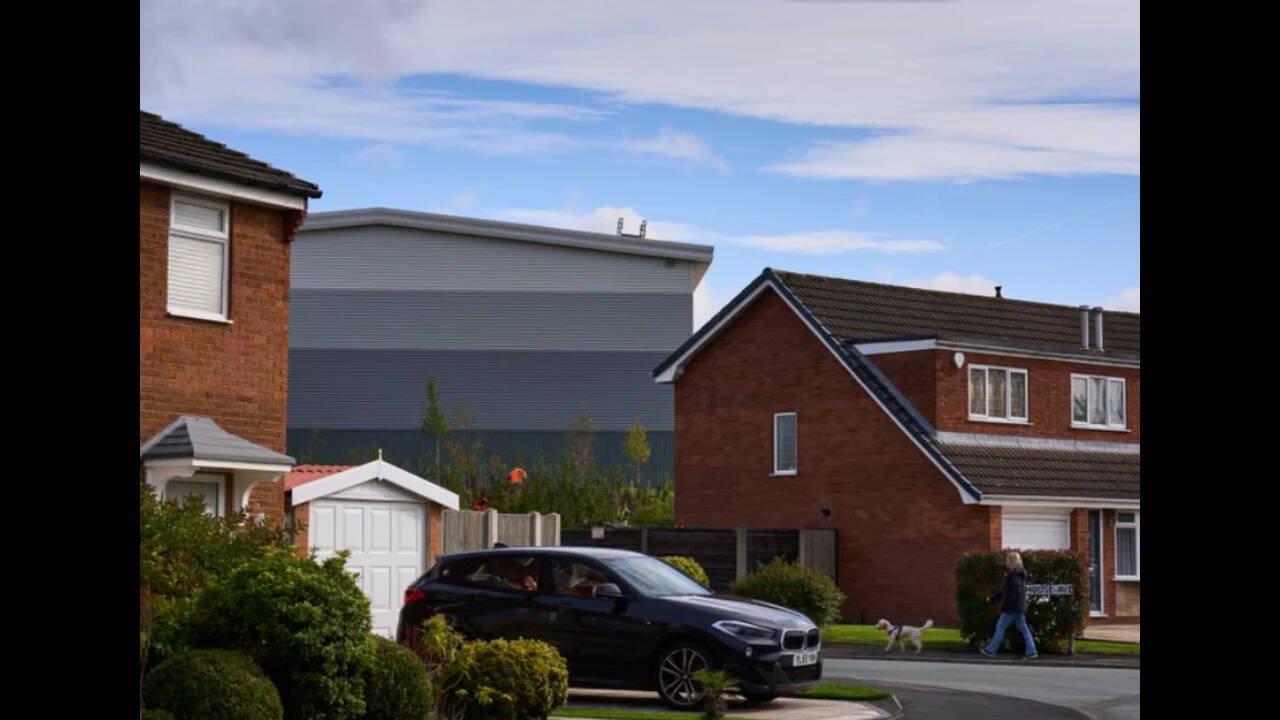
In Astley, a community where daily life moves at the human speed of school runs, dog walks, and quiet mornings, that barometer has been falling for months.
A proposal to introduce heavy goods vehicle (HGV) operations into the area has set off a chain reaction that few outside the parish could have predicted. On paper, the story looks like a dry municipal footnote. A planning dispute. A scheduled November public inquiry. A list of 131 formal objectors. A community fighting fund sitting at £78,000.
Numbers like those are easy to skim past over morning coffee. They look tidy. They look administrative.
They are anything but. Behind every pound in that £78,000 war chest is a kitchen-table calculation made by ordinary people who realized that if they did not pay to defend the character of their own streets, nobody else would do it for them.
The Arithmetic of a Quiet Street
To understand why 131 people have formally put their names on the line—and why hundreds more have emptied pockets, baked cakes, organized raffles, and transferred hard-earned savings into a shared legal fund—you have to look at what an HGV actually does to a place that was never built to hold it.
Think of a village road not as an asphalt strip, but as a living room shared by everyone who lives along it. A family hatchback moves through that room like a polite guest. A 44-tonne articulated lorry enters it like someone driving a shipping container through your hallway.
Consider a hypothetical morning on one of these lanes—a composite picture drawn from the lived reality of countless rural communities across Britain facing similar industrial encroachment. Picture a parent standing at a front gate at 8:15 AM, holding a child’s hand, waiting for a gap in traffic to cross to the pavement opposite. When a full-sized HGV passes at speed, it does not merely occupy the road; it displaces the air. The draft pulls at coats. The low-frequency rumble vibrates through the soles of shoes and rattles single-glazed windowpanes in cottages built long before the internal combustion engine was invented.
Then consider what happens next: two lorries meet where the road narrows near a blind bend or a stone wall. One mounts the kerb. The verge collapses into mud. Drainage ditches cave in. A cyclist hugs the hedge, praying the driver sees them in a blind spot that stretches several metres out from the cab.
Residents do not need a transport consultant to explain these mechanics. They live them. Yet in the strange, inverted world of UK planning law, lived experience counts for very little unless it is translated into the rigid dialect of highway geometry, swept-path analyses, acoustic decibel readings, and statutory policy frameworks.
Why £78,000 Had to Be Raised
That translation is where local democracy becomes brutally expensive.
When a commercial applicant brings forward a major transport or industrial scheme, they arrive at a public inquiry armed with a small army: King’s Counsel barristers, acoustic engineers, traffic modellers, and planning specialists whose entire careers are spent steering applications through the system. Their fees are absorbed as a line item on a corporate balance sheet—a routine cost of doing business.
Residents get no such budget.
If local people walk into a public inquiry armed only with heartfelt letters about noise, danger to schoolchildren, and the slow erosion of village life, they lose. Planning inspectors are bound by strict rules of evidence. Emotion, no matter how justified, is ruled out of bounds unless it is anchored to technical proof. To challenge a developer’s traffic count, you must hire your own highway engineer. To cross-examine a corporate lawyer on planning policy, you must instruct your own barrister.
Raising £78,000 in a single community is not a casual charitable gesture. It is an act of collective self-defence.
Pause and picture what £78,000 actually represents in household terms. That is not loose change dropped into a tin outside a supermarket. That is pension money set aside for a rainy day, holiday funds quietly cancelled, small business owners writing cheques they can barely spare, and retired neighbours donating £20 a week because they cannot bear the thought of leaving their grandchildren a village choked by diesel fumes and rattling axles.
Each contribution carries a quiet, unspoken fear: What if we spend everything we have, and they still approve it?
That vulnerability is the hardest part of any community campaign. Nobody in Astley woke up wanting to become an amateur planning lawyer. People have jobs to hold down, elderly parents to care for, roofs to fix, and dinners to cook. Instead, evenings that should have been spent resting have been consumed by reading hundreds of pages of technical appendices, checking visibility splays with tape measures, and organizing fundraising drives just to buy a seat at the table.
Inside the November Public Inquiry
When the November public inquiry opens, the battle moves out of village halls and onto the sterile, formal floor of a hearing room.
For anyone who has never sat through a planning inquiry, the atmosphere can be jarring. There are no dramatic courtroom outbursts. Everything is polite, procedural, and wrapped in dense jargon. Yet the stakes are permanent. Unlike a bad local council decision that might be voted out at the next election, a planning permission granted at inquiry attaches to the land forever. Once the concrete is poured and the operator’s licence is running, the clock never turns back.
Having 131 formal objectors registered on the case sends an unmistakable signal to the Planning Inspectorate. In planning disputes, apathy is the developer’s greatest ally; when only five or six neighbours object, an inspector can easily dismiss the opposition as a handful of vocal outliers resistant to any change. One hundred and thirty-one individual objections—backed by £78,000 in pooled resources—tells a completely different story. It demonstrates a systemic, community-wide consensus that the proposed HGV movements are fundamentally incompatible with the local environment.
During the November hearings, the Astley campaign’s funded legal and technical team will be able to do what ordinary residents alone cannot: put the applicant’s assumptions under oath and pull them apart line by line.
They will interrogate the numbers that rarely make the headlines. How many vehicle movements per day are actually projected at peak hours, and what happens when inevitable congestion forces drivers onto unapproved rat-runs? How were baseline noise levels measured—on a quiet Sunday afternoon, or at dawn when ambient background sound is lowest and the sudden roar of a diesel engine causes the sharpest sleep disruption? What happens when a 16.5-metre articulated vehicle attempts a tight junction in wet winter weather?
Every question asked by the residents’ barrister in that room will have been paid for, penny by penny, by the people sitting in the public gallery behind them.
The Invisible Cost of Heavy Haulage
There is a wider truth sitting beneath the Astley dispute, one that stretches far beyond a single postcode.
Across Britain, rural and semi-rural communities are increasingly treated as frictionless logistics corridors—blank spaces on a map connecting distribution hubs to motorway junctions. From a distance, on a spreadsheet in an office miles away, a road is just a line. It has a width, a classification, and a theoretical capacity.
What the spreadsheet never captures is the tipping point.
Every road has an invisible threshold where traffic stops being background noise and starts dictating how people live. Below that threshold, neighbours stop to chat over garden walls, children ride bicycles to friends’ houses, and windows stay open on warm summer nights. Cross that threshold—even by a few dozen heavy lorry movements a day—and the behaviour of an entire village shifts overnight.
Parents start driving their children half a mile to school because walking feels unsafe. Elderly residents stop crossing the road to visit neighbours. Front rooms go unused because the television has to be turned up every time a trailer thunders past. Gradually, almost imperceptibly, a community retreats indoors behind double glazing and closed curtains.
Nobody writes a compensation cheque for that loss. You cannot put a price tag on a quiet Sunday morning, or on the freedom of an eight-year-old learning to ride a bike without a parent hovering three inches from their shoulder.
Yet when residents push back, they are often dismissed with a familiar, lazy label: NIMBYs. People who want the benefits of modern supply chains without accepting the infrastructure that makes them run.
That caricature falls apart the moment you look closely at places like Astley. Nobody in a rural village objects to the existence of freight, or to the drivers who keep the country supplied. What they are fighting is the reckless mismatch of scale—the insistence on forcing industrial-grade haulage through arteries designed for a completely different way of life, simply because it is cheaper or more convenient for a single operator than finding a site with proper motorway access.
The Weight of Showing Up
Win or lose, something irreversible has already happened in Astley.
Think about how rare it is, in an era where neighbours often barely know each other’s names, for 131 people to formally stand together and raise £78,000 for a common cause. That kind of solidarity does not appear out of thin air. It is forged in living rooms over cold cups of tea, in rainy leaflet drops down dark lanes, and in the shared realization that a home is more than bricks and mortar—it is the streets, hedges, and neighbours surrounding it.
When the inquiry convenes this November, the technical experts will argue over sightlines, gradient percentages, and decibel contours. The lawyers will cite precedents and national policy paragraphs.
And somewhere in the back of the room, watching quietly as the arguments unfold, will be the people who funded every word of their defence—waiting to find out whether £78,000 and 131 voices are enough to keep the morning silence intact.