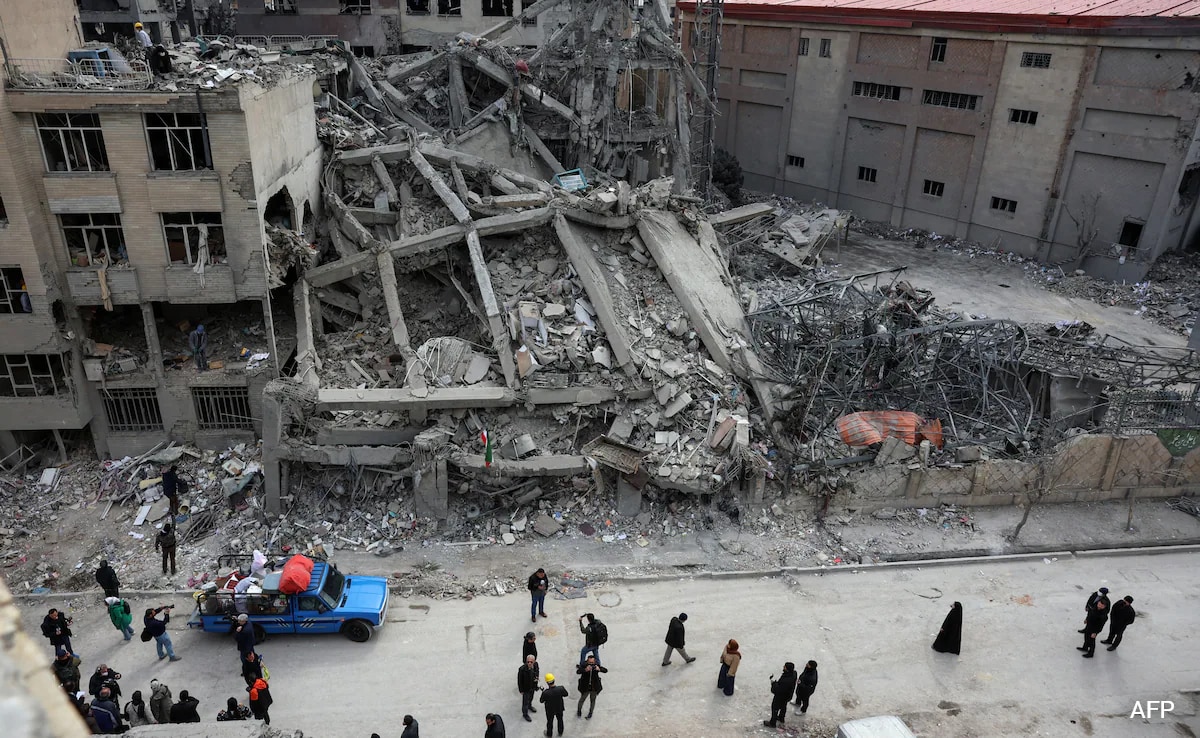
The joint statement issued by 17 nations, led by the United States and France, calling for an immediate 21-day ceasefire between Israel and Hezbollah is not a victory of diplomacy. It is a desperate, last-minute attempt to pull the plug on a regional furnace that has already begun to melt the borders of the Levant. While the public narrative centers on "seizing the opportunity" for peace, the grim reality on the ground suggests that the opportunity is less about a lasting settlement and more about preventing a total collapse of the Lebanese state.
For months, the border between northern Israel and southern Lebanon has been a theater of calculated violence. That calculation has now failed. The current escalation has moved beyond the "tit-for-tat" exchanges that defined the last year. With Israeli airstrikes hitting deep into Lebanese territory and Hezbollah launching projectiles toward Tel Aviv, the 17-nation coalition is fighting against a clock that has already struck midnight for thousands of displaced civilians on both sides of the Blue Line.
The Illusion of the Three Week Window
The proposed 21-day pause is intended to provide space for the implementation of UN Security Council Resolution 1701. This resolution, a relic from the 2006 war, mandates that Hezbollah withdraw its forces north of the Litani River and that the Lebanese Armed Forces (LAF) be the sole military presence in the south. It sounds straightforward on paper. In practice, it has been a dead letter for nearly two decades.
The fundamental flaw in the 17-nation strategy is the assumption that three weeks of quiet can solve a structural deadlock that eighteen years of "peace" could not. Hezbollah has spent those eighteen years turning southern Lebanon into a fortress. They are not merely a militia; they are a socio-political entity embedded into the very soil of the region. Expecting them to pack up their missile arrays and retreat behind a river because of a joint communique from Washington and Paris ignores the ideological and strategic imperatives that drive the group.
Israel, conversely, finds itself in a political vise. The Netanyahu government is under immense domestic pressure to return sixty thousand displaced citizens to their homes in the north. For these residents, a ceasefire that leaves Hezbollah’s Radwan Force within striking distance is not a solution; it is a stay of execution. The Israeli military establishment is increasingly convinced that only a buffer zone—created by force—can provide the security guarantees their public demands.
The Lebanon Internal Collapse Factor
While the world watches the missiles, the real danger lies in the terminal decay of the Lebanese state. The 17 nations urging restraint are not just worried about a ground invasion; they are terrified of a total vacuum. Lebanon is currently a country without a president, a functioning central bank, or a unified military command that can actually challenge Hezbollah’s hegemony.
If a full-scale war erupts, the Lebanese Armed Forces will likely fracture along sectarian lines. This would leave the country as a failed state on the Mediterranean, creating a power vacuum that would draw in every regional actor from Tehran to Ankara. The "opportunity" the 17 nations are talking about is specifically the chance to bolster the LAF and the Lebanese government before they vanish entirely.
The Iranian Shadow and the Limits of Western Pressure
The diplomatic push assumes that the actors at the table—Israel and the Lebanese government—are the ones holding the keys. They aren't. The real negotiation is happening in the shadows between Washington and Tehran. Hezbollah does not move without a green light from the Islamic Revolutionary Guard Corps (IRGC).
Iran views the northern front as its most potent lever against Israel. By keeping the border active, they drain Israeli resources and maintain a "ring of fire" around their primary adversary. Why would Tehran agree to a 21-day pause that allows Israel to refocus its military might on Gaza or, worse, on Iranian nuclear facilities? The 17-nation coalition offers plenty of carrots to Lebanon—economic aid, infrastructure support—but it has very few sticks to use against Iran that haven't already been deployed.
Tactical Shifts on the Ground
While diplomats talk, the military reality is shifting toward a high-intensity conflict. Israel’s "Northern Arrows" operation has systematically targeted Hezbollah’s mid-level leadership and communication networks. The pager and walkie-talkie attacks earlier this month were not just psychological warfare; they were a deliberate attempt to deafen and blind the organization before a potential ground move.
Hezbollah, despite the losses, remains a formidable force. They possess an arsenal of over 150,000 rockets, many of them precision-guided. Unlike Hamas in Gaza, Hezbollah has a land bridge to a superpower patron. Supplies flow through Syria with relative ease. A 21-day ceasefire would theoretically allow Hezbollah to regroup and reorganize its shattered command structure. This is a point not lost on the Israeli Defense Forces (IDF), who view any pause as a tactical disadvantage.
The Displacement Crisis as a Political Weapon
The humanitarian angle is often framed as the reason for the ceasefire, but it is also the primary driver of the war. We are seeing a demographic engineering project occurring in real-time. By making northern Israel uninhabitable, Hezbollah has achieved a strategic goal without even crossing the border. By making southern Lebanon a wasteland, Israel is attempting to turn the Lebanese civilian population against Hezbollah.
This creates a cycle of resentment that no diplomatic "opportunity" can easily break. The 17 nations, including heavyweights like the UK, Germany, and Saudi Arabia, are essentially trying to put a lid on a boiling pot without turning off the flame.
The Failure of Resolution 1701
To understand why this current diplomatic push is so fragile, one must look at the wreckage of previous agreements. Resolution 1701 failed because it relied on UNIFIL (United Nations Interim Force in Lebanon) to enforce a demilitarized zone. UNIFIL has no mandate to use force to disarm Hezbollah, and they are frequently blocked from inspecting sites by "local residents"—a common euphemism for Hezbollah operatives.
The 17 nations are calling for a "return" to 1701, but that would require a massive expansion of UNIFIL’s powers or a sudden, miraculous surge in the capability of the Lebanese Army. Neither is likely. The Lebanese Army is currently being kept afloat by direct US subsidies, including salary top-offs for its soldiers. It is a force designed for internal stability, not for picking a fight with the most heavily armed non-state actor in the world.
The Economic Consequences of a Wider War
If the 21-day ceasefire fails and a ground war begins, the economic shockwaves will hit far beyond the Levant. The Eastern Mediterranean is a burgeoning hub for natural gas. Significant infrastructure, including rigs shared by Israel, Cyprus, and potentially Lebanon, would become targets. The maritime border agreement brokered by the US in 2022 was supposed to be a "peace through prosperity" bridge. That bridge is currently on fire.
Global shipping, already battered by Houthi attacks in the Red Sea, cannot afford another closed theater in the Mediterranean. This is why nations like Japan and Canada joined the 17-nation statement. It isn't just about moral high ground; it's about protecting the arteries of global trade.
The Washington Dilemma
For the Biden administration, this is a legacy-defining moment. With an election on the horizon, the last thing the White House wants is a regional war that drags the US into another Middle Eastern quagmire. The 21-day proposal is a "Hail Mary" intended to freeze the conflict until after November.
However, the administration’s leverage is slipping. Prime Minister Netanyahu knows that the US is unlikely to cut off military aid in the middle of a multi-front war, regardless of how much they dislike his tactics. This gives Israel a window of "strategic autonomy" that they are using to the fullest.
The Hezbollah Internal Debate
Inside Lebanon, the mood is one of quiet terror. The Christian, Druze, and Sunni populations have no desire to see their country destroyed to satisfy an Iranian strategic objective or a Palestinian cause they feel increasingly detached from. There is a growing chorus within Lebanon calling for the implementation of Resolution 1701, but those voices are muted by the reality of Hezbollah’s guns.
Hezbollah leader Hassan Nasrallah is in a corner. If he agrees to a ceasefire without a corresponding end to the war in Gaza, he breaks his promise to keep the two fronts linked. If he continues to fight, he risks the total destruction of his base of support in southern Lebanon and the suburbs of Beirut. The 17 nations are betting that Nasrallah fears the latter more than the former.
Beyond the Statement
The 17-nation document is a list of wishes, not a roadmap. It lacks a verification mechanism. It lacks a clear consequence for non-compliance. It lacks the buy-in of the two main combatants. Israel has signaled it will continue to strike Hezbollah "with full force" until security is restored. Hezbollah has signaled it will not stop until Gaza is quiet.
The "opportunity" these nations speak of is a thin sliver of light between two massive, grinding stones. To seize it would require a level of political courage and compromise that has been absent from the region for decades. It would require Hezbollah to effectively surrender its frontline positions and Israel to trust that a failed state can suddenly become a reliable security partner.
As the US-led talks begin, the drones continue to buzz over Galilee and the smoke continues to rise over the Bekaa Valley. Diplomacy is moving at the speed of a typewriter in an age of hypersonic missiles. The 17 nations are shouting into a hurricane, hoping that the sheer volume of their collective voice can turn the tide. But the tide is made of blood, history, and a deep-seated conviction on both sides that this conflict can only be settled by the sword.
The 21 days start now, but the fuse was lit a long time ago.