The Western Narrative Is Built On A Fundamental Misunderstanding Of Maritime Crude
Turn on mainstream financial news or scan the standard geopolitical summaries, and you will hear the exact same refrain: Houthi drone strikes against Red Sea shipping are about to trigger a global energy shock. Commentators point to Bab el-Mandeb, draw dramatic red arrows toward the Suez Canal, and warn that Riyadh is on the verge of a catastrophic disruption to its oil export pipeline.
It makes for great television. It is also completely detached from how the global physical oil market actually operates.
The assumption that Houthi operations in the Southern Red Sea threaten the core of Saudi Arabia’s export capacity misunderstands geography, infrastructure, and oil economics. Western media treats the entire Arabian Peninsula as a single vulnerable pipeline network. The reality is far less dramatic, far more strategic, and radically different from the narrative being pushed by armchair defense analysts.
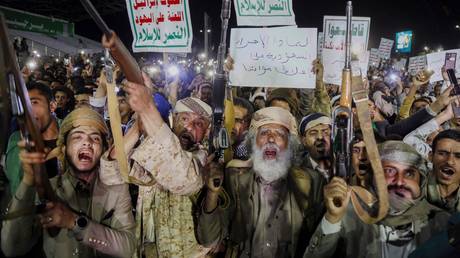
The Houthis are not crippling the global crude trade. They are running a high-visibility, low-cost asymmetric PR campaign that forces Western navies to burn tens of millions of dollars in interceptor missiles while the actual flow of heavy crude quietly reroutes without collapsing the Western economy.
Saudi Arabia Is Not Trapped In The Red Sea
The core thesis of the standard panic pieces relies on a lazy premise: that Saudi Arabian oil MUST traverse the Red Sea to reach its critical buyers, leaving Riyadh at the mercy of Yemen's drone arsenals.
Let us look at actual logistical infrastructure instead of cable news graphics.
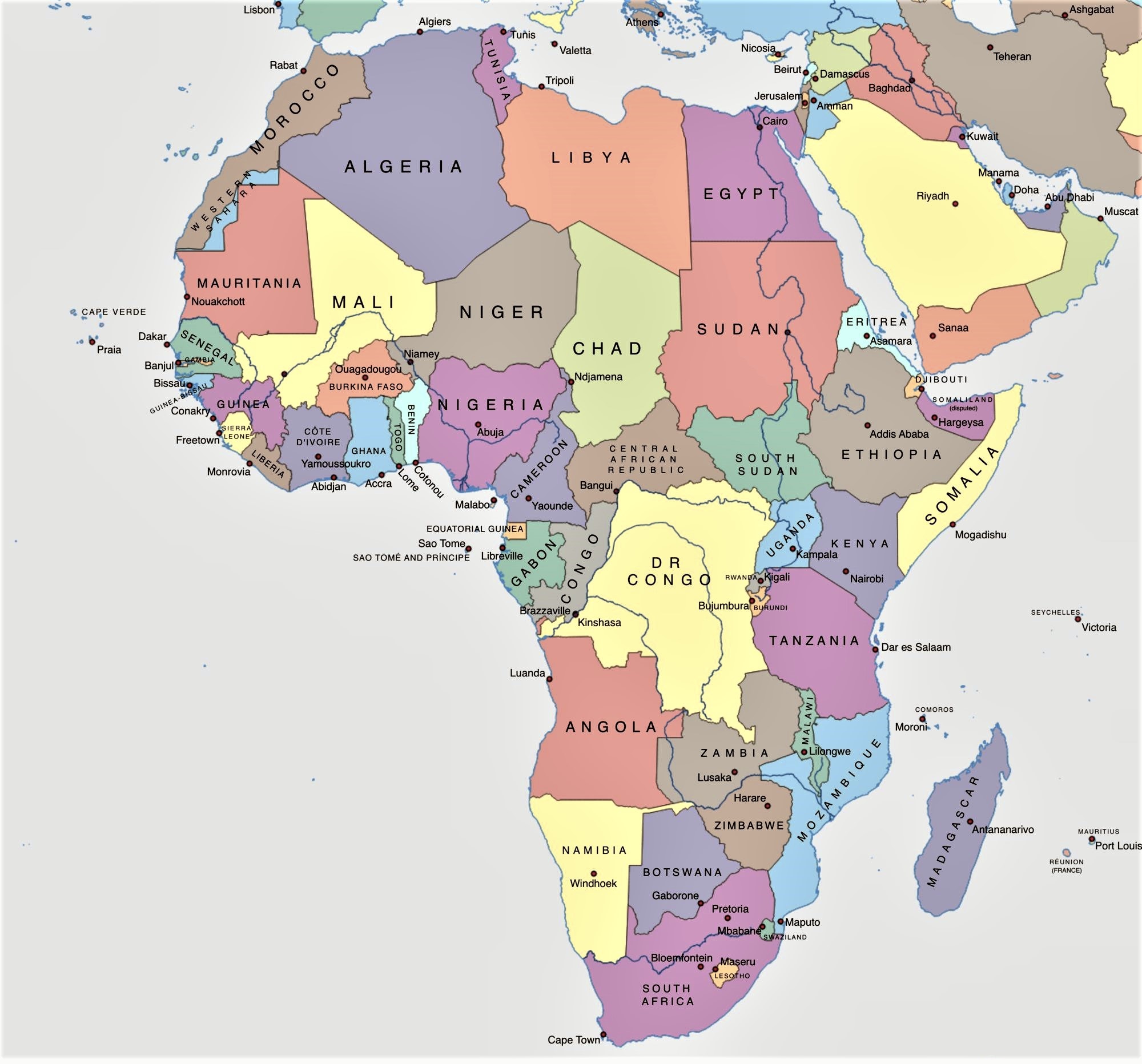
Saudi Arabia’s primary oil production hubs—the giant fields like Ghawar, Safaniya, and Shaybah—are located in the Eastern Province, hugging the Persian Gulf. The vast majority of Saudi crude exports leave from Eastern terminals like Ras Tanura and Ju'aymah.
Where is that oil going?
It is not going to Europe. It is not going to North America.
Over 70 percent of Saudi Arabia’s crude exports head East to Asia—primarily to China, India, Japan, and South Korea.
To ship oil from Ras Tanura to Ningbo or Jamnagar, a tanker sails southeast through the Strait of Hormuz into the Indian Ocean. It does not go anywhere near the Bab el-Mandeb strait. It does not enter the Red Sea. It is thousands of miles away from Houthi drone range.
The East-West Pipeline Reality Check
"But what about the Yanbu terminal on the Red Sea?" critics ask.
Yes, Saudi Arabia operates the East-West Pipeline (the Petroline), capable of moving roughly 5 million barrels per day from Eastern fields to the port of Yanbu on the western coast. Riyadh built this infrastructure precisely as a strategic bypass around the Strait of Hormuz during the Iran-Iraq war.
Here is the nuance the doom-sayers miss: Yanbu is located in the northern half of the Red Sea, roughly 600 nautical miles north of the Bab el-Mandeb danger zone.
If Saudi crude loaded at Yanbu is destined for Europe, it heads north through the Suez Canal. It never passes the Houthi-controlled waters off Yemen. If it is destined for Asia, Riyadh simply does not ship it out of Yanbu—it routes it directly out of the Persian Gulf terminals instead.
The idea that the Houthis have trapped Saudi Arabian oil behind a blockade is a myth borne out of staring at a world map without looking at maritime routing charts.
Who Is Actually Suffering? (Hint: It Isn't Riyadh)
I have spent years watching corporate boardrooms panic over headline risks while completely ignoring actual balance sheet mechanics. When maritime insurance rates spike in the Red Sea, Western analysts immediately scream "oil crisis."
In reality, the pain of the Red Sea disruption is hyper-specific, localized, and largely born by container shipping and European refined product imports—not Saudi crude producers.
| Sector / Region | Perceived Threat Level | Actual Impact | Primary Reason |
|---|---|---|---|
| Saudi Crude Exports | Extreme Panic | Minimal | Asian buyers dominate; shipments originate in the Persian Gulf. |
| European Diesel Market | Moderate Threat | Real, but manageable | Refined products from Middle East/Asia must detour around the Cape of Good Hope. |
| Global Container Shipping | High Threat | Severe Delay / Higher Freight Costs | Suez Canal bypass adds 10-14 days to Asia-Europe trade routes. |
| Houthi Political Standing | Low Concern | High Gain | Low-cost operations yield massive geopolitical leverage and local recruitment. |
When a container ship turns away from Suez and routes around the Cape of Good Hope, it adds roughly 10 to 14 days to the transit time between Asia and Northern Europe. That incurs extra fuel costs and ties up vessel capacity, driving up spot freight rates for consumer goods, electronics, and manufacturing components.
That is a container logistics problem. It is an inflationary pressure for European retailers.
It is not a physical oil supply shortage.
Physical oil is a fungible, global commodity. If European refiners find it slightly more expensive to bring middle distillates through the Red Sea, arbitrage windows shift. Russian crude (which Houthi forces generally allow unmolested), Mediterranean short-haul crudes, and Atlantic Basin barrels fill the gap. The market adjusts.
The Real War Is Economic Asymmetry
If the Houthis are not destroying the Saudi oil engine, what are they actually achieving? They are demonstrating the absurd economic asymmetry of modern warfare, and Western military doctrine has no clean answer for it.
Consider the math:
- Houthi Attack Asset: A modified Samad or Quds-type drone built with commercial off-the-shelf components, costing anywhere between $10,000 and $20,000.
- Western Defense Asset: A Standard Missile-2 (SM-2) or Aster 30 fired from an Arleigh Burke-class destroyer or European frigate, costing between $2 million and $4 million per shot.
Firing a $3 million missile to neutralize a $15,000 balsa-wood drone is a losing value proposition. You can sustain that doctrine for weeks; you cannot sustain it for years.
[ $15k Houthi Drone ] ---> (Attacks Shipping Lane)
                                    |
                                    v
[ $3M Interceptor Missile ] ---> (Fired by Western Navy)
                                    |
                                    v
Result: 200x Cost Imbalance / Depleted Naval Stockpiles
The Houthis do not need to sink ten crude tankers a week to win their game. They only need to keep the threat level high enough to force commercial war-risk underwriters to keep premiums elevated, while drawing Western coalitions into an expensive, indefinite naval patrol cycle in the Gulf of Aden.
Riyadh understands this math perfectly. That is precisely why Saudi Arabia has been so hesitant to join aggressive offensive coalitions targeting Yemen in recent years. They spent years firing expensive munitions at low-cost targets in northern Yemen and realized it leads to a strategic dead end.
Riyadh wants a stable environment to execute Vision 2030, secure foreign direct investment, and build out its mega-projects. The Saudis are playing a long-game diplomatic balance, while Western commentators urge them to double down on a failed military framework.
Dismantling The Common Questions
Whenever this topic surfaces, industry observers ask the same set of flawed questions based on outdated geopolitical frameworks. Let us dismantle them directly.
"Will Red Sea disruptions force oil to $120 a barrel?"
No. Oil prices are driven by global supply-demand balances, OPEC+ quota compliance, Chinese industrial demand, and US shale production—not by shipping reroutes around East Africa.
A shipping delay changes the location of the inventory on a given Tuesday; it does not destroy the physical barrel. Unless actual extraction infrastructure or primary export terminals in the Persian Gulf are physically destroyed, a transit detour adds a couple of dollars in freight costs, not a $40 geopolitical risk premium.
"Isn't Saudi Arabia being forced to defend Suez to save its revenue?"
Riyadh does not collect revenues from Suez Canal tolls—Cairo does. Egypt is the actor taking the massive financial hit from declining Suez Canal revenues, not Saudi Arabia.
Saudi Arabia gets paid when the barrel hits the ship at Ras Tanura or Yanbu. Once the transaction clears and the bill of lading is signed, the buyer and the maritime insurer carry the transit risk.
"Can't the Houthis just blockade the Strait of Hormuz next?"
This question betrays a total lack of geographic and geopolitical literacy. The Houthis operate out of western Yemen, bordering the Red Sea and the Gulf of Aden. The Strait of Hormuz is located over 1,000 miles away, controlled on its northern bank by Iran.
The Houthis have zero naval or territorial presence near Hormuz. Suggesting they could close Hormuz is like suggesting a naval militia in the English Channel could close the Strait of Gibraltar.
Stop Looking At The Red Sea Through A 1970s Lens
The obsession with viewing every Red Sea skirmish as an existential threat to global oil markets is a relic of 20th-century geopolitical thinking.
The global energy map has mutated. Trade flows have pivoted decisively toward Asia. Saudi Arabia’s strategic priority is not fighting a perpetual war along its southern border to protect European trade routes; it is maintaining quiet export channels to Qingdao and West Coast India.
The Houthis are testing Western patience, draining Western military budgets, and exposing the fragility of global supply chains for consumer goods.
They are not shutting down the Saudi oil machine. Anyone telling you otherwise is selling fear instead of analyzing balance sheets and maritime logistics.
Stop watching the red arrows on television. Watch where the tankers are actually sailing.