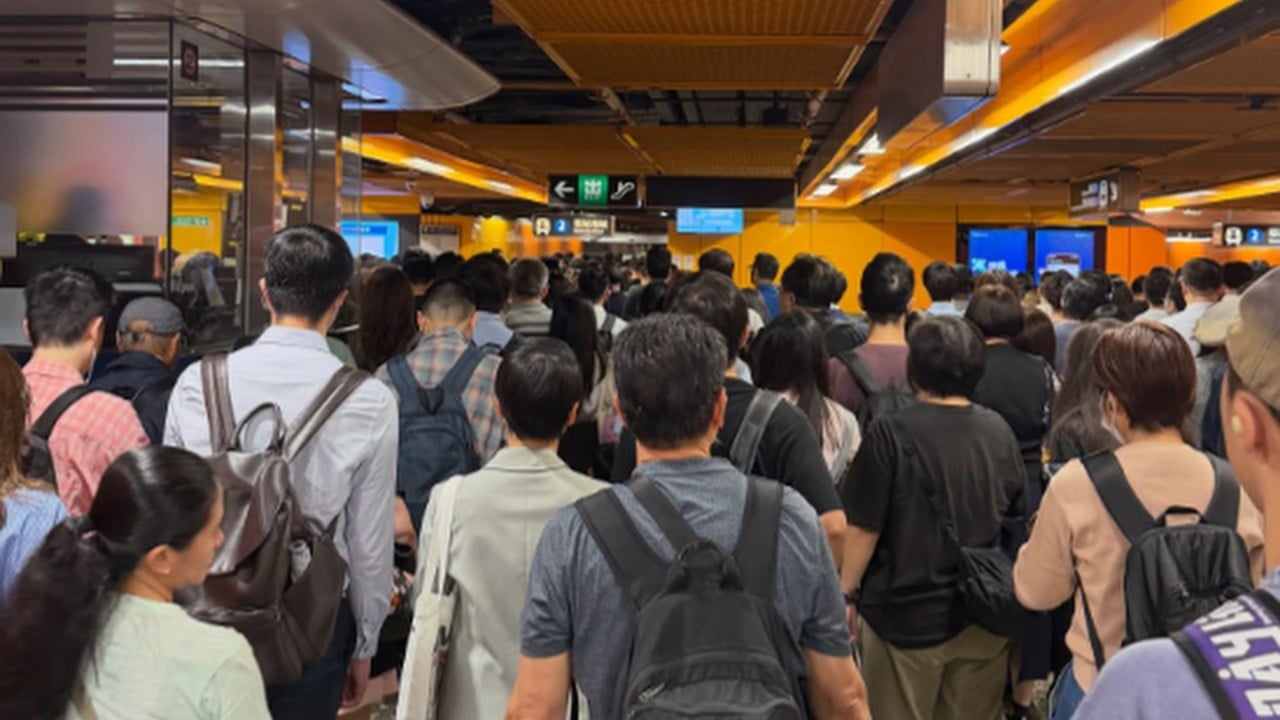
Your morning coffee goes cold on a crowded platform at Causeway Bay while a familiar red-and-white chime echoes overhead. Another Hong Kong MTR signalling fault has stalled the Island line right at the peak of rush hour.
Most commuters blame old trains or lazy maintenance when they're stuck staring at a frozen destination board. That's completely wrong. The real story behind an MTR signalling fault on the Island line comes down to aging automated trackside hardware, razor-thin headway margins, and a multi-billion-dollar upgrade project that's taking way longer than anyone planned. When one tiny track circuit loses track of a single train, the entire corridor from Kennedy Town to Chai Wan grinds down to a crawl within minutes.
I've stood on those packed platforms at Admiralty and Quarry Bay more times than I care to count, watching station staff pull out the foldable metal crowd-control barriers before the official mobile app even updates its status banner. If you commute along Hong Kong Island's northern shore, understanding what actually breaks—and how to route around it before the station gates lock—saves you forty minutes of misery.
Why the Island Line Chokes So Fast During Rush Hour
The Island line isn't just another subway route. It's the economic spine of Hong Kong Island, threading directly beneath Central, Admiralty, Wan Chai, Causeway Bay, and Taikoo. During the morning and evening peaks, trains run at roughly two-minute intervals. Think about what that spacing actually means in practice.
There is zero buffer. None.
When the signalling system functions properly, automated train protection keeps metal wheels moving safely just hundreds of meters apart. The moment a signalling fault occurs—whether at Sheung Wan, Tin Hau, or Heng Fa Chuen—the computer loses positive confirmation of where a train sits on a specific block of track. Safety protocols immediately force drivers to switch from automated operation to manual visual driving under strict speed restrictions.
Instead of gliding into Wan Chai at full speed, a train creeps forward at 22 kilometers per hour. That single slow-moving train creates a cascading shockwave backward down the tunnel. Within ten minutes, platforms at North Point and Fortress Hill hit capacity. Station controllers then have no choice except to activate crowd-management measures, holding passengers at the ticket concourses so people don't get pushed off the platform edge.
The Core Problem Behind Recent Signalling Glitches
People hear "signalling fault" and picture a broken traffic light in a dark tunnel. The reality is way more complex. The Island line still relies on a legacy SACEM (Système d'Aide à la Conduite, à l'Exploitation et à la Maintenance) signalling architecture originally installed in the late 1980s and upgraded incrementally over the decades.
Hardware wears out. Trackside sensors, axle counters, relay boxes, and data transmission cables endure relentless vibration, high humidity, and constant thermal cycling eighteen hours a day. Even a momentary voltage drop or a degraded track circuit board triggers a fail-safe shutdown. In railway engineering, "fail-safe" means the system assumes the worst possible scenario—like a broken rail or an occupied track ahead—and halts traffic until engineers verify the line is clear.
Honestly, the system is doing its job when it stops trains. A frozen commute beats a collision every single day of the week. Still, knowing the system works as designed doesn't make you feel better when you're late for a client meeting in Central.
What MTR Corporation Won't Put on the Platform Posters
When a Hong Kong MTR signalling fault disrupts the Island line, the official announcements give you the bare minimum. You'll hear that trains are running at five-to-eight-minute intervals instead of two, and that you should allow extra time for your journey.
What they don't broadcast is how badly the delay compounds at interchange stations.
Admiralty is the pressure cooker of the entire network. It connects the Island line, the Tsuen Wan line, the South Island line, and the East Rail line. When Island line trains slow down, passengers trying to transfer from Kowloon or the New Territories back up onto the escalators within seconds. If you're coming across Victoria Harbour from Tsim Sha Tsui during an Island line disruption, stepping off at Admiralty traps you in a subterranean bottleneck with nowhere to go.
Quarry Bay and North Point suffer the exact same fate for commuters coming through the Eastern Harbour Crossing on the Tseung Kwan O line.
The Delayed Signalling Replacement Project
MTR Corporation has been trying to replace the aging signalling systems across its urban lines—including the Tsuen Wan, Island, Kwun Tong, and Tseung Kwan O lines—with a modern Communications-Based Train Control (CBTC) system from the Thales-Alstom consortium. CBTC uses continuous wireless communication between trains and trackside computers rather than fixed track circuits, allowing tighter train spacing and faster recovery after hiccups.
The rollout has been a well-documented headache. Software integration bugs, testing incidents—including a famous 2019 test-run collision on the Tsuen Wan line that halted trials for years—and complicated overnight testing windows pushed the completion timeline back repeatedly. Because the MTR only closes for roughly four hours every night between 1:00 AM and 5:00 AM, engineers get barely two hours of actual track access after power-down and safety checks. Upgrading a live, high-capacity metro system without shutting it down for months is like performing open-heart surgery while the patient runs a marathon.
How to Spot a Major Disruption Before You Tap Your Octopus Card
Most commuters walk straight through the turnstiles with headphones on, completely oblivious until they reach the escalator landing and see a wall of people. You can beat the crowd every time if you know the early warning signs.
First, watch the ticket concourse monitors and listen to the station PA before you tap in. MTR policy requires announcing delays once intervals stretch noticeably, though station-level announcements often lag behind internal control room alerts by three to five minutes.
Second, check the MTR Mobile app's "Traffic News" tab while you're still walking down the street toward the station entrance. Look closely at the wording. If the notice says "extra travelling time of 5 to 10 minutes," the system is limping along, and you'll probably make it through with mild crowding. If the phrasing shifts to "10 to 15 minutes or more" or mentions "free shuttle buses being arranged," do not enter the paid area. Once you tap into a crowded concourse during a 15-minute delay, fighting your way back out against incoming foot traffic becomes a nightmare.
Third, watch the station staff. When you see yellow-vested platform assistants walking briskly toward the escalators carrying folding metal barriers or red crowd-control tape, a major bottleneck is already underway downstairs. Turn around immediately.
Smart Escape Routes Along the Island Line Corridor
Hong Kong Island has a narrow, linear geography, which means a single broken rail line feels inescapable. It isn't. You just need to know which surface options actually move when the underground stalls.
Use the Tram for Short-to-Medium Hops
Everyone treats the Hong Kong Tramways ("Ding Ding") like a slow tourist novelty. During an MTR signalling fault, it's a lifesaver for hops between Sheung Wan, Central, Wan Chai, and Causeway Bay. Yes, trams sit in street traffic, and yes, they get packed fast when the subway breaks. However, the tracks run right along Des Voeux Road, Queensway, Hennessy Road, and Yee Wo Street—directly above the Island line stations. If you only need to go two or three stops, walking up to street level and hopping on a tram beats standing motionless in an underground tunnel for twenty-five minutes.
Cross the Harbour Early Instead of Using Admiralty
If you're travelling from Kowloon to Hong Kong Island during a morning Island line fault, avoid the Tsuen Wan line transfer at Admiralty completely.
- Heading to Central or Sheung Wan? Take the Star Ferry from Tsim Sha Tsui. It's immune to tunnel delays, runs every few minutes, and drops you right at the Central Piers with direct footbridge access to IFC and Exchange Square.
- Heading to Wan Chai or Causeway Bay? Catch the Star Ferry to Wan Chai Pier instead, or grab a cross-harbour franchised bus (like the 101, 104, or 111) before you enter the MTR system.
- Coming from the East Rail line? Stay on the East Rail line straight into Exhibition Centre station in Wan Chai North rather than changing to the Island line at Admiralty. Exhibition Centre puts you a five-minute walk from the heart of Wan Chai's office towers without touching the broken line.
Know Where the MTR Free Shuttle Buses Actually Load
When a signalling fault shuts down a section of the Island line completely, MTR deploys free shuttle buses. Most people waste twenty minutes wandering around station exits trying to find them.
Shuttle buses don't stop right outside every main station exit because main roads like Hennessy Road and King's Road lack space for dozens of idling double-deckers. They stage at designated curbside points slightly off the main arteries—such as near Admiralty Centre, Lockhart Road in Wan Chai, or outside Victoria Park in Causeway Bay. Follow the temporary A4 directional signs pasted to station pillars, and keep in mind that shuttle buses usually run between affected MTR stations rather than making every single intermediate stop.
What to Do If You Are Already Stuck on a Delayed Train
Sometimes you're already inside the carriage when the lights flicker, the air conditioning drops to low-power mode, and the driver announces a signalling delay ahead.
Don't panic, and definitely don't touch the emergency door release unless there is smoke, fire, or a genuine medical emergency. Opening a train door inside a tunnel forces the control room to cut traction power across the entire track section immediately, turning a ten-minute signalling reset into a two-hour evacuation nightmare for thousands of other passengers.
Keep your phone screen brightness low to conserve battery, stay inside the carriage until the train reaches a platform, and avoid cramming into the first doorway you see once the doors open. Walk toward the ends of the platform where foot traffic thins out near the secondary exits.
Check Your Commute Strategy Before Tomorrow Morning
Signalling faults on a 40-year-old, high-frequency metro line aren't going away overnight, regardless of how many maintenance crews work through the night. Download the MTR Mobile app and turn on push notifications specifically for the Island line so you get alerts before leaving your apartment. Save the Star Ferry and cross-harbour bus routes in your preferred transit app as backups, and always check the concourse status boards before tapping your Octopus card at the gate.